
UAEU initiative empowers women farmers in rural areas across Africa and beyond
The research-driven programme boosts productivity, gender equality and climate resilience in developing regions
Sponsored by United Arab Emirates University

Sponsored by
Sponsored by
A United Arab Emirates University (UAEU) programme is empowering rural women in the agriculture sector to promote gender equality, food security and climate action. The project is part of an initiative by Her Highness Sheikha Fatima bint Mubarak to empower rural women in agriculture through sustainable, climate-smart agricultural practices, and is supported by the UAE’s Ministry of Foreign Affairs.
“Women represent nearly half – and in some cases more than 50 per cent – of the agricultural workforce in developing countries,” says Mohamed Alyafei, dean of the College of Agriculture and Veterinary Medicine at UAEU. “However, they face many structural barriers in land ownership, financial access, agricultural inputs and modern technology.”
The programme was launched in 2024, following the UAE’s hosting of the 28th United Nations Climate Change Conference (COP28) in December 2023. It aims to support several of the UN’s Sustainable Development Goals, namely gender equality, zero hunger and climate action. So far, the project has reached Senegal and Ethiopia, and is being expanded to include Uzbekistan.
“In countries such as Senegal and Ethiopia, empowering women farmers can significantly increase agricultural productivity, reduce rural poverty, strengthen food security and improve household nutrition,” says Alyafei. “Closing the gender gap in agriculture is not only a social justice issue but also an economic necessity for sustainable development across Africa.”
The programme highlights the country’s “commitment to linking climate action with women’s empowerment and food security”, says Ahmed Ali Alraeesi, vice-chancellor of UAEU. It brings together UAEU and African partner universities, including Gaston Berger University in Senegal and Haramaya University in Ethiopia, to deliver research-based training programmes for rural women.
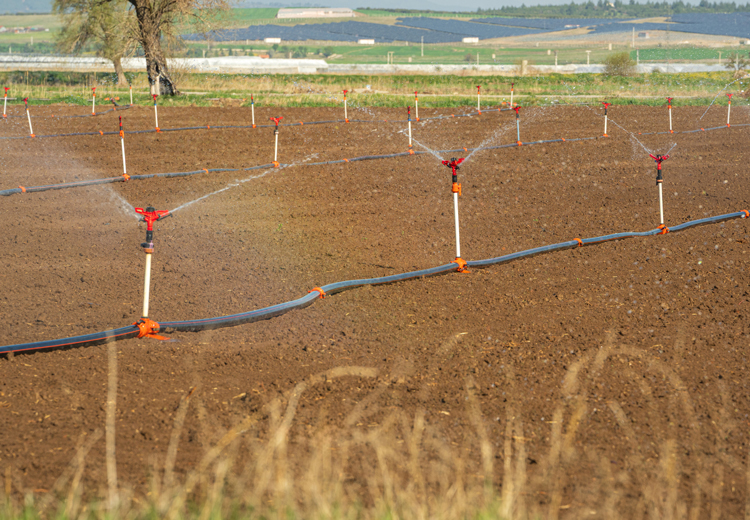
The programme adopts a “train-the-trainer” model, which equips women with practical skills in sustainable farming techniques, integrated crop systems, soil management and modern agricultural technologies, such as precision agriculture tools. “Importantly, this is not only a training initiative, but also a research-driven programme that evaluates impact, scalability and long-term sustainability,” says Alraeesi.
The programme also involves two students from UAEU and two from the partner countries, who are engaged in the research and fieldwork, contributing to data collection, analysis and community engagement. “This ensures academic integration and capacity building on both sides,” Alraeesi says.
Alraeesi adds that the programme aims to create measurable and lasting impact. The preliminary results of the programme were shared at COP29 in Baku, Azerbaijan, in 2024. “Early findings demonstrated positive outcomes in skills development, productivity improvements and cross-border academic collaboration,” Alraeesi says.
Collaboration was central to the initiative’s success. “Partnerships with African universities ensure that the research is locally grounded and culturally relevant,” Alraeesi says. “Such multi-level collaboration ensures that the project is not isolated in academic research, but rather a scalable and policy-aligned development model.”
The programme has been such a success that the university is expanding it to include other countries outside of Africa. “Looking ahead, we plan to expand the model geographically and thematically,” Alraeesi says. The latest country to be included is Uzbekistan. “This reflects our intention to adapt the model to other rural contexts, while maintaining its core principles of sustainability and women’s empowerment.”
“Ultimately, our goal is to build a sustainable, internationally connected research platform that empowers rural women, strengthens food systems and sustainability, and contributes meaningfully to global climate action,” Alraeesi concludes.