
Seeds of change: how nanoparticles can help trees take root in the desert
The ghaf tree can live for up to 400 years in the harshest conditions, but it needs help to grow. Researchers at the United Arab Emirates University have developed a novel seed optimisation approach that can accelerate ghaf seed germination for mass plantation of the UAE desert and support the country’s efforts to combat desertification
Sponsored by United Arab Emirates University

Sponsored by
Sponsored by
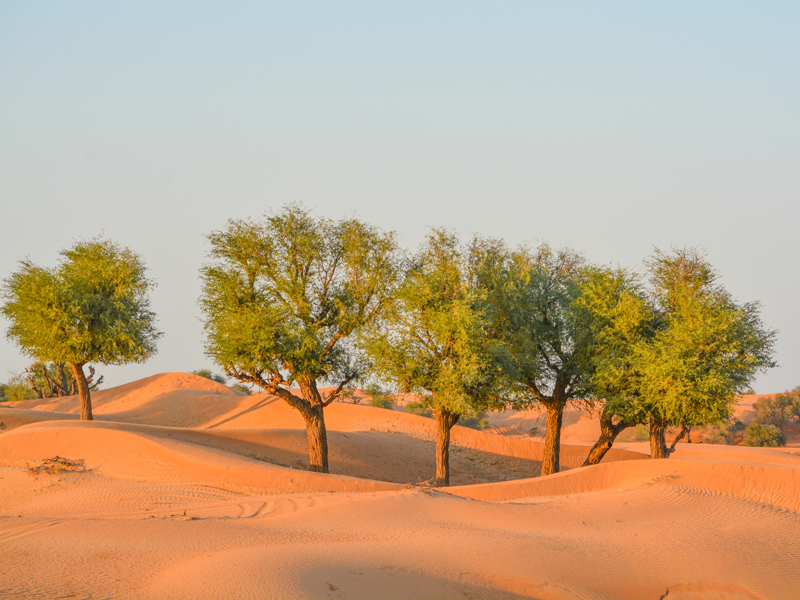
The ghaf is the national tree of the United Arab Emirates. A member of the pea family, this flowering tree can take root in the harshest conditions, where the soil is sandy and low in nutrients, where there is little rainfall and the heat shows no mercy. No wonder it is considered a symbol of tolerance.
Over centuries, the ghaf has been used for agriculture and medicine. Today, its ecological and cultural importance has inspired several schemes to promote its growth and support the UAE’s ecosystem.
Mohammed Al Yafei, acting dean of the College of Agriculture and Veterinary Medicine at the United Arab Emirates University (UAEU), says the ghaf tree project is an ambitious initiative, led by mobile car services company CAFU, to revive arid ecosystems by planting one million ghaf trees.
Zienab Ahmed, associate professor in the Department of Integrative Agriculture at UAEU and leader of the research team, explains that ghaf trees are drought-tolerant and can improve the quality of the soil and air around them. Ghaf tree roots can grow to 80 meters, and each tree absorbs up to 34.65kg of harmful carbon dioxide daily, which is released later in the form of oxygen. The trees also provide an important habitat and food source for a variety of animals and birds.
“Through this research, we tried to study different features of the seed to better understand the challenges it faces and identify the ideal conditions for growth, especially in harsh environments with limited water and poor soil nutrients,” says Ahmed.
Ahmed’s team treated the ghaf seeds and planted them in simulated desert conditions, achieving remarkable results. The ghaf seeds started germinating after three days, and the germination rate improved from 11 per cent to 83 per cent. The seeds were also more durable for storage and transport over long distances.
Ahmed is also looking for uniform germination; if the seeds germinate at the same time, consistently, then the mature ghaf trees will form a uniform green canopy that offers respite from the sun for livestock, flora and fauna. The ghaf plant is incredibly resilient. Once it takes root, it thrives on its own. Giving it a bit of support during germination goes a long way and pays off in the long run.
Ahmed’s latest approach is advancing desert reforestation through nanotechnology. She applied synthesised zinc oxide nanoparticles to the seeds and found that this treatment is a pivotal influencer in stimulating germination, increasing internal seed activities such as water uptake and nutrient absorption, and promoting enzymatic activities.
“These nanoparticles helped the seed germinate faster and enhanced nutrients in it,” says Ahmed. “Nanoparticles of essential nutrients such as zinc and iron are not only enhancing the germination but also increasing the nutritional value, antioxidant content and protein in the leaves of growing ghaf plantlets. These can be a novel function microgreen from a local plant, which is essential for human health and future food security.”
The research aims to tap into the natural power of native plants like the ghaf to tackle today’s environmental challenges and support more sustainable food systems in the UAE and beyond. Ahmed and her team aspire to unlock the hidden nutritional treasures of ghaf and pave the way for healthier and more resilient future food for nutritional security.