
Innovative research shaping the future of agriculture
Researchers at Southern Cross University are pioneering agricultural research to help farmers become more resilient in the face of climate change

Sponsored by Southern Cross University

Sponsored by

Sponsored by
Climate change is impacting global agriculture, with scientists predicting that some crop yields may decline worldwide. As growing conditions are disrupted by factors ranging from shifting rainfall to increased pest pressure, the agricultural sector has to adapt.
Southern Cross University (SCU) in Australia supports farmers in this process through research on mapping new opportunities for crops such as coffee, strengthening pollination systems and addressing biosecurity risks. This work connects regional challenges with global impact through collaborations that extend from Australia to the Pacific and beyond.
SCU is committed to promoting research that empowers communities and contributes to meaningful change. Its Harvest to Health research cluster, for example, recognises the connection between health and sustainable food production.
With the effects of climate change, the crops that are currently cultivated may not be sustainable or economically viable. “There are lots of smaller microclimates that could help [farmers] to diversify,” says Ben Liu, senior research fellow at the Faculty of Science and Engineering at SCU.
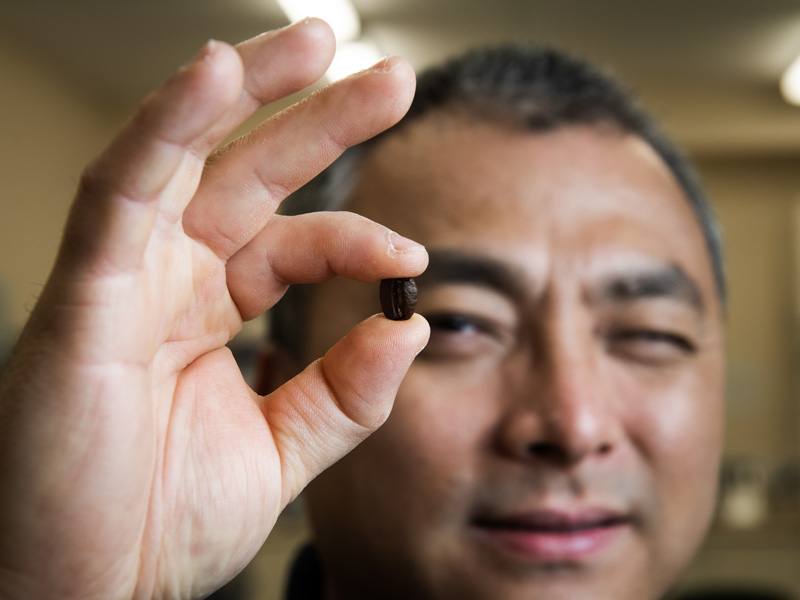
One of Liu’s projects focuses on coffee production. Less than one per cent of the coffee consumed in Australia is produced locally. However, the country has been growing coffee beans for more than 100 years, but the beans are either exported as a raw commodity or produced on small-scale farms.
His research looks at what types of coffee grow best in different parts of Australia. This can help farmers diversify their crops to focus on high-value products and potentially reduce consumers’ reliance on imports. “It is not just about research – we need to make it economically viable,” he says.
Cooper Schouten, director of SCU’s Bee Research and Extension Lab, leads a team that is working to make beekeeping and pollination-dependent horticulture more productive and sustainable. Bees are fundamental to supporting food and nutrition security, says Schouten. “We have bee research across many disciplines, including biosecurity, pest and disease management, nutrition and genetic improvement programmes.”
One project investigates Varroa mites, which are the leading cause of honey bee losses globally. Schouten and colleagues are trialling organic treatment options to combat mite infestations and exploring how to optimise them for Australian conditions. “A lot of existing research comes from climates and industry contexts that are not similar to Australia’s,” says Schouten. “Local research is vital to make informed business decisions that are based on facts. At the moment, that information at large does not exist for farmers here.”
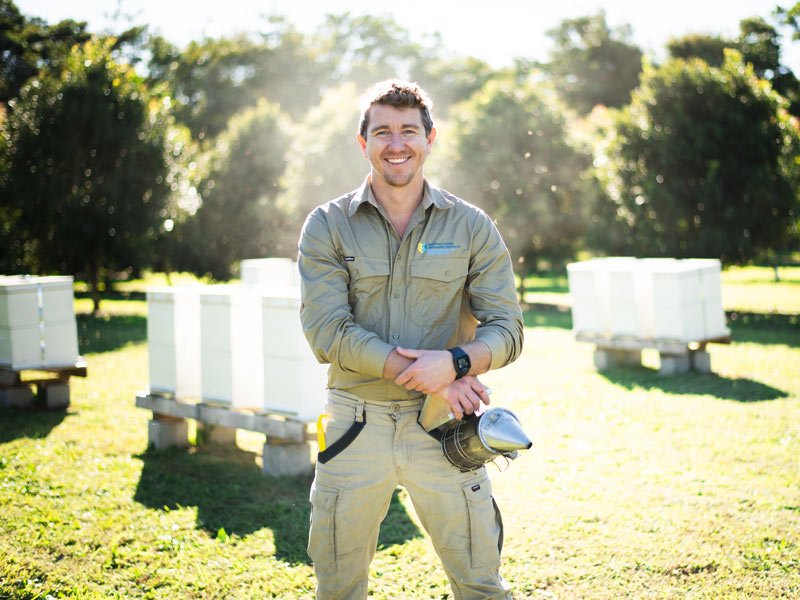
Schouten is passionate about applied research that solves problems on the ground, and partnerships with local farmers and organisations are integral to impactful research. “The relationships with the private sector in Australia underpin what we do at the university,” he says.
International collaborations are also crucial, says Schouten. He works closely in partnership with governments and beekeeping industries in countries such as Fiji, the Solomon Islands, Morocco, Ghana and Papua New Guinea. These partnerships help improve knowledge that can drive strategic beekeeping industry development with benefits to both partner countries and Australia. “That is critical for global honey bee biosecurity and capacity building,” he says. “We are not just focused on the science but also the capacity of scientists and extension professionals who can go out into the world, engage with industry, listen to what their challenges are and then work out how we can solve some of those problems together.”