
How Do Dogs Age? MUST Research Reveals Non-linear Immune Ageing Patterns and Explores Three Geroprotective Interventions
A collaborative research team led by Chair Professor Jian-Kang Zhu and Professor Yu-Xuan Lyu from the Faculty of Medicine at Macau University of Science and Technology (MUST), together with researchers from Southern University of Science and Technology, South China Agricultural University and collaborating research institutions, has published a study in the international journal Biogerontology.


Sponsored by

Sponsored by
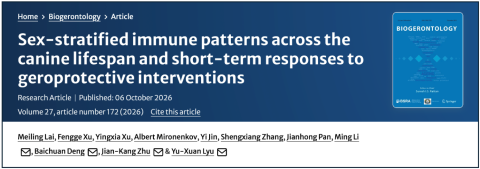
The study, entitled “Sex-stratified immune patterns across the canine lifespan and short-term responses to geroprotective interventions,” provides new insights into the complex nature of canine immune ageing.
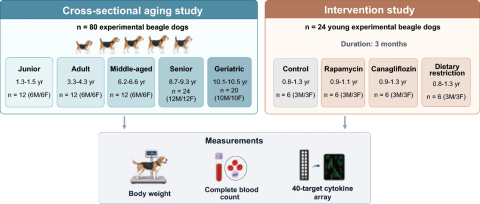
Using a highly standardised cohort of laboratory Beagles, the researchers identified non-linear, age-associated changes in immune cell populations and sex-stratified patterns in serum cytokines. The team also investigated the short-term immune responses to three potential geroprotective interventions: rapamycin, canagliflozin and dietary restriction.
The findings provide a valuable reference for future research in translational geroscience and the shared health of humans and companion animals.
Understanding Canine Ageing Through a Controlled Research Model
As companion animals, dogs share many aspects of human living environments, dietary habits and healthcare. Their ageing processes offer valuable opportunities to investigate biological mechanisms relevant to human health.
Large-scale initiatives such as the Dog Aging Project (DAP) in the United States have attracted considerable international attention. However, studies involving privately owned companion dogs must account for numerous variables, including breed differences, dietary diversity and neutering status.
To address these challenges, the research team examined immune ageing in a controlled cohort of intact laboratory Beagles, providing a more standardised framework for understanding age-associated immune changes.
Key Finding 1: Canine Immune Ageing Is Not a Linear Decline
The researchers analysed age-associated haematological and serum cytokine profiles in 80 healthy laboratory Beagles aged between one and eleven years.
The findings revealed that canine immune ageing is heterogeneous and non-linear, rather than a simple, continuous decline in immune function.
Several absolute leukocyte counts decreased with age before rising again in geriatric dogs. These stage-specific changes suggest that immune ageing involves complex biological adjustments rather than uniform deterioration.
The study also identified distinct sex-stratified patterns in serum cytokines, highlighting the importance of considering both age and sex when investigating immune ageing.
Although more cytokines showed significant age-associated variation in male dogs than in females, formal age-by-sex interactions did not remain significant after correction for multiple testing.
Together, these findings contribute to a more nuanced understanding of how the canine immune system changes throughout the lifespan.
Key Finding 2: Three Geroprotective Interventions Show Different Short-term Responses
The research team also conducted a 90-day intervention study involving 24 young Beagles to investigate the short-term responses to three potential geroprotective strategies.
Rapamycin: The broadest cytokine response
Rapamycin was associated with the broadest changes in measured serum cytokines at the end of the intervention period.
These findings suggest that rapamycin may influence multiple immune signalling pathways, providing a basis for further investigation into its potential geroprotective effects.
Canagliflozin: More targeted cytokine changes
Canagliflozin was associated with a narrower range of cytokine differences, alongside descriptive reductions in body weight.
The findings suggest that its short-term immune and metabolic responses may differ from those observed with rapamycin.
Dietary restriction: Weight reduction without measurable immune endpoint changes
Dietary restriction reduced body weight but did not produce detectable changes in the measured immune endpoints during the 90-day intervention period.
This suggests that changes in body weight do not necessarily correspond to immediate changes in circulating immune markers. Longer-term studies will be needed to assess potential effects on immune ageing.
Given the relatively small intervention groups and the use of endpoint-only cytokine measurements, these findings should be regarded as exploratory rather than conclusive evidence of anti-ageing benefits.
Advancing Translational Geroscience and Human–Animal Health
The study contributes to a growing body of research exploring dogs as valuable models for understanding biological ageing and evaluating potential geroprotective strategies.
By examining a standardised cohort of intact laboratory Beagles under controlled environmental conditions, the researchers established a useful reference for interpreting age-associated immune changes in canine populations.
The findings may also support future investigations involving companion dogs, including longitudinal studies examining immune biomarkers, biological ageing and responses to geroprotective interventions.
In addition, the preliminary intervention results provide a foundation for further research into the long-term effects of rapamycin, canagliflozin and dietary restriction.
The research highlights the potential of collaborative scientific efforts within the Guangdong–Hong Kong–Macao Greater Bay Area to advance ageing research and translational biomedical innovation.
MUST continues to strengthen its research capabilities through regional and international collaboration, with a focus on understanding the mechanisms of ageing and translating scientific discoveries into future healthcare applications.
Publication Details
Lai, M., Xu, F., Xu, Y., Mironenkov, A., Jin, Y., Zhang, S., Pan, J., Li, M., Deng, B., Zhu, JK., & Lyu, YX. Sex-stratified immune patterns across the canine lifespan and short-term responses to geroprotective interventions. Biogerontology (2026).