
Redefining research and pedagogy in the AI era
As AI reshapes the global economy, City University of Macau is revamping its pedagogical approach to create a sustainable talent pipeline for the digital era
Sponsored by City University of Macau

Sponsored by
Sponsored by
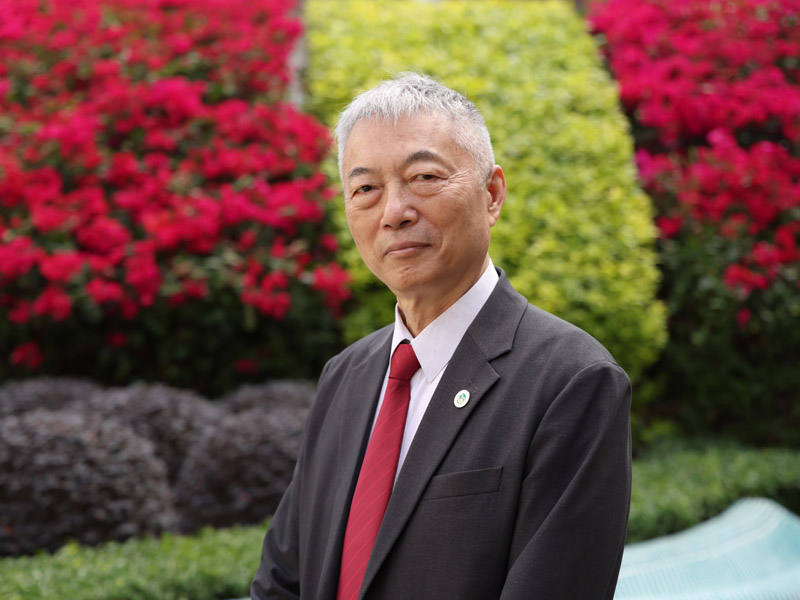
In the rapidly evolving higher education space, adopting AI and data science has become essential to improving student success and institutional impact. City University of Macau (CityU Macau) is at the forefront of this shift. Wanlei Zhou, the university’s vice-rector for academic affairs and founding dean of the Faculty of Data Science, is keen to leverage new technologies to align academic rigour with real-world application. Through its multi-pronged research approach and academic cluster model, CityU Macau is positioning itself as a hub for innovation that transcends traditional disciplinary boundaries.
“CityU Macau has adopted a clear strategic direction: using data science and AI to drive interdisciplinary development across the humanities, social sciences and natural sciences,” Zhou says. “Crucially, we prioritise the connecting of research with real-world impact through an integrated pathway of platforms, data and application scenarios.”
CityU Macau’s philosophy is rooted in the belief that technology should serve as a bridge between theory and societal impact. Rather than viewing AI as a siloed technical field, the university treats it as an enabling force for all sectors of human endeavour.
“In the digital era, we believe universities must do three things at the same time: build research capability that is application-orientated but academically rigorous; develop talent through cross-disciplinary education; and embed governance, ethics and compliance into technology,” Zhou explains.
To achieve this, the university prioritises research that addresses genuine industrial needs. It focuses on developing talent through interdisciplinary education, recognising that AI and data science are no longer isolated fields but crucial technologies for growth in sectors such as tourism, healthcare and education. It also incorporates governance and ethical matters into digital developments, which is particularly relevant for cross-border data use and privacy protection within the Greater Bay Area.
One of CityU Macau’s many recent achievements has been the exponential growth of its research ecosystem. Between 2022 and 2025, the university’s annual funding for AI-related initiatives increased tenfold. However, Zhou emphasises that its research growth is not simply the result of an increase in financial backing.
“Our research expansion is also driven by a balanced funding structure and stable investment channels,” Zhou says. “We take a dual-track approach, combining competitive public funding and industry collaboration, to support continuous investment in all relevant areas. This stability is crucial for sustaining research teams and pursuing long-term academic agendas.”
To ensure its research output translates into meaningful real-world results, CityU Macau works with platform-based research organisations. Across its campus, the university has established more than 30 joint laboratories and cooperation platforms to support collaborative projects in areas such as data security, medical AI and cross-border data governance. This model increases both the volume and relevance of the university’s output.
“With all of our research, we believe that having methods for measurable evaluation is key,” Zhou says. “CityU Macau insists that research should be testable in real environments. In high-frequency scenarios like tourism and healthcare, the university adopts evaluation methods such as A/B testing and return on investment assessments to strengthen research quality and reproducibility.”
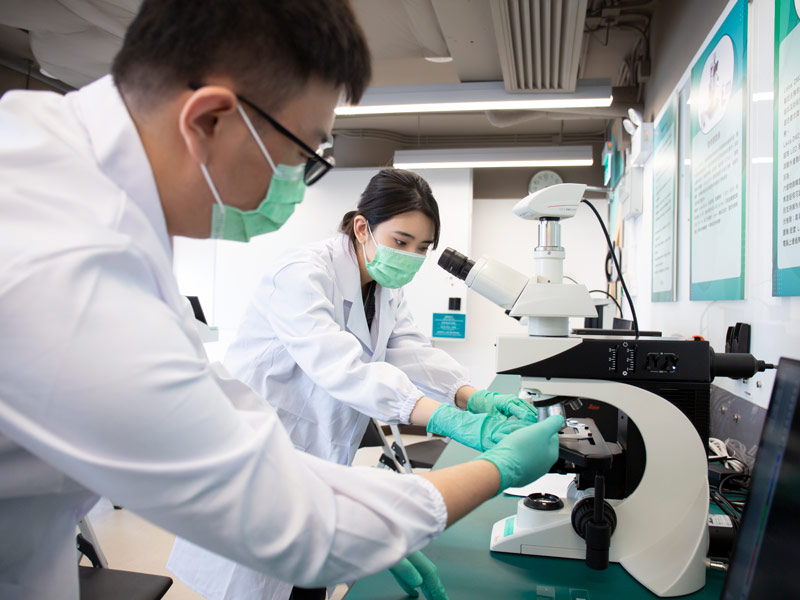
The university’s technical infrastructure plays a vital role in the growth of its research ecosystem. CityU Macau maintains a steady and elastic compute strategy, utilising on-campus medium-scale resources for routine training while collaborating with regional supercomputing platforms to manage periods of peak demand and large-scale experiments. This allows researchers to deliver results faster and more reliably.
“Such technical efforts are supported by our world-class faculty,” Zhou notes. “Crucially, 93 per cent of our staff have either learning or working experience abroad, enriching our educational environment with diverse perspectives and expertise.” Many of them are featured in the global list of top two per cent scientists, published by Stanford University and Elsevier.
With university research increasingly being viewed as a gateway to regional and sectoral growth, clustering has recently seen greater adoption as a pedagogical strategy. At CityU Macau, academic cluster construction is guided by the idea that AI and data science are foundational infrastructure for multiple disciplines. The Faculty of Data Science plays a central role as a university-wide engine for providing data governance, model training and applied research methods in fields such as healthcare, smart cities and education technology. Additionally, it acts as a geographic focal point for cross-border data governance and multilingual innovation, leveraging Macao’s unique position to link the Greater Bay Area with Portuguese-speaking countries.
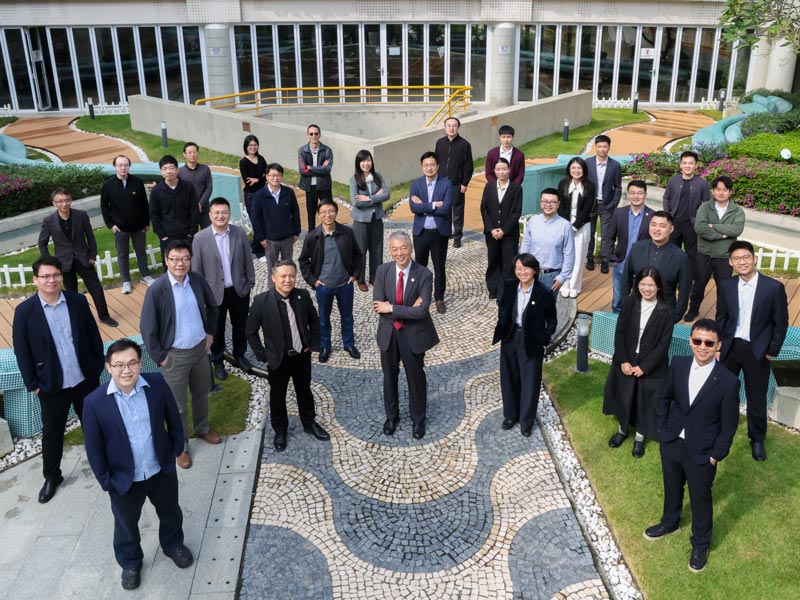
“We’re building clusters not only by recruiting scholars but also by creating a scalable pipeline where research leads to pilot deployment and eventually to full-scale transformation and iteration,” Zhou explains. “This approach ensures that academic output is not just theoretical but creates sustainable impact on the economy and society in the Greater Bay Area and beyond.”
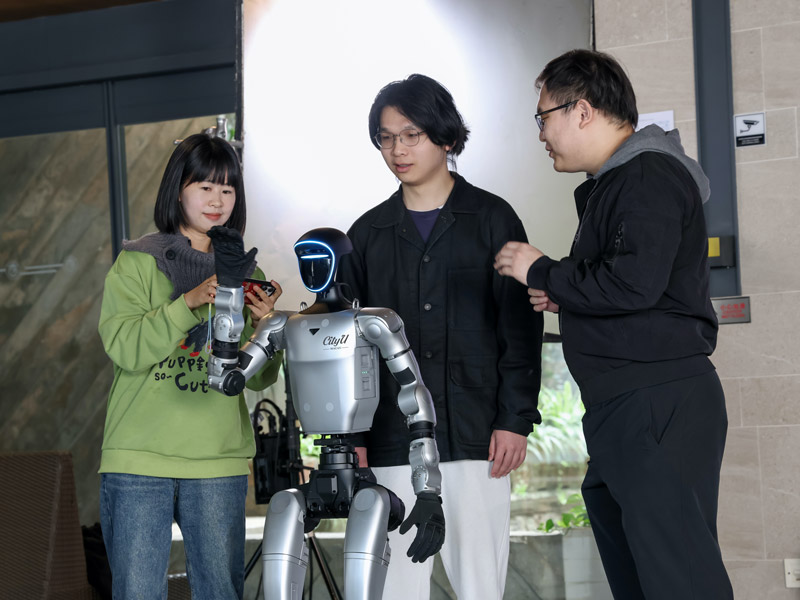
The university is strengthening a practice-based talent training model by embedding AI and data science into all its major research avenues. It has moved beyond traditional academic models to emphasise industry-linked learning. “Students benefit from gaining skills in modern AI pipelines, including model fine-tuning and deployment practices that align with current industry needs,” Zhou says. “Our interdisciplinary pathways allow them to build AI competence for diverse careers in public service, security and tourism. By working within the university’s joint labs and training bases, students transition from theoretical learners to practitioners capable of managing complex environments.”
CityU Macau has announced the launch of full AI degree programmes at the bachelor’s, master’s and doctoral levels, which combine technical capability with an understanding of local industry and cultural needs.
“We aim to improve both the quantity and quality of research outputs by investing in platforms, partnerships, evaluation systems and scalable compute collaboration, while cultivating talent through AI and data science-enabled programmes and authentic practice environments,” Zhou says. With this goal, CityU Macau is determined to remain a beacon of innovation, preparing its students to lead the AI-driven world.
Find out more about City University of Macau.