
Securing a sustainable future for the planet through innovation
The City University of Hong Kong explores innovative uses of technology in its Unesco-backed initiative to promote sustainable development
Sponsored by City University of Hong Kong

Sponsored by

Sponsored by
In the face of urgent and interconnected global challenges, collaborative initiatives are central to promoting sustainability and societal progress. City University of Hong Kong (CityUHK) is championing this cause by spearheading international initiatives that drive innovation in sustainability, social equity and quality of life.
A recent example is CityUHK’s Fostering Innovation for Resilience and Sustainable Transformation (FIRST) programme. It was designed in accordance with the United Nations (UN) International Decade of Sciences for Sustainable Development, from 2024 to 2033. Officially endorsed by Unesco, the FIRST programme will support the development of innovative technologies to drive sustainable development.
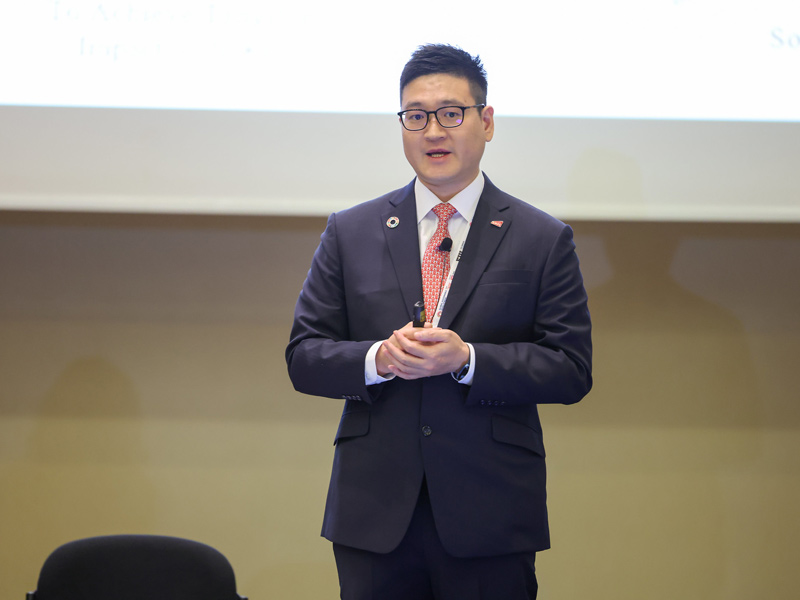
The programme has the potential to improve people’s quality of life, says Edwin Tso, associate dean of internationalisation and outreach at CityUHK. “The FIRST initiative is where hope meets action,” he said, during a session at the 2025 THE Global Sustainable Development Congress.
The FIRST programme advances four types of technologies: passive radiative cooling coatings to lower the temperatures of buildings; affordable printable solar films for generating electricity in rural areas; the conversion of waste biomass to energy for the circular economy; and a sanitation system for generating potable water.
“The first phase of the programme is to co-develop these technologies to improve the quality of life in underprivileged countries and promote sustainability,” Tso said. Everyone should be able to live comfortably, have access to affordable energy and safe drinking water.
The programme’s short-term impact will be to improve living conditions. “In the medium term, we can create jobs,” Tso said. “And in the long term, we can have a cultural shift towards sustainability, while advancing global scientific knowledge. This is not just about science – it’s about justice.” Each project is led by team members at CityUHK, alongside industry, academic and NGO partners, he added.
“The mission of the International Decade of Sciences for Sustainable Development is to engage all societal actors to further advance scientific knowledge and enhance scientific endeavour to deepen our understanding of nature and humanity,” said Lin Wang, project officer in the Natural Sciences Sector at Unesco.
In its first funding call, Unesco received more than 200 proposals from over 50 countries, showcasing strong global interest and commitment, said Wang. CityUHK’s FIRST programme was one of the 30 proposals that received an endorsement. The Unesco team will launch the second call for proposals in 2025. “We want to engage more partners to help us implement the Decade of Sciences,” Wang said.
Innovation and sustainability are at the heart of CityUHK’s strategic plan, said Anderson Shum, vice-president of research and chair professor of chemical and biomedical engineering at the university. “We want our students, staff and researchers to innovate for sustainability, and we want to collaborate with different partners beyond borders.”
CityUHK is committed to strengthening international partnerships and collaboration to scale technological solutions. “Hong Kong is uniquely positioned,” Shum said. “We are open to everywhere in the world, but we are also connected with mainland China, which has well-established supply chains and manufacturing capabilities. These are often the key towards more affordable technologies.”
The panel:
- Anderson Shum, vice-president of research and chair professor of chemical and biomedical engineering, City University of Hong Kong
- Edwin Tso, associate dean of internationalisation and outreach, City University of Hong Kong
- Lin Wang, project officer, Natural Sciences Sector, Unesco