
The role of AI in brain and heart health
AI-powered healthcare is reshaping prevention and treatment, with digital tools enabling earlier interventions, reduced costs and new models for global collaboration in cerebro-cardiovascular health

Sponsored by City University of Hong Kong

Sponsored by

Sponsored by
Kannie Chan Wai-yan, director of the Hong Kong Centre for Cerebro-Cardiovascular Health Engineering (COCHE), believes that AI and digital technology are driving a paradigm shift in healthcare models. Through preventive and personalised care, she argues, AI and digital healthcare will lead to earlier interventions and reduced medical costs.
COCHE is one of a number of InnoHK centres established within City University of Hong Kong (CityUHK), set up in conjunction with the government of the Hong Kong Special Administrative Region to develop the area as a hub for global research collaboration. It was set up in partnership with the University of Oxford in the UK and the Karolinska Institutet in Sweden, and is supported by the Innovation and Technology Commission.
Chan’s research focuses on cerebro-cardiovascular health, looking at the role AI can play in preventing diseases that have devastating effects on the brain, such as stroke and dementia. She discussed how AI can identify subtle patterns that humans might not be able to see, for example by enhancing medical imaging using algorithms to make images clearer. “AI’s ability to visualise early pathological changes can improve treatment outcomes, accelerate clinical applications and ultimately enhance patient care,” she explains.
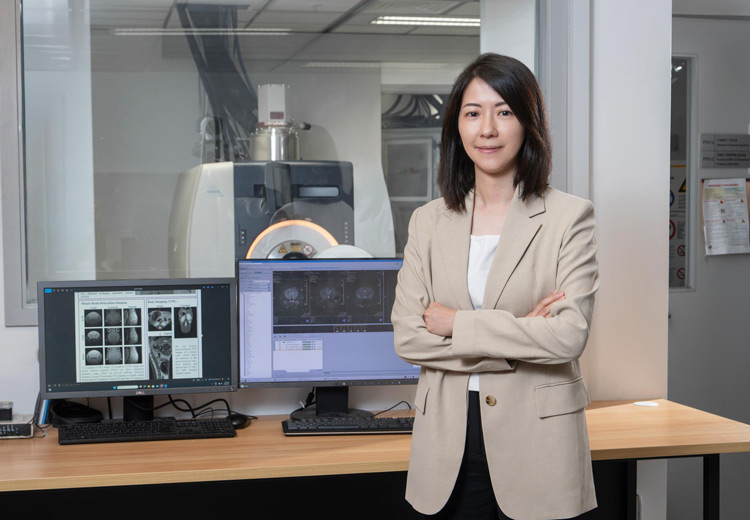
COCHE researchers are looking at a range of initiatives in this field, such as using advanced imaging technologies and point-of-care solutions to understand the relationship between cerebro-vascular and cardiovascular health. The centre also wants to raise awareness of the latest digital approaches to reshape diagnosis and treatment, advocate for proactive and integrated prevention strategies, and encourage interdisciplinary collaboration to accelerate breakthroughs in this area.
Alongside its research into cerebro-cardiovascular health, COCHE uses health engineering and advanced technologies such as wearable devices to create intelligent systems and new treatment methods for conditions such as hypertension, diabetes and clogged arteries. The data that researchers collect from these devices is transmitted for further analysis and integration with other biomarkers, potentially leading to earlier detection and diagnosis of these diseases.
The CityUHK campus recently hosted the 2025 THE Digital Health Asia event, the first time the Digital Health series has been held in Asia. The aim of the event was to highlight the importance of collaboration between governments, industry, academia and research institutions, and to explore the applications of frontier technologies and future trends in digital health.
Chan, who is also a professor of biomedical engineering at CityUHK, believes that the event supports the development of successful cross-sector partnerships, which play an important role in advancing research in this area. That success depends on a number of core elements: shared vision and goals, complementary strengths and resources, patient-centric outcomes, and sustainable health management models. By aligning these elements, she argues, academia, government and industry can “harness collective expertise” and resources to foster effective innovation in digital health and improve public health overall.
Find out more about Digital Health Asia 2025.