
Placing innovation at the heart of healthcare
The 2025 THE Digital Health Asia event, to be held in partnership with City University of Hong Kong, will showcase recent innovations in digital health and global perspectives on the future of healthcare

Sponsored by City University of Hong Kong

Sponsored by

Sponsored by
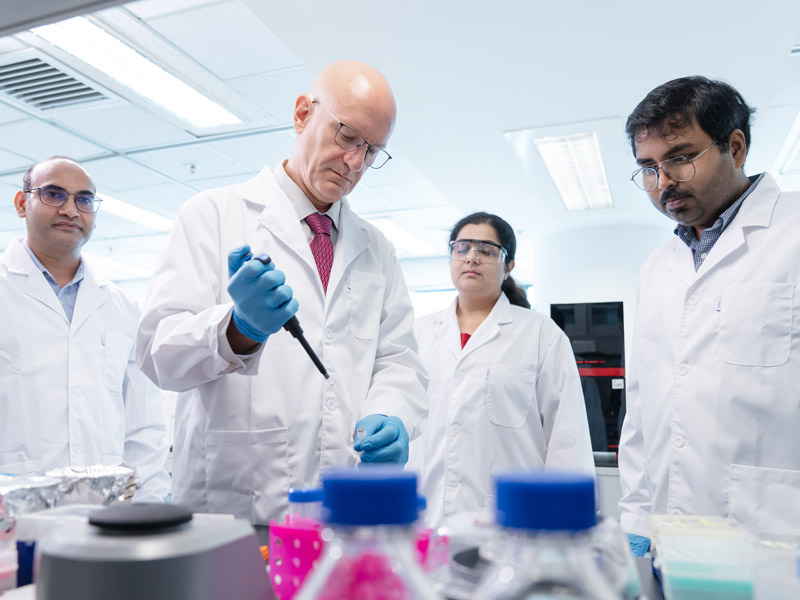
Advancing digital innovation in healthcare has long been an important objective for City University of Hong Kong (CityUHK). The university’s new College of Biomedicine, which was established in early 2025, supports this mission by driving scientific progress in disciplines such as neuroscience, digital medicine and biomedical sciences and engineering.
“The fields of life and medical sciences offer the toughest challenges and the greatest excitement,” says Isaiah Arkin, dean of CityUHK’s College of Biomedicine. “I similarly find Hong Kong incredibly exciting. It’s not just a proverbial gateway to the East – I consider it the epicentre of this region.”
Before becoming the dean of the College of Biomedicine, Arkin’s research was focused on the membrane proteins found in viruses. Given its location, Hong Kong is ideally positioned for studying infectious diseases within the international context.
“At CityUHK, we don’t distinguish between diseases from the East, West or the developing world,” Arkin says. “The fact that Hong Kong is a travel hub means that every disease is at the forefront of our work. We decided to launch the new College of Biomedicine with that in mind. The college is perfectly aligned with the university’s overarching goal of innovating into the future.”
Reflecting this ethos, the College of Biomedicine aims to channel the current confluence of two powerful elements: the seemingly endless flow of new data and cutting-edge technologies such as AI.
“At the College of Biomedicine, we can utilise these two pillars to ask questions that were unfathomable just a few years ago,” Arkin says. The college is actively pursuing interdisciplinary and international partnerships to advance innovation in biomedicine and related fields. For instance, it recently initiated a new workshop and seminar series in collaboration with the Hong Kong Institute of AI for Science.

Given the rapid pace at which the healthcare and biotechnology industries are developing, another key objective of the College of Biomedicine is to instil the concept of lifelong learning in students. Not necessarily what to think, but how to think.
“None of us truly knows what the future holds,” Arkin notes. “We must provide students with a solid background in scientific and biomedical fundamentals. They must understand that their learning doesn’t stop when they leave university. We want to encourage curiosity, critical thinking and a firm grasp of the fundamentals. Curiosity-driven research and critical analysis must be the focal points.”
CityUHK is set to host the upcoming THE Digital Health Asia event, which offers a global platform to showcase the latest developments in digital healthcare. Taking place in September 2025, the event will bring together experts and leaders from higher education, healthcare, government, technology and the pharmaceutical sector, aligning with the College of Biomedicine’s vision of collaboration and interdisciplinarity.
“My hope is that the 2025 Digital Health Asia event gets people thinking quantitatively about biomedical problems and fosters a shared language between those from the quantitative world and physicians,” Arkin says. “The ability to analyse medicine digitally is incredibly exciting. The data sets currently at our disposal, combined with new forms of thinking driven by AI, promise to advance the healthcare sector in unforeseen ways.”