
New drug combo fights flu and outperforms Tamiflu, the leading drug on the market
A new antiviral strategy presents promising progress toward more effective treatments against the flu, reports Professor Isaiah Arkin, Dean of the College of Biomedicine, City University of Hong Kong (CityUHK).


Sponsored by

Sponsored by
Prof. Arkin and his research group.
The approach led by Professor Arkin deploys a combination of theobromine (found in the cacao bean) and the chemical compound arainosine that inhibits flu, including important strains such as H1N1 swine flu and H5N1 avian flu.
“This combination significantly reduced viral replication and disease symptoms in cell and animal models, outperforming appreciably the antiviral drug oseltamivir, better known as Tamiflu,” said Professor Arkin, whose fellow researchers are from CityUHK’s Department of Biomedical Engineering and the Hebrew University of Jerusalem.
Significant to the research is the M2 protein found on the surface of the flu virus. M2 acts like a minuscule entrance that lets protons, i.e., subatomic particles, into the virus. M2’s entrance is a crucial step needed for the flu virus to spread inside the body and cause illness. This M2 gateway opens up only when the environment becomes more acidic, which happens when the virus enters a cell. Hence, blocking this channel opens up the possibility of stymying the influenza virus.
What’s more, results suggest that the influenza virus is less likely to develop resistance to this drug pair compared to existing antivirals, which represents a major advance against evolving flu strains, added Professor Arkin.
“Our approach delivers a strong candidate for clinical development and offers a blueprint for discovering antivirals against other viruses, representing a significant leap toward more durable, effective flu treatments,” said Professor Arkin.
Looking to the future, broader applications could help to develop treatments for other viruses with similar gateway vulnerabilities.
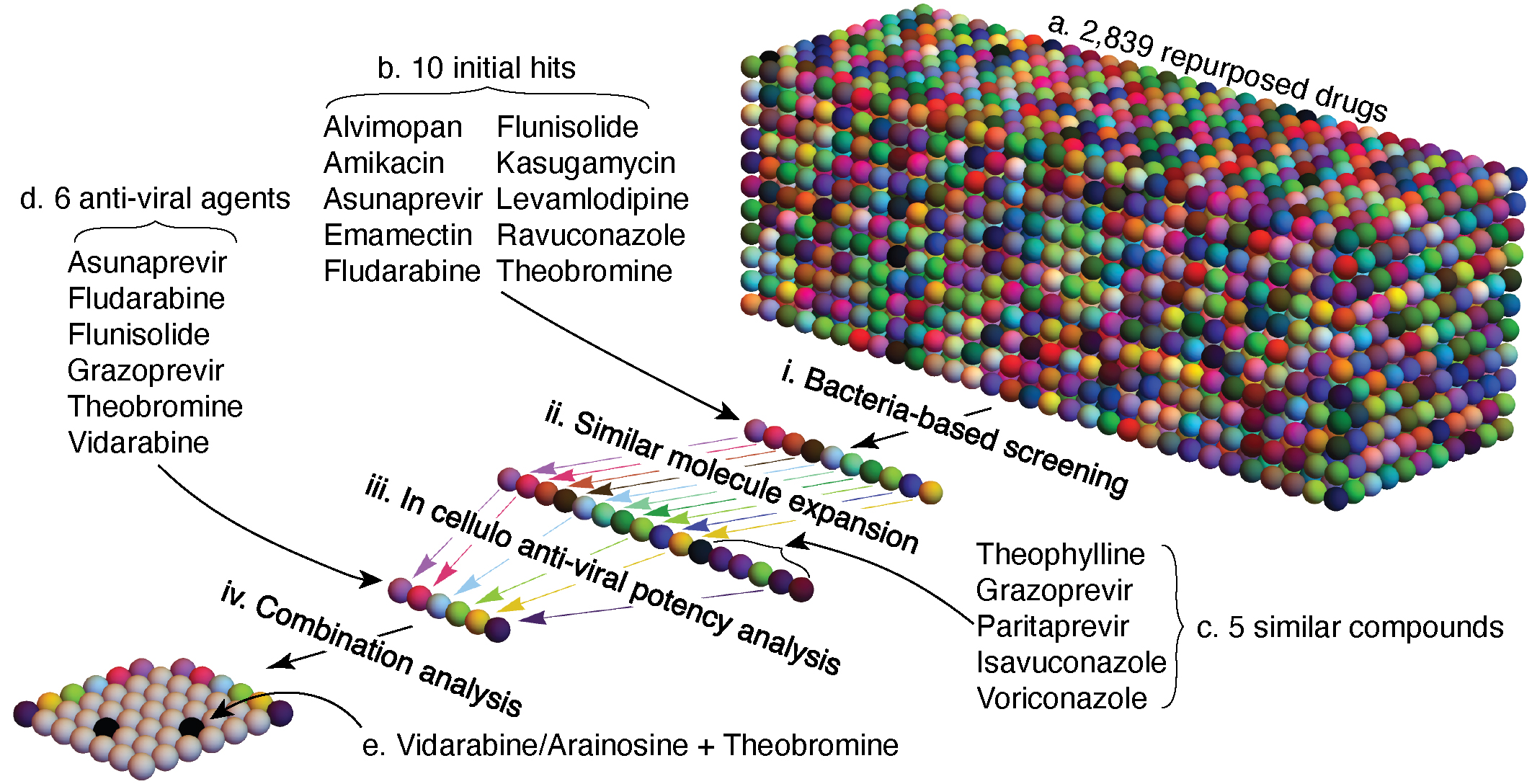
Systematic approach for anti-influenza agents yielding the theobromine and arainosine drug duo: i. A repurposed drug library of 2,839 compounds (a) was screened with bacteria-based assays to yield ten hits (b). ii. Five additional compounds (c) were found based on their similarity to the ten hits from the previous stage (b). iii. In cellulo testing demonstrated that six compounds (d) exhibit anti-viral activity out of the 15 expanded hits (b+c). iv. One pair of compounds exhibits remarkable anti-viral synergism from combination studies in tissue culture.
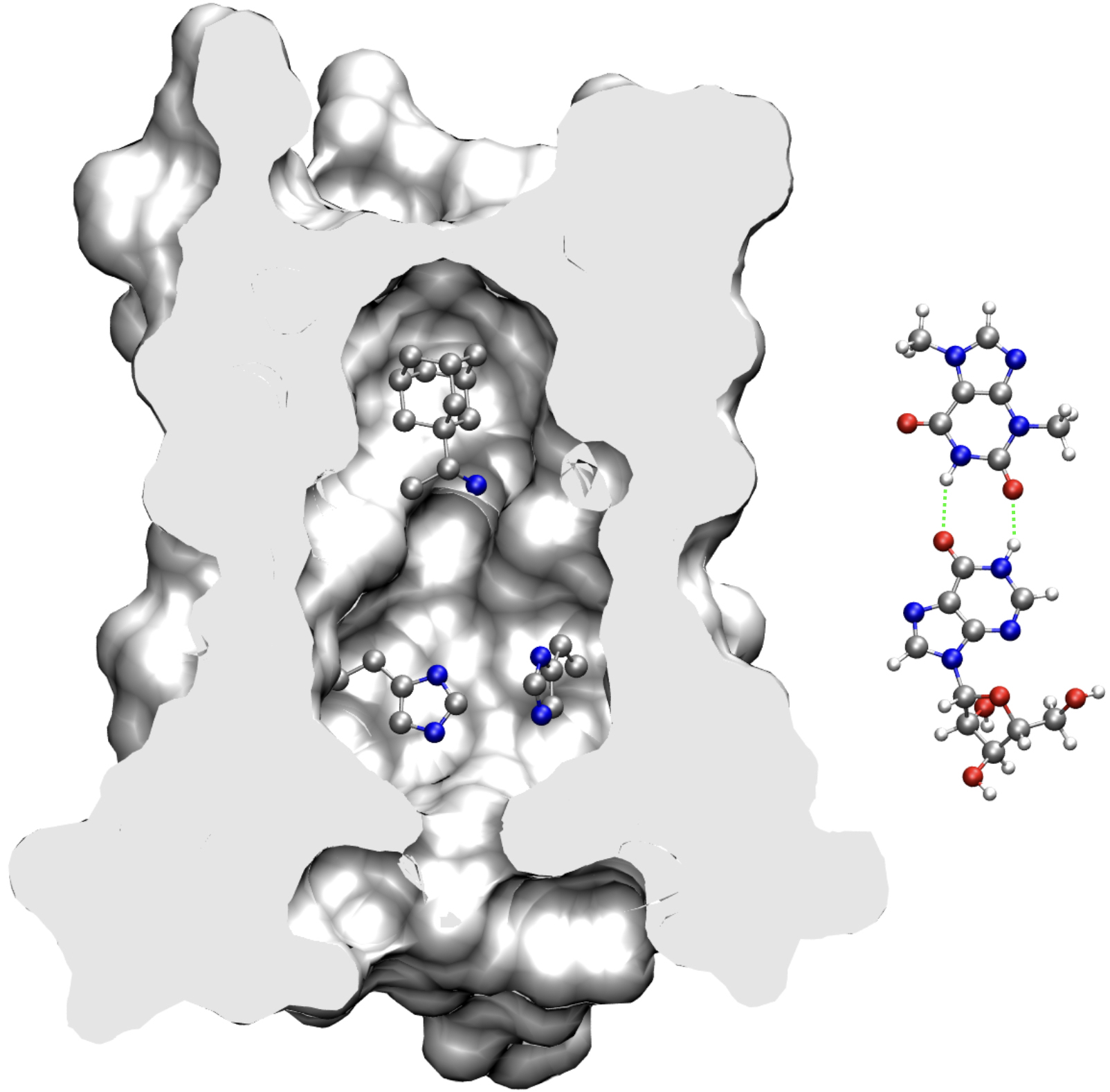
Proposed mechanism for inhibition of the arainosine-theobromine drug duo. The structure of the viral ion channel bound to rimantadine (flumadine®) is sliced in the middle to depict the channel’s pore and drug binding site. Components in the channel that are important for channel activity are depicted in ball-and-stick alongside rimantadine. Theobromine (Top) and arainosine (Bottom) are shown on the Right with proposed hydrogen bonding in green.