
Fire-repelling foam could save lives and upcycle waste
City University of Hong Kong researchers have partnered with collaborators in Latvia to develop new, safer and more sustainable polyurethane foam

Sponsored by City University of Hong Kong

Sponsored by

Sponsored by
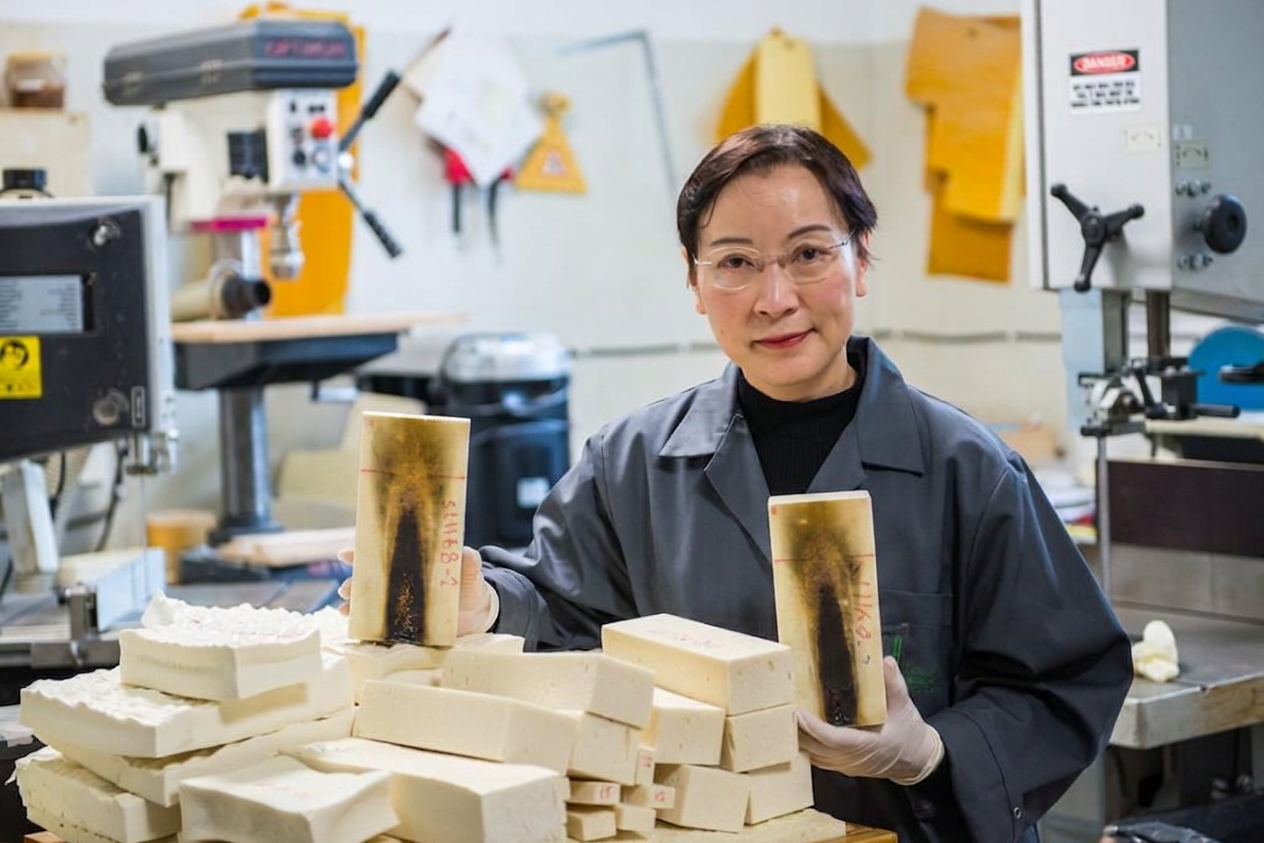
City University of Hong Kong (CityUHK) researchers are developing flame-retardant foams from renewable resources, an innovation that can save people’s lives and upcycle waste.
“This advancement in sustainable construction and building materials aligns with global sustainability goals and supports Hong Kong’s initiatives for green construction and enhanced building safety,” says Carol Sze Ki Lin, a professor in the School of Energy and Environment at CityUHK.
Lin’s work focuses on developing circular biorefineries that use waste, such as food waste and agricultural biomass, to make new products. These products include sustainable aviation fuel, bioplastics and novel functional ingredients and sustainable proteins. “Current biorefineries often struggle with high raw-material costs and immature processing technologies,” she explains. Her research aims to address these challenges.
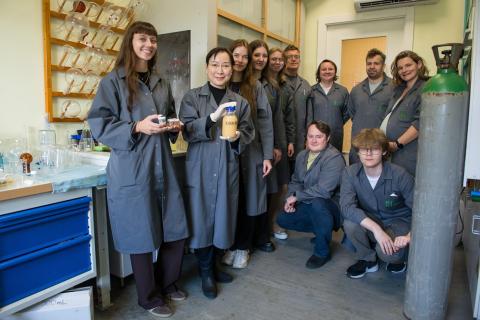
Lin is one of seven CityUHK researchers who have been awarded the Research Grants Council of Hong Kong’s inaugural Overseas Research Fellowship Scheme. She is currently visiting the Latvian State Institute of Wood Chemistry, where she is collaborating with scientists to develop sustainable, fire-safe polyurethane foam derived from natural sources.
Conventional polyurethane foams are used extensively in construction, for example, in building insulation and structural cores. They are also inherently flammable. The presence of polystyrene foam exacerbated the tragic Wang Fuk Court fire in Hong Kong in November 2025, she says. Also, when they burn, these foams produce toxic gases, such as hydrogen cyanide and carbon monoxide.
At the same time, food waste is a major source of greenhouse gas emissions. “By transforming food waste into sustainable, fire-retardant polyurethane foams, we support Hong Kong’s 2050 carbon neutrality goals, while directly responding to new, stringent mandates for fire-safe construction materials,” she says.
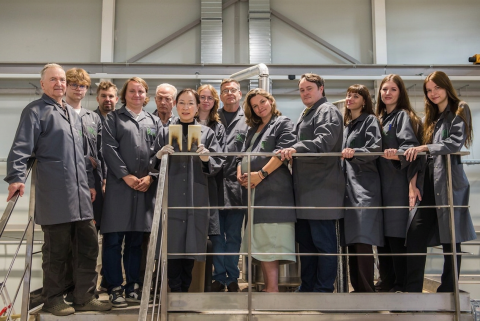
Lin and her group are now moving from laboratory synthesis to commercial viability. “Through our collaboration with the Latvian State Institute of Wood Chemistry, we are using their pilot-scale facilities to upscale our processes,” she says. “We are also conducting comprehensive techno-economic evaluations and lifecycle assessments.”
They are engaging with industry leaders in the Baltic states and pursuing industrial partnerships in Hong Kong and the Greater Bay Area. That way, “we aim to deploy these fire-safe polyurethane foams in real-world construction projects to gather immediate performance feedback”, she says.
CityUHK’s engagement with the Latvian institute goes beyond the use of their facilities. Interdisciplinarity is a cornerstone of Lin’s research, and developing sustainable, fire-safe materials requires environmental engineering, polymer chemistry and fire-safety engineering.
“Our work relies heavily on our long-term collaboration with the Latvian State Institute of Wood Chemistry, a globally recognised authority on polyurethane chemistry,” she says. “By combining our expertise in waste valorisation at CityUHK with their state-of-the-art pilot facilities and advanced fire testing capabilities, we can achieve breakthroughs that neither institution could accomplish alone.”
In the next decade, Lin expects that there will be an increased focus on chemical circularity and industrial scalability. “Ultimately, my research team aims to design new polyurethane backbones specifically optimised for high-yield depolymerisation, ensuring our sustainable, fire-safe materials are both economically viable and fully integrated into a global circular bioeconomy,” she says.