
Digital Health Asia 2025 spotlights interdisciplinarity and partnerships
Driving breakthroughs in digital health requires interdisciplinary collaboration and global partnerships

Sponsored by City University of Hong Kong

Sponsored by

Sponsored by
Digital health technologies are advancing rapidly and are changing the way that healthcare is delivered around the world. Recent developments in AI, remote monitoring and personalised medicine are driving a shift in the way diseases are monitored, diagnosed and treated.
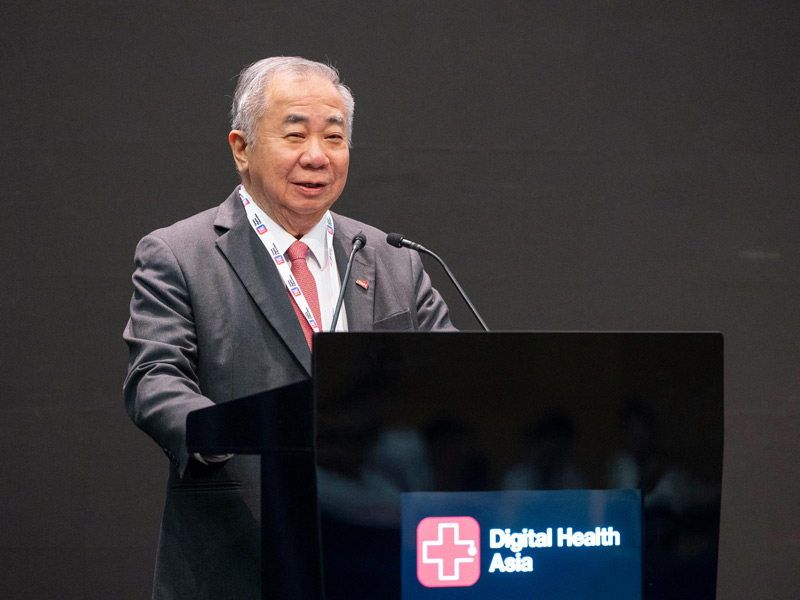
Innovative digital technologies and data analysis can empower the healthcare industry to better predict and respond to diseases, said Michael Yang, senior vice-president for innovation and enterprise at City University of Hong Kong (CityUHK), at the 2025 THE Digital Health Asia event. However, to take advantage of their potential, digital health must be patient-centric and promote personalised treatment using technology, he said.
Held in September 2025, the event was organised by THE in partnership with CityUHK and its Institute of Digital Medicine. It was the first event in THE’s Digital Health Series to take place in Asia, attracting over 400 delegates from different parts of the world.
Digital Health Asia 2025 offered a timely platform for exchanging ideas and best practice to address urgent healthcare challenges globally. The event featured more than 50 expert speakers from across the world, representing academia, industry, government and non-governmental organisations. The sessions explored the future of digital health, spotlighting three major areas: AI and health data, biotechnology and digital health, and collaboration and commercialisation.
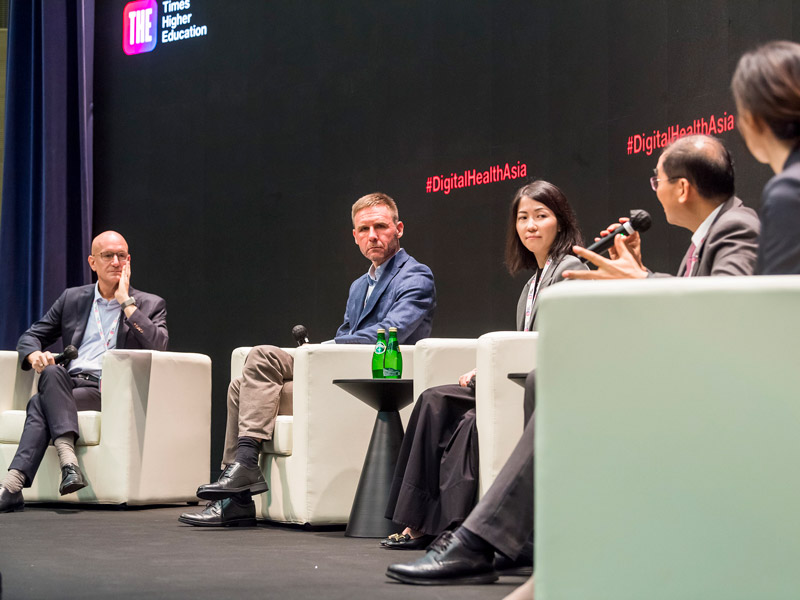
The panel discussions ranged from the role of lifestyle in disease prediction and health outcomes to how digital tools can improve well-being in ageing populations. Some sessions showcased cutting-edge digital health technologies. Notable examples included body-integrated wireless technologies to monitor patient health, developed by researchers at Northwestern University in the US, and an award-winning virtual reality platform from the University of Cambridge in the UK that helps address public-speaking anxiety.
Nine start-ups incubated by CityUHK’s flagship innovation and entrepreneurship programme, HK Tech 300, displayed their digital healthcare products and technologies in the exhibition area at the summit.
Digital Health Asia 2025 also featured cultural activities, student performances and networking opportunities designed to promote connections and collaboration among participants.
One of the key themes of the event was the importance of interdisciplinarity and partnerships in advancing healthcare. “Digital Health Asia 2025 was more than just a conference,” said Freddy Boey, president of CityUHK. “It was a celebration of the spirit of collaboration.”
Mei Mei Lim, president of the APAC region at THE, emphasised the importance of collaboration and idea sharing. “Interdisciplinary collaboration and innovative thinking will be key to the future of healthcare development,” she said. “This summit provides an ideal platform for promoting global dialogue and cooperation.”
In a keynote address, Mark Welland, deputy vice-chancellor at the University of Cambridge, emphasised the role of universities in supporting technological innovation and tackling global challenges. He said that innovation needs cross-disciplinary collaboration with experts from diverse fields.