
Defending marine ecosystems and human health
Researchers at City University of Hong Kong have carried out two crucial studies into marine life and its interaction with everyday chemicals and toxins

Sponsored by City University of Hong Kong

Sponsored by

Sponsored by
City University of Hong Kong (CityUHK) has made a number of important discoveries in its scientific research into marine ecosystems and human health. In two key studies, teams from CityUHK collaborated with other researchers to identify risks to marine animals from exposure to chemical and electronic waste.
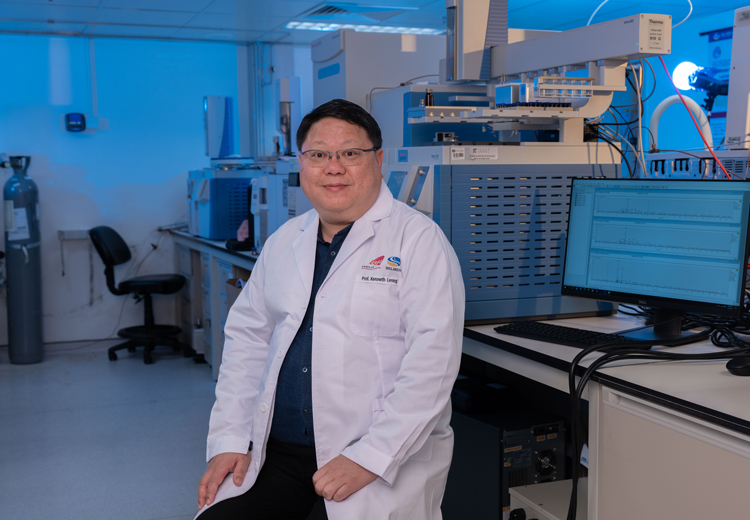
Kenneth Leung Mei Yee, chair professor of the Department of Chemistry and associate dean of the College of Science at CityUHK, worked with academics from the School of Environmental Science and Engineering at Southern University of Science and Technology on a study of human exposure to perfluoroalkyl and polyfluoroalkyl substances (PFAS) from eating imported fish such as salmon, tuna, swordfish and cod.
The team compiled seawater‑monitoring data from 3,126 locations worldwide over the past 20 years and used marine food‑web models to analyse PFAS concentrations in 212 edible fish species. They also analysed fisheries and trade data from 33 countries alongside the estimated intake of different species. High-risk contaminated species were most likely to be sourced from Europe. But even in low-contamination areas, consumers could still be exposed to risk through cross-border transfers.
“The major breakthrough of this work is the development of a robust food-web-based model to predict the tissue concentration in various marine fish species from seawater concentrations of PFAS, allowing exposure analysis and risk assessment of these forever chemicals for safeguarding our health. Such a model can be applied to assessing the risk of other chemical contaminants worldwide,” Leung explains. Often found in products such as non-stick cookware or waterproof clothing, PFAS are slow to degrade and accumulate in organisms, gradually moving up the food chain and posing risks to human health.
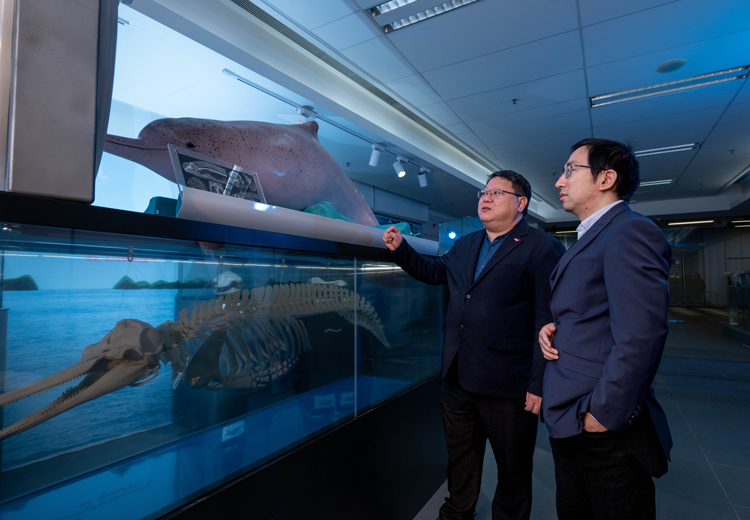
A second piece of research examined how liquid crystal monomers (LCMs) from household electronics and electronic waste can bioaccumulate in marine life, including endangered Indo-Pacific humpback dolphins and finless porpoises. Led by Leung and colleagues from the State Key Laboratory of Marine Environment Health at CityUHK and Shantou University in China, the team investigated how these pollutants, used in the manufacture of smartphones and other devices, ended up in marine animal tissue.
Yuhe He, associate professor in the School of Energy and Environment and assistant director of the State Key Laboratory of Marine Environment Health, adds: “This study is a wake-up call. The substances powering our daily-use e-devices are now infiltrating marine life. We must act now on e-waste to protect ocean health and, ultimately, ourselves.”
The study found evidence of the presence of LCMs in the brains of wild mammals, as well as in blubber, muscle, liver and kidney tissue. Several LCMs impaired gene expression associated with DNA damage, while some compounds suppressed cell proliferation and interfered with DNA replication. “It is quite shocking to know the contamination of LCMs in tissues of dolphins and porpoises, and the potential health risks to these beautiful creatures as well as humans,” Leung says. “To rectify the problem, we are currently using AI and cell-based toxicity tests to identify harmful LCM compounds. The results will inform the industry to phase out the harmful LCMs and keep the safe ones, eventually making our oceans safer for marine life and us.”