
Developing the first drug for multi-organ radiation protection
A pharmaceutical breakthrough at Adelaide University is showing promise in both multi-organ radiation protection and cancer treatment.

Sponsored by

Sponsored by
Radiation plays a crucial role in a number of fields; it’s vital for killing cancer cells in current cancer treatments, propelling nuclear-powered military submarines and electricity grids, and more. However, radiation carries risks. Overexposure can lead to radiation poisoning, triggering severe symptoms and conditions such as causing cancers, cognitive impairments, and fatal multi-organ failure (bone marrow, lung, intestines, heart). In Australia, workers including uranium miners, our military personnel, emergency service professionals, and astronauts are all vulnerable to radiation poisoning. To mitigate its adverse effects, Adelaide University researchers have made great strides towards a world first: a multi-organ anti-radiation drug.
Researchers at the South Australian immunoGENomics Cancer Institute (SAiGENCI) are working to develop and manufacture SAi001, the world’s first broad-spectrum pharmaceutical radiation protectant, and to develop its key ingredient as an anticancer drug.
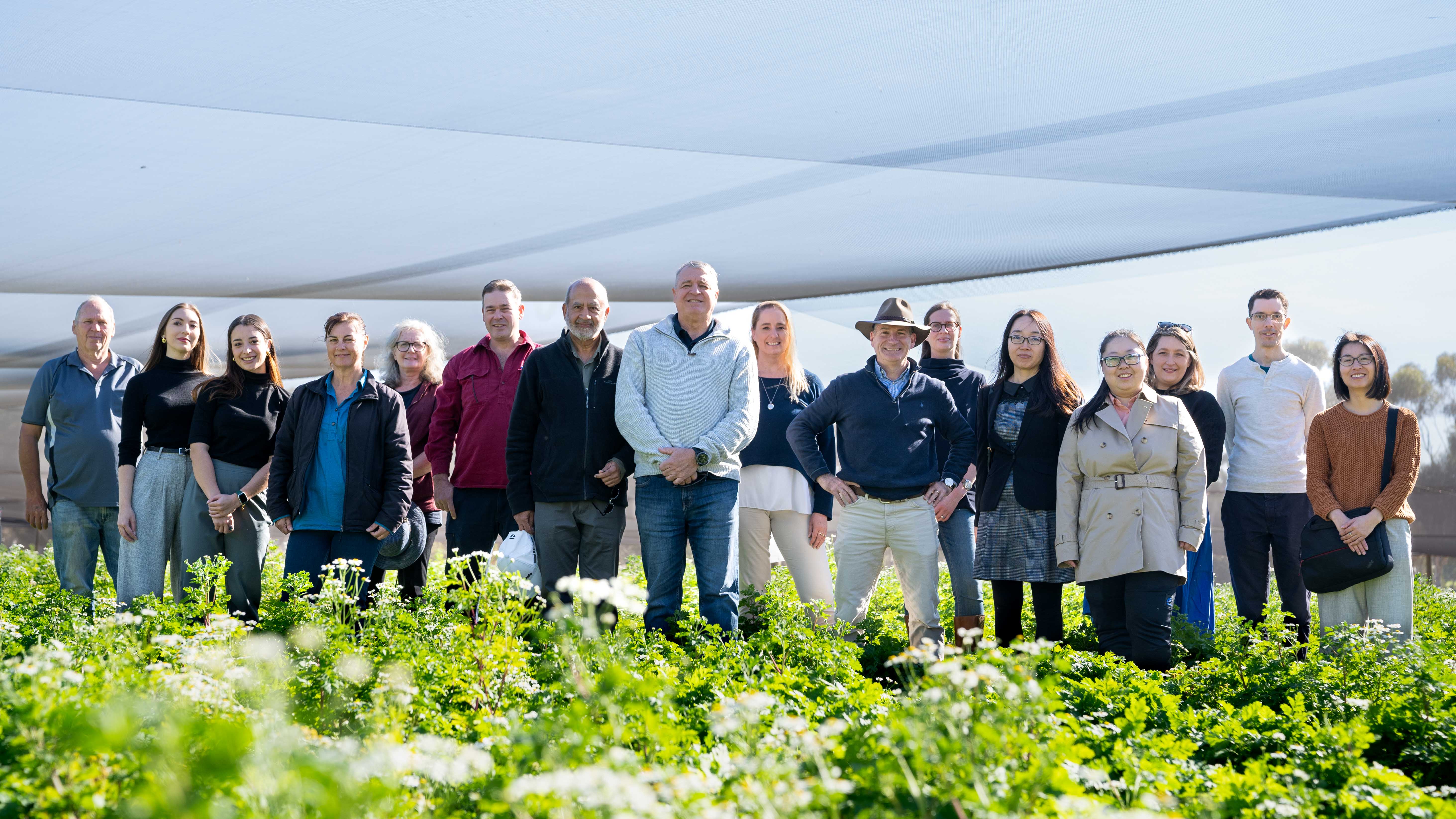
“This project has a strong potential for success and will directly facilitate the development of a commercially viable, regulatory-approved radioprotective pharmaceutical as well as a new anti-cancer agent,” says Professor Christopher Sweeney, who leads the SAi001 development team including Dr Agnieszka Kumorkiewicz-Jamro, Dr Katherine Morel, and Professor ChunXia Zhao.
Current post-exposure mitigant drugs aid exclusively in the recovery of bone marrow, offering no protection to the central nervous system, gastrointestinal tract, or other body systems impacted by radiation. SAi001 aims to change this.
“SAi001 has the potential to offer durable, multi-organ protection without causing cumulative or irreversible toxicity,” Professor Sweeney says.
In fact, it has already seen success toward this goal, with mouse studies showing the drug protects critical organs such as the lungs, intestines, bladder, and testicles from the harmful effect of radiation. This can be useful both in clinical radiotherapy protocols and for military applications; the SAiGENCI researchers are working with the university’s Defence and Security Institute to support Australian Defence Force personnel operating in radiological, nuclear, and outer space environments.
“SAi001 also addresses a crucial unmet need by providing protection against the harmful effects of high-energy cosmic radiation for astronauts on long-duration space missions, such as NASA’s ‘Moon to Mars’ initiative,” says Professor Sweeney.
“It has the potential to reduce mortality and morbidity while improving short-term operational readiness and long-term redeployment potential.”
SAi001’s multi-purpose, multi-organ success is made possible because of its plant-derived active pharmaceutical ingredient (API), which exhibits radiation protection effects while also having anti-tumour and anti-inflammatory activities.
“The API of SAi001 is regarded as the first small molecule that can selectively kill cancer cells while simultaneously protecting neighbouring normal cells from the adverse effects of radiation in radiotherapy,” Professor Sweeney says.
Yet another benefit of this novel drug? It’s easy to use, as it’s administered orally.
“It’s easy to administer, and retains its effectiveness in biological assays over years and has a long shelf life of two years,” Professor Sweeney says. “SAi001 achieves many complex feats––yet it’s delivery system is simple.”
Professor Sweeney and his team are working on advancing SAi001 studies from the animal phase to the human phase while simultaneously developing manufacturing processes with industry partners to allow for rapid commercialisation.
This research is part of a university-wide collaboration called “The Daisy Project”, a multi-stage initiative aiming to accelerate the journey of this vital drug to market. Supported by funds from the Australia’s Economic Accelerator, Seed Grants program and the Defence Innovation Partnership’s Collaborative Research Fund, the initiative looks set to deliver the world its next medical milestone.
The next stage for Sweeney and his team is a second drug, which is predicted to be a ground-breaking cancer treatment that could help patients with metastatic cancers, including breast, prostate, and lung cancer as well as haematological cancers like lymphomas and leukemias.
As an Australian project, it also has enormous export potential. From the financial, to the dangerous arenas of military work, and all the way to Mars, this innovative medical breakthrough shows incredible promise.