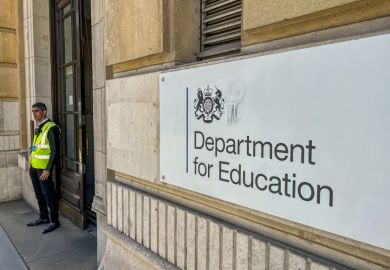
Former education secretary Bridget Phillipson was initially concerned about forcing students on weekend-only courses to repay their maintenance loans but went ahead following advice from civil servants, according to court documents.
A group of five English universities have launched a legal challenge against Phillipson and the Student Loans Company (SLC) over the decision to remove funding for weekend courses, with a two-day judicial review hearing beginning on 28 July.
The legal team representing the claimants – Bath Spa University, Buckinghamshire New University, Leeds Trinity University, London Metropolitan University and Southampton Solent University – argue that Phillipson’s decision to halt funding for students on weekend-only courses was “unlawful” as she had erroneously interpreted the regulations relating to which students are eligible for maintenance loans.
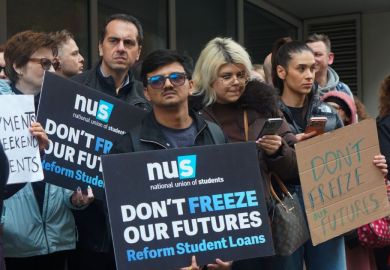
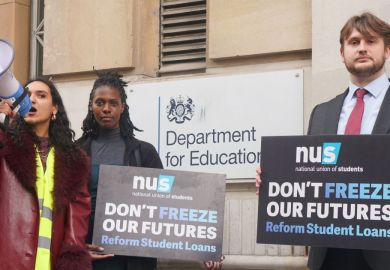
In April, about 22,000 students were informed their maintenance loans and childcare grants issued by the SLC had been halted and they would have to repay the money they had already received immediately, despite being part-way through their studies.
The government eventually partially reversed its position and said students could repay through the normal processes, but maintained that any future students on weekend courses would not be eligible for the funding.
The 2011 regulations at the heart of the ongoing legal challenge state that students on distance learning courses are not generally eligible for maintenance loans or grants.
The government argues that the regulations stipulate that weekend study, even on university campuses, does not fulfil the attendance requirements required for a course to be classified as in-person.
However the claimants say the definition is unclear and cannot be taken literally. They argue that students who are regularly attending a university campus should not be viewed as undertaking distance learning.
“The secretary of state’s conclusion that all weekend attendance courses are automatically distance learning courses is wrong in law,” documents prepared by the claimants say.
After years of students on weekend courses receiving loans, the issue of whether they should be eligible for these payments appears to have first come to the government’s attention after the Open University questioned skills minister Jacqui Smith about why its students could not access maintenance loans.
The SLC and Department for Education (DfE) then began to send communications to higher education providers about “regulatory ambiguity” related to eligibility for maintenance support.
According to the claimants, communications shared by the DfE recognised that excluding weekend courses from maintenance loan access was “not in keeping” with the aims of the incoming lifelong learning entitlement and noted that students studying in the evening were entitled to maintenance loans.
Phillipson later received submissions from civil servants about ways to curb abuse in the franchise system, which appear to have prompted her to write a letter to higher education providers in December 2025 stating that weekend-only students were not eligible for loans.
“The claimants were surprised by this paragraph, which did not identify any legal basis for the assertion, and queried this with the SLC to seek to understand what this meant for their students and courses,” the legal documents state.
In February 2026, Phillipson was then briefed on “irregular” student finance payments linked to weekend-only course provision.
According to the legal documents, “the minister expressed concern about stopping maintenance support for students mid-year without warning”. She later reiterated concerns about the impact of the recommendations made by DfE officials, including forcing recipients to pay back their loans, on genuine students.
Phillipson eventually agreed to pursue the recommended options, although she took advice on how to manage the impact on individual students.
Evidence shared with the court suggests the government later identified a “second tranche” of providers who had also classified weekend attendance courses as in-person courses, but the claimants’ lawyers argued that these institutions had been treated “very differently” to the original group.
According to the documents, funding for their students was not halted immediately and the government has agreed to “explore options” with those providers for ceasing payments.
The universities’ legal team also argue the SLC acted unlawfully by failing to restore funding to the affected students once the government’s decision was reversed.
They said the SLC “wrongly” claimed that it has reinstated funding for all affected students while in reality leaving “certain” students without this money for three and a half months.
The government is expected to argue that the permission to apply for judicial review should be rejected as the universities’ claim was made too late. A judgment in the case is expected at a later date.
The DfE was contacted for comment.
Register to continue
Why register?
- Registration is free and only takes a moment
- Once registered, you can read 3 articles a month
- Sign up for our newsletter
Subscribe
Or subscribe for unlimited access to:
- Unlimited access to news, views, insights & reviews
- Digital editions
- Digital access to THE’s university and college rankings analysis
Already registered or a current subscriber?