The UK government might have backtracked on its decision to force weekend-only students to begin paying back their maintenance loans immediately but the incident has fuelled mistrust in the already controversial student loan system and cast doubt over the future of flexible learning, according to those involved.
Government officials announced in Parliament last week that they would no longer expect students who had received the loans “in error” to repay them immediately and that ministers had asked the Student Loans Company to collect overpayments through normal student finance repayments.
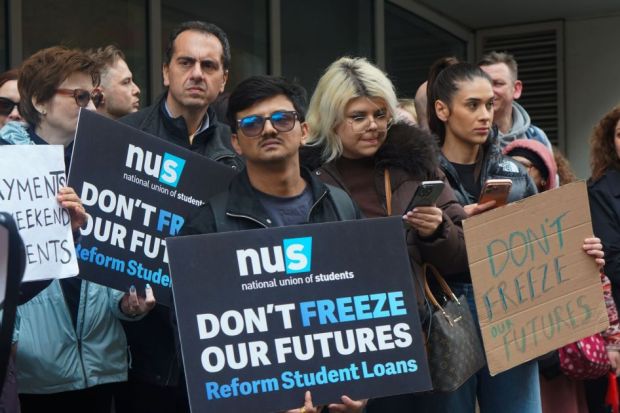
The U-turn followed significant media attention and pressure from campaigners, including a petition by the National Union of Students (NUS) that garnered over 13,000 signatures.
Although the decision came as a “huge relief” to the 22,000 students who had been told to pay back their loans, many could still be forced to drop out as future loan payments remain blocked, and “it doesn't fix the issue of what the future of weekend courses looks like”, according to NUS president Amira Campbell.
Universities continue to argue that, for years, students on weekend courses have been receiving maintenance loans without any issues.
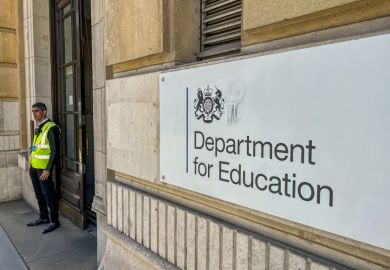
The problems began in December, when education secretary Bridget Phillipson sent a letter to providers explicitly stating that students “whose attendance is limited solely to weekends will not meet the criteria”.
Universities then entered into discussions with the Department for Education (DfE) about this, attempting to clarify the rules, which they say were unclear.
“If the regulations are as clear as is claimed, why did the student loans company change their guidance in December 2025?” asked Georgina Andrews, vice-chancellor of Bath Spa University.
“Universities acted in good faith since 2011, following guidance provided by the Student Loans Company, which is owned by the government, with no indication that weekend study made students ineligible for support.”
While these discussions continued, a group of universities received another letter saying that the DfE “has no legal authority to allow further irregular payments to be made and must also seek to recover previous irregular payments made” – meaning that students on weekend courses would no longer receive maintenance loans and would have to start paying them back long before they expected to.
“There are questions about why the decision was taken at all,” said Rachel Hewitt, chief executive at MillionPlus, noting that weekend courses were only ineligible for the funding because they are classed as distance learning, despite much of the teaching taking place on campus. “But also why it’s been done in a way which has had such a significant impact on students’ lives.”
Although the DfE claimed that legal requirements meant it had to collect the payments, the education secretary also has discretion over how those regulations are applied – allowing the government to later change its mind.
“They definitely came out swinging and they definitely came out far too hastily on this,” said Campbell.
In statements to the media, Phillipson accused providers of “incompetence” and “abuse of the system”. With the majority of the affected students enrolled with franchise providers, she linked the incident to evidence in recent years of the abuse of the student loan system within the franchise sector.
But Hewitt suggested that the government had not provided any evidence to suggest there was purposeful abuse in this case. If there was, she said there should be “targeted tackling of those issues where they’ve arisen, rather than a blanket approach which seems to have really damaged a lot of real students’ lives”.
A source at one affected university said the DfE initially viewed the issue as a “potential indicator of wider sector concerns” but “subsequent review, including engagement with student petitions and complaints, confirmed the students involved were genuine, leading the department to soften its earlier position”.
“We also believe they’ve acknowledged that there is no evidence of fraudulent activity,” they said.
As the government and universities continued to blame one another, students were left paying the price, said Campbell.
It is “incredibly frustrating, incredibly confusing to be in a situation where government and universities point at each other back and forth, and no one can identify who is at fault and make a decision about who should hold responsibility,” she said. “With the way that the system’s designed, it always ends up being the student.”
And while the government may have backed down on its initial stance, the issue is far from over for the students involved. The repayment of childcare grants has only been paused until “at least September” and students who have not transferred to weekday courses will remain ineligible for future loans.
“We are concerned that the government’s actions continue to unfairly disadvantage students who choose to pursue higher education through non‑traditional routes,” said James Knowles, vice-chancellor of Southampton Solent University.
“The Student Loans Company does not appear to be adequately equipped to deliver on the government’s requirements, and the resulting confusion has been exacerbated by inconsistent and chaotic communication with both students and universities.”
One student told Times Higher Education they had received an email from Student Finance England on 24 April confirming the changes to the repayments and promising to restart the payment of maintenance loans from May for students who have transferred to weekday teaching.
Speaking anonymously, the student said the hardship payment they had been offered by their university – £400 for those with children and £200 for those without – was not enough, given many students have had to cut down their working hours in order to switch to weekday classes.
The student said they, alongside a group of others from their university, are looking to pursue legal action against the university, but the cost of a lawyer is proving prohibitive.
While the affected universities continue to contend with disgruntled students, they have moved to take legal action against the government, issuing a pre-action protocol letter. THE understands that the DfE has replied to the letter and the universities are deciding how to proceed following the latest decision to halt recouping of payments.
Institutions also point to the government’s efforts to encourage flexible learning, with the launch of the lifelong learning entitlement – a revamp of the student loan system that moves away from traditional three-year degrees – only months away.
“We need to ensure that…lessons are learned from this experience, but also that our regulations are prepared for the future, and universities are supported to deliver flexible types of provision which can help meet the government’s skills needs and the aims of the lifelong learning entitlement,” said Hewitt.
And at a time of growing outrage about the student finance system as a whole, Campbell said the incident has further fuelled mistrust.
“The majority of students in the UK need to trust in the student loan system in order to be able to access higher education,” she said.
“This situation has shown that they can’t trust it, because one minute they could be on their courses, three months away from graduation [and] the next minute they could be given a bill of £55,000 that they need to pay back.”
The DfE declined to comment beyond its its initial statement due to the impending legal action.
Register to continue
Why register?
- Registration is free and only takes a moment
- Once registered, you can read 3 articles a month
- Sign up for our newsletter
Subscribe
Or subscribe for unlimited access to:
- Unlimited access to news, views, insights & reviews
- Digital editions
- Digital access to THE’s university and college rankings analysis
Already registered or a current subscriber?