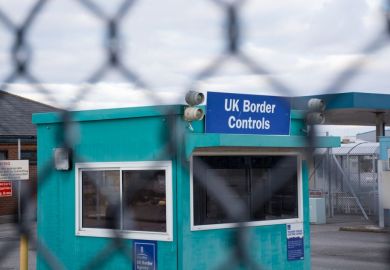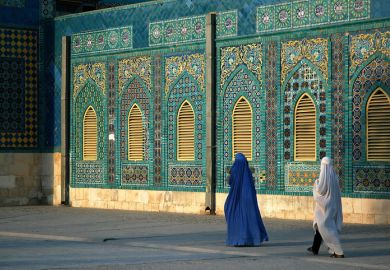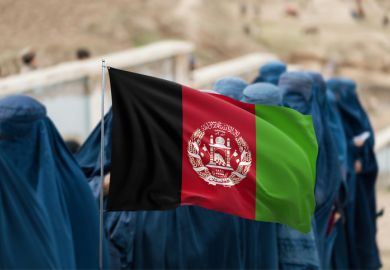
The British government’s announcement last week that it will stop issuing study and work visas to people from Afghanistan – to stop them “abusing” the system by claiming asylum – will come as a bitter blow to a population whose hopes of a better future in their own country are being systematically destroyed by the Taliban.
Take the plight of Afghanistan’s existing crop of PhD students abroad, many of whom until recently also held teaching positions at Afghan universities.
The challenges of doctoral research are very well known the world over: huge workloads, unforgiving deadlines and critical feedback, potentially causing intellectual self-doubt and even burnout. Nor are the employment outcomes of doctoral research ever guaranteed. But for Afghanistan’s PhD candidates, the prospects are particularly bleak in a shrinking and nearly collapsed higher education system.
Before the Taliban’s return to power in 2021, Afghan universities had reached a historical high point. Faculty members collaborated with international peers and higher education institutions, published research papers in leading journals, and mentored students eager to contribute to their country’s modernisation. PhD candidates envisioned careers as innovators, educators or policymakers.
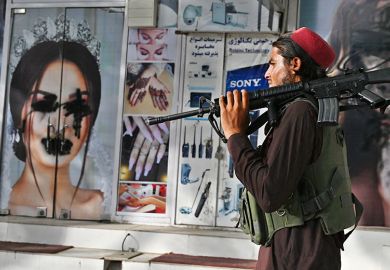
Today, that vision lies in tatters. The Taliban’s systematic purge of qualified academics – replaced by religious figures with no formal expertise – has gutted mentorship networks, cut off employment routes and removed livelihoods.
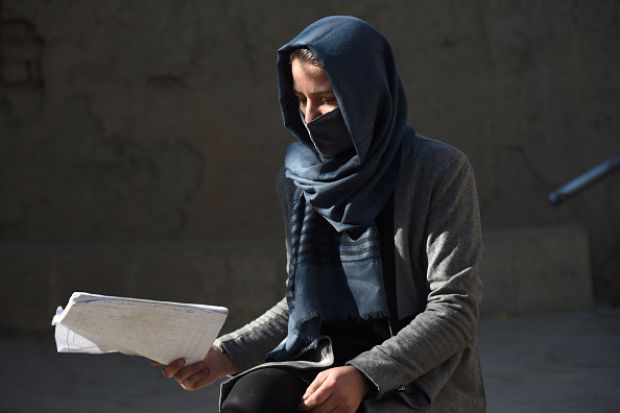
“I fled Afghanistan and now live in very troubling conditions, with no hope for the future,” one academic told me, describing how censorship and fear have replaced intellectual curiosity in Afghanistan. For doctoral students, this loss is existential.
The collapse of career prospects amplifies this general despair about the anti-intellectual turn that Afghanistan has taken since 2021. Even for those who are close to completing their degrees, the Taliban’s preference for madrasa graduates over university-educated professionals renders their qualifications meaningless.
A PhD candidate who is in the final year of a PhD in an ASEAN country told me he “doesn’t even think about celebrating” his impending completion. “What I think about is if I return to Afghanistan, will I have the chance to continue my teaching at university? There, I see zero per cent job security,” he told me.
University teachers are government employees in Afghanistan, but last year the Taliban announced that to decrease spending, they were abolishing thousands of public-sector positions, including 40,000 schoolteachers and university lecturers.
A PhD candidate who studies in Germany is one of those who has lost his job back home, and his PhD funding is only awarded by the DAAD – the German Academic Exchange Service – on an annual basis, depending on progress.
“My supervisor pressured me to ensure funding first, before she can continue supervision,” he told me. “This really doubled my mental stress. I lost my position at a public university in Afghanistan and now I am not only concerned about my PhD work, but also my future funding and my career. DAAD is really helpful to me and I believe they will extend my funding, but a small thing makes my already depressed mind even more gloomy.”
Another PhD candidate, who studies in Turkey, told me that, on top of his doctoral work, he is learning Turkish and working part-time to make up for his lost salary as a university lecturer in Afghanistan, which previously supported his family of five, including his parents. “While I was studying for my master’s degree under the previous Afghan government, my family was receiving my salary, so I was studying stress-free,” he said.
“I was even able to save an amount of my scholarship, so when I returned to Afghanistan, I bought a car for my family. This was a milestone for our family having our own car.” But now he is struggling to find the time and energy to study for his PhD because of his need to undertake paid work – and therefore to be conversant in Turkish.
Clearly, the message for Afghan doctoral students’ host institutions abroad is that even though the initial shock of the Taliban reconquest might have receded, its consequences continue to mount for the country’s intellectuals.
That compassion is certainly evident in some places. A newly arrived PhD candidate in Germany, who also lost her job in Afghanistan, told me she had received “lots of support from my supervisor and my colleagues” in Germany: “My supervisor is very friendly and not only gives me the motivation to work on my PhD but also helps me in everything I need: workplace support, equipment, even finding a room, which is difficult in Germany. She really considers my hurt emotions. I feel really comfortable in my PhD.”
This level of support is what Afghan PhD candidates as a group need from their host universities and host countries. Those who are in their final year could be helped to find post-doctorate fellowship schemes or other short- or long-term positions in academia – or even outside it. This would not only to benefit them: and their considerable talents would also benefit their host universities and countries.
This is clearly not a point of viewed shared by the UK government – or by the US, which stopped processing visa applications from Afghans in November. Those decisions will be another blow to bright Afghans who are still in the country but hoping to study abroad, and they will be very worried that other countries might also adopt similar policies.
But, at the very least, host countries must do everything they can to support the Afghan students they already have, especially at doctoral level. PhD students have enough to worry about on top of their doctoral work given their concerns for their country and their families back home. Helping ease their worries about their cancelled future careers and livelihoods will help prevent them from falling into despair.
The author is based in Afghanistan. For safety reasons, he has asked to remain anonymous. His interviewees also requested anonymity for the same reason.
Register to continue
Why register?
- Registration is free and only takes a moment
- Once registered, you can read 3 articles a month
- Sign up for our newsletter
Subscribe
Or subscribe for unlimited access to:
- Unlimited access to news, views, insights & reviews
- Digital editions
- Digital access to THE’s university and college rankings analysis
Already registered or a current subscriber?