The total number of student visa applications in the UK dropped 20 per cent in the year to October after another sharp fall in applicants last month.
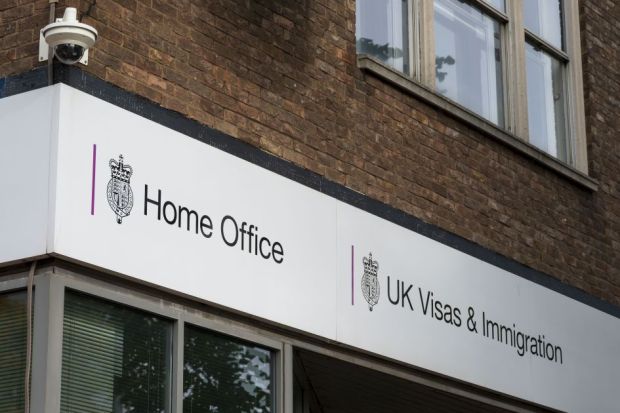
Data released by the Home Office on 12 November shows that just 5,800 people applied through the sponsored study route in October, down 31 per cent on the 8,400 who applied as main applicants in October 2025. That represents a 44 per cent fall from the same month in 2023 when 10,400 applied.
Overall, there were 20 per cent fewer bids from main applicants under the sponsored student route in the year ending October 2026 (349,900 in total) compared with the same 12-month period in 2025 when 434,000 applied. Almost 500,000 applied for student visas in the 12 months up to October 2023.
Last month’s dip in applications was the sharpest monthly fall over the crucial summer recruitment window, with cumulative July to October applicant totals (236,100) falling 16 per cent compared to 2025 when it was 282,200. In 2023, that four-month window saw 323,100 applicants.
The sharp drop in the number of student visa applications comes amid growing concerns in the sector that visa officials turned down many more applicants over the summer months, in particular those coming from so-called high-risk countries such as Pakistan, Nigeria, India and Ghana.
| Month | 2023 applications | 2025 applications | 2026 applications | 2025–26 fall (per cent) | 2023–26 fall (per cent) |
| July | 81,900 | 73,700 | 59,200 | 20 | 28 |
| August | 147,200 | 120,300 | 99,500 | 17 | 32 |
| September | 83,600 | 79,800 | 71,600 | 10 | 14 |
| October | 10,400 | 8,400 | 5,800 | 31 | 44 |
| July–October total | 323,100 | 282,200 | 236,100 | 16 | 27 |
That has led to questions about whether the Home Office’s “visa brake” – introduced in late March for nationals of Afghanistan, Cameroon, Myanmar and Sudan – could have been applied more widely to other countries without consultation.
Under new Basic Compliance Assessment rules introduced in June, universities risk losing their licence to recruit overseas students if more than 5 per cent of applicants are rejected. That has led at least 15 UK universities suspending recruitment from Pakistan, according to the Financial Times, with at least nine stopping recruitment from other “high-risk” territories.
“Some universities have pulled out of certain markets or severely restricted recruitment in certain countries so that will have played a part in these figures,” said Jonathan Hill, senior immigration manager at Fragomen solicitors.
Higher costs related to travel and subsistence might have also contributed to the fall in applicants, said Hill.
“Economic uncertainty in the current geopolitical climate will have played a part too, while I suspect there is knock-on effect from the restriction of the graduate route,” he said, referring to the Labour government’s decision in May 2025 to restrict post-study work rights from two years to 18 months, which comes into effect for those graduating after January 2027.
In last month’s Budget, chancellor John Healey announced that the two-year graduate visa would return for “high-compliance” universities. The move was widely seen as recognition of the importance of international student fees to sector finances, with the majority of UK universities predicted to announce deficits in their annual accounts later this year.
According to Home Office data, applications from dependants of students in the12 months to October were 32 lower (15,400 in total) when compared with the year to October 2025.
It follows rule changes that came into effect in January 2024, which prevented most students bringing dependants, with exceptions made for those studying postgraduate research degrees.
Applications from student dependants were “relatively low”, said the Home Office, noting that they were 89 per cent lower compared with the year up to December 2023, before the changes came into effect.
Zaid Kadhum, policy manager at the Russell Group of research-intensive universities, said: “While Russell Group universities continue to attract large numbers of talented students from around the world, these figures suggest the volatility we’ve seen in the international student market shows no sign of slowing.
“Changes in application numbers haven’t happened overnight, and the drops we’ve seen are in part the result of successive government policies over a number of years. Turning this round is vital for growth, and plans to return to a two-year graduate route visa for universities that are highly compliant with immigration rules are a really positive first step. Ministers have an opportunity to double down and drop the proposed international student levy, which would be a tax on one of the UK’s most important export industries.”
Register to continue
Why register?
- Registration is free and only takes a moment
- Once registered, you can read 3 articles a month
- Sign up for our newsletter
Subscribe
Or subscribe for unlimited access to:
- Unlimited access to news, views, insights & reviews
- Digital editions
- Digital access to THE’s university and college rankings analysis
Already registered or a current subscriber?