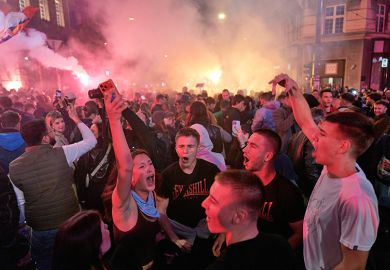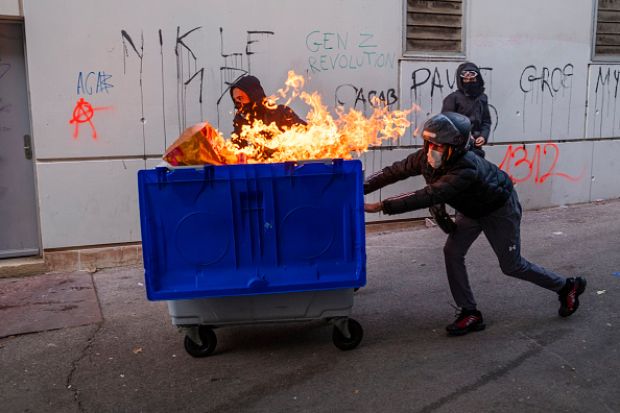
Student protests across Europe show little sign of slowing, with more strikes and demonstrations planned in the weeks ahead as anger grows over a range of issues including high tuition fees, cost of living, and anxieties about young people’s futures.
University students are leading protest movements in Albania and Austria, while in other countries they have become a dominant force in large-scale movements that have drawn together secondary school pupils, trade unions, workers and other sections of society.
Plans for more protests follow a weekend of unrest across the continent. In Albania, police used tear gas and water cannons to disperse crowds following violent clashes with protesters in the capital Tirana on 24 October.
In mid-October, university students joined the broader anti-government protests in the country which began in May against a luxury coastal development backed by US president Donald Trump’s daughter Ivanka Trump and son-in-law Jared Kushner.
Students have given it new momentum, becoming a leading force in the unrest. They are calling for lower tuition fees, more investment in education, an end to alleged corruption in public services and better job opportunities. They are also demanding the resignation of prime minister Edi Rama, who has repeatedly refused to back down. University lecturers in the southeastern European country have announced a teaching boycott in support of the students.
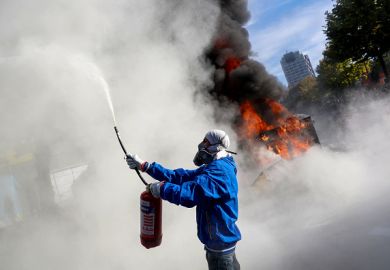
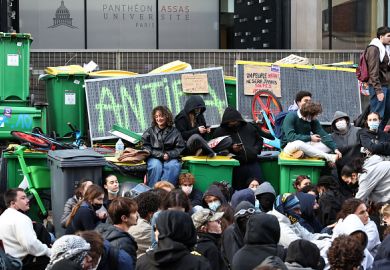
Over in France, more than 1,000 people were arrested on 24 October as hundreds of thousands of people took to the streets. Officials were able to prevent a repeat of the rioting and looting that took place during the previous weekend, which has been described as some of the worst scenes of disorder the country has seen in recent years.
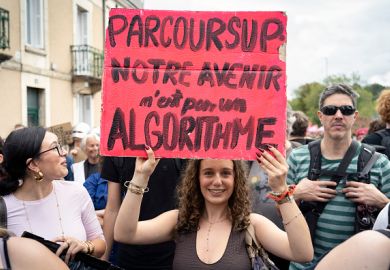
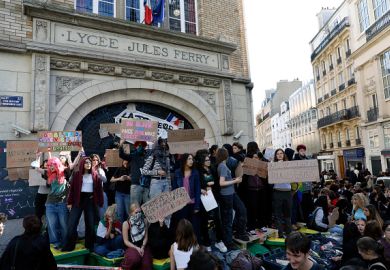
The movement comes at a pivotal time for France, ahead of presidential elections next year. It was started by secondary school pupils in September over poor conditions at schools before spreading to campuses. University students have joined the protests to express concerns over a lack of funding for higher education, the cost of living, and what they see as an “opaque” admissions system known as Parcoursup.
More demonstrations are planned for 31 October and a nationwide strike on 5 November despite the education ministry announcing plans to scrap Parcoursup, create more places at universities and link university scholarships to inflation.
Largely peaceful protests have also taken place in Austria. Tens of thousands of students and staff took part in a demonstration last week against proposed cuts to university funding.
Marching under the slogan “Save Universities – Red Alert!”, the Austrian Student Union said funding pressures had led to fewer courses and less support for students in the country’s universities.
The movement comes after the government proposed a €16 billion (£13.4 billion) budget for universities for 2028-2030, which universities say falls short by €2 billion. The government has a 31 October deadline to finalise the funding.
In Spain, students and staff at Madrid’s six public universities have called for a two-day strike on 4 and 5 November and a protest outside the education ministry on 28 October. They have accused the regional government of failing to provide enough funding for teaching and research.
Over the past few weeks, Spain has seen large and sometimes violent protests over the cost and shortage of housing, triggered by the removal of an elderly woman from her home in Madrid in September. These protests are mainly organised by tenants’ unions and housing campaigners. While most university students in Spain live at home with parents or family, some have joined the larger movement to express concerns over the cost of studying away from home, according to local media reports.
Similarly in Italy, university students have joined wider protests over rising cost-of-living, cuts to public services and low wages, making up a part of the larger demonstrations which also include secondary school pupils, trade unions and workers.
Earlier this month, students set up tents outside the parliament in Rome to bring attention to rising rents and a shortage of affordable accommodation. The campaign, organised by Unione degli Universitari (UDU), is calling for more public investment in universities and student housing.
Register to continue
Why register?
- Registration is free and only takes a moment
- Once registered, you can read 3 articles a month
- Sign up for our newsletter
Subscribe
Or subscribe for unlimited access to:
- Unlimited access to news, views, insights & reviews
- Digital editions
- Digital access to THE’s university and college rankings analysis
Already registered or a current subscriber?