Australia’s third smallest university is taking the contest to its big-city counterparts with a “brand campaign” urging students to “stop worshipping sandstone”.
The University of Canberra (UC) plans a A$2.7 million (£1.4 million) advertising blitz inviting people to “expect empathy over elitism” at its campus of some 18,000 students.
“Go further than you imagined,” one poster says. “Learning belongs to everyone,” says a second. “Tradition isn’t the only way,” says a third. “Bring your own worth,” says a fourth.
Vice-chancellor Bill Shorten said the campaign had been informed by UC-commissioned research showing that potential students were alienated by universities’ “digital wallpaper” advertising of their “shiny” buildings.
“Students are seeking care, compassion and community,” he said. “A sense of belonging has become more important to most students and prospective students than…institutional prestige [and] academic elitism.
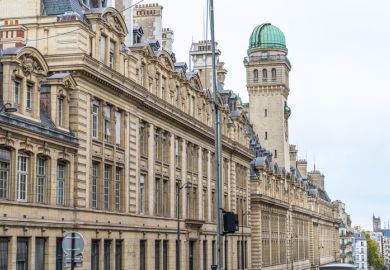
“The time has come to stop worshipping sandstone”, he said, referring to the name given to the country’s oldest, most prestigious institutions. “It’s just a rock, after all.”
The campaign, which kicks off on 6 April, features advertisements on television, social media, digital screens, billboards, streets signs and the sides of buses. It will “facilitate an expansion into metropolitan markets such as Sydney”, UC said.
Shorten said he was not “having a fight” with big-city universities. “This is just us being proud of who we are,” he told Times Higher Education. “We’re eschewing the prestige theatre of elitism. If one sort of university says, ‘we’re very smart’, why can’t other universities say, ‘we’re not sandstone and we’re proud of it’? We’re not going to accept a status given to us by anyone else.”
Education minister Jason Clare has accused the sector of indulging in “Hunger Games” competition for students. Shorten said he was not worried about inciting “bad blood” by making humorous jibes at rich neighbours.
“Bad blood is when a big university opens up next to a small university to hoover up the lucrative courses, undermining the ability of smaller universities to provide less profitable but equally important training and learning in a region.”
He said some regional students felt “lost” in “big impersonal cities” like Melbourne and Sydney. “At Canberra, we are either the biggest small city…or the smallest big city in Australia. People can have that city experience without living in anonymous grey canyons of loneliness.”
The campaign is anchored around six case studies of non-traditional students: a young woman who grew up on a farm, a school-leaver who “didn’t get the score”, a mother with a toddler, a greying construction worker, a wheelchair-bound woman whose family members have never attended university, and a young Indigenous man whose father turns out to be the one who is graduating.
UC said it was trying to portray the “true grit” of people raised without expectations of tertiary education. All six advertisements were based on UC alumni and students, some of them featured in the flesh. “[We are] saying to a lot of Australians, ‘you actually do fit in uni’,” Shorten said. “You don’t have to have studied ancient Greek at school, and you don’t have to come from four generations of dentists.
“I’m a fan of the university sector of Australia – big, small, old, new, whatever. But…the image of universities can do with some improvement collectively, and this is our contribution. There’s still a lot of Australians who never think about going to university, which is a shame.”
Register to continue
Why register?
- Registration is free and only takes a moment
- Once registered, you can read 3 articles a month
- Sign up for our newsletter
Subscribe
Or subscribe for unlimited access to:
- Unlimited access to news, views, insights & reviews
- Digital editions
- Digital access to THE’s university and college rankings analysis
Already registered or a current subscriber?