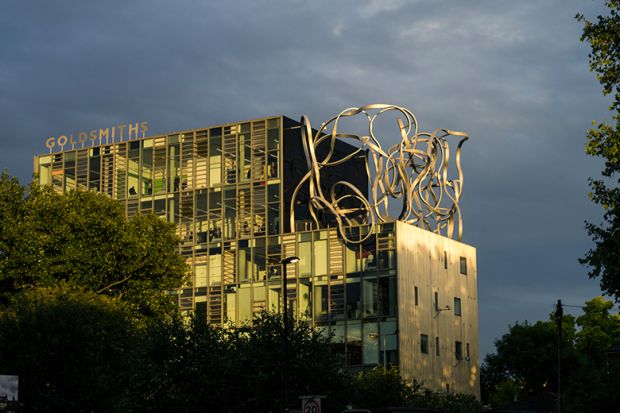
Academics and students at Goldsmiths, University of London say that yet another round of cost-cutting has left them “exhausted” and fear it will send the institution into a “death spiral”.
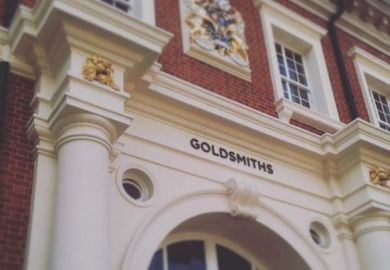
The south-east London university, known for its teaching of the creative arts, has announced plans to cut a further £22 million from its budget, the third major restructure since 2019.
Senior leaders have insisted that the institution cannot go on in the way it has done, given that student numbers have fallen by “more than a quarter” in the past five years.
A Goldsmiths spokesperson said the university needed to make major changes to adapt as it battles rising costs, increased global competition in higher education, and rapid technological and cultural change.
But Catherine Rottenberg, an academic in the university’s media, communications and cultural studies department, said “anxiety is sky-high, and people are exhausted” after the latest news.
“It’s the third round of restructuring since 2019, and each time it’s been more devastating than the last time, because each restructure brings with it not only loss of staff, but also loss of functionality. This is the same template that’s being used across the sector, and it doesn’t work anywhere.”
Staff have questioned how Goldsmiths could be in this position again after 381 staff have left the institution since 2019 through redundancy schemes, and Rottenberg added “it’s hard to believe that after it made savings of about £16 million in the last round, it’s now trying to save £22 million”.
But the university spokesperson said that “without purposeful redesign, our institution will continue to face a structural financial deficit and an operating model that is not aligned with future learners, regulatory expectations or the pressing realities of our sector”.
Its transformation plan – “The Future Goldsmiths” – will see the university deliver a curriculum “aligned to its critical core”, offer flexible learning, and build stronger pathways from schools, the further education sector and employers. A recent announcement that it is set to increase its online programmes this summer will see the university target a “wider range of learners, including adult students and those balancing study with other commitments”.
“The Future Goldsmiths programme provides an integrated institution-wide plan to deliver long-term financial sustainability while preparing Goldsmiths for a transformed academic and operating environment,” the spokesperson said.
Despite this, staff are still questioning the numbers behind the cuts. Des Freedman, former head of department and co-director of the Goldsmiths Leverhulme Media Research Centre, said simply: “Where has the money gone?”
Having worked at Goldsmiths for 25 years and survived the two previous restructures, he said he felt “nostalgic” for how the institution operated before the reorganisations.
“There have been significant cuts to professional services staff in recent years – and the students feel that – as well as significant academic redundancies and the closure of leading programmes. It sort of starts to feel like a death spiral, and that is the last thing that any staff member wants to see happening.”
He continued: “No one is kidding themselves that these are tough circumstances, but that’s exactly why we’re demanding a period of calm so that we can focus collectively on recruitment, and on trying to get a more stable future.”
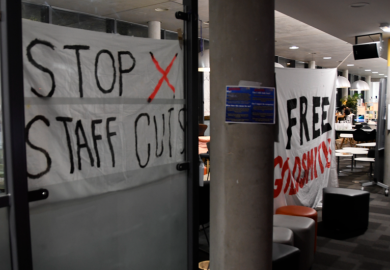
Members of the University and College Union branch will be participating in a marking and assessment boycott from 27 April in response. Students at the university have expressed solidarity with staff: about 200 have joined the “Free Goldsmiths” student movement, and some have occupied the university library.
One student, Starr Thomas, campaigns and activities officer at Goldsmiths, feared that “the fight in staff has just completely gone” after the successive years of cuts and increased workloads.
Thomas, an applied theatre student, noted that key modules from their course “no longer exist”, and expressed concern that the radical spark and the uniquely political nature of Goldsmiths’ courses that attract many students to the institution are “unravelling in front of our eyes”.
The university spokesperson added that Goldsmiths is “recognised and celebrated around the world, with a reputation and legacy that is the envy of many others across the UK and internationally.
“As we go through these changes, we will continue centring our students and their interests, outcomes and experience to make sure they receive the best support possible to help achieve their ambitions.”
Register to continue
Why register?
- Registration is free and only takes a moment
- Once registered, you can read 3 articles a month
- Sign up for our newsletter
Subscribe
Or subscribe for unlimited access to:
- Unlimited access to news, views, insights & reviews
- Digital editions
- Digital access to THE’s university and college rankings analysis
Already registered or a current subscriber?