Business schools will be forced to make “strategic” decisions about what courses they can and can’t offer amid a difficult economic environment, university leaders have said.
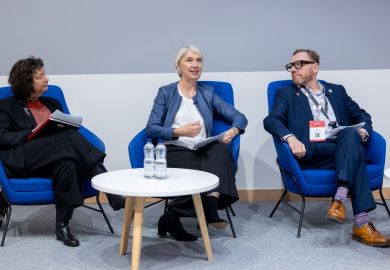
Speaking at the Chartered Association of Business Schools (CABS) annual conference, Gillian Armstrong, pro vice-chancellor and executive dean at Ulster University Business School, said smaller programmes may need to be cut even if some businesses really value them.
With the financial challenges sweeping the sector, “we’ve had to take a really strategic look at our portfolio,” said Armstrong.
“We’re a large complex business school that has an extensive portfolio and I think that was a result of no matter which stakeholder that came to us, we always seemed to be able to do something for them,” she said.
“But we probably are in an environment now where that is not just possible, so we’re having to be a little bit more strategic and really take a hard look at what is working for us and what’s not.
“That’s challenging, because sometimes smaller programmes that businesses really want at the moment may not always be financially viable, so it’s a balancing act.”
She added that postgraduate master’s degrees are not as successful in the current environment amid changes to graduate visa rules, meaning the university is instead looking at micro credentials and executive education so “we have agility, and ensuring that we have agility in a reducing workforce”.
“We’re having to be really smart at what we do, and do that more strategically, more purposefully, but also not losing the essence of what a business school is because it is there to support business,” said Armstrong. “I think that’s the tension for business schools: trying to come up with that sustainable model that you can confidently resource,” she said.
It comes after CABS’s annual survey warned that enrolments have “deteriorated” compared to last year amid the announcement of the international student levy and changes to the graduate route, with 69 per cent of schools reporting lower international enrolments for 2026-27.
Mairi Watson, principal and vice-chancellor at Glasgow Caledonian University, added that business schools are not just having to consider portfolio reviews, but “organisational reviews”. But, she said, this “takes you into the realm of changing the shape of the workforce”.
“Stopping things does cause institutional stress and institutional pain, but it’s absolutely better than not changing things and not leaning into the opportunity for development,” said Watson.
Despite the challenges, business schools still often remain the most prosperous parts of a university, and Watson said they should present their parent institutions with wider economic opportunities.
She said that they are the “connective tissue” that connects universities with their wider economic ecosystems, and that business schools have “convening power” to “bring people together”, both locally and internationally.
“The less we can think about business schools as one part of the university and more about them being the veins or the muscles, or whichever medical reference you want to make, then the more chance we have of success and sustainability.
“We need to look inwards and be critical and self-reflective about the role that the business school plays, and of the way that the business school enables deep and meaningful conversations about economic impact across the university.”
Register to continue
Why register?
- Registration is free and only takes a moment
- Once registered, you can read 3 articles a month
- Sign up for our newsletter
Subscribe
Or subscribe for unlimited access to:
- Unlimited access to news, views, insights & reviews
- Digital editions
- Digital access to THE’s university and college rankings analysis
Already registered or a current subscriber?