South African universities must resist political attacks on foreign academics and students as anti-migrant sentiment continues to ramp up across the country, experts have warned.
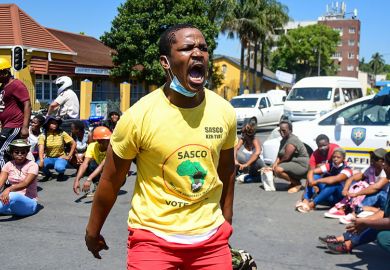
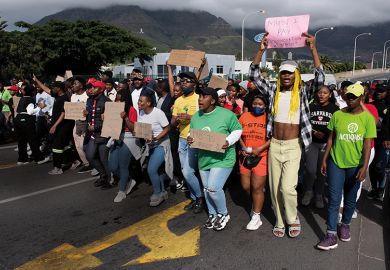
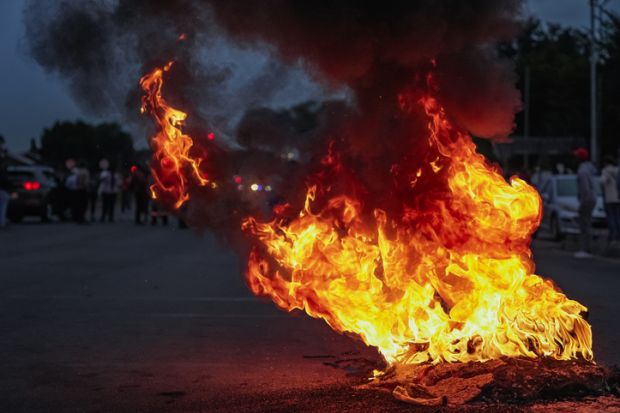
Since June, anti-immigration marches and demonstrations have been taking place across South Africa, prompting the government to launch a crackdown on undocumented migrants, with over 50,000 foreigners processed for deportation in July.
Legal migrants have reportedly also been targeted by demonstrators, while universities have been caught up in the anti-immigration sentiment.
In June, a parliamentary higher education committee accused universities of being too reliant on foreign academics, despite ongoing public investment to grow the pipeline of local scholars.
According to government figures, foreign nationals accounted for 7.74 per cent of the post-school education workforce in 2024.
The row has sparked a debate over whether more should be done to prioritise local academics or if the rhetoric is a reflection of rising anti-foreigner sentiment in South Africa.
Savo Heleta, a Bosnian higher education and internationalisation scholar who worked in South African higher education for over a decade, said anti-migrant and xenophobic sentiments have been “around universities” for a long time, but were “hidden and subtle” until recently.
“Now, however, politicians, parliamentarians and commentators are targeting universities directly, claiming that the universities are flooded with foreign staff, academics and students, taking spaces and opportunities from South Africans,” he said.
Experts warned that the ongoing tensions could harm universities’ internationalisation goals as well as academic collaboration with the wider continent.
Jonathan Jansen, distinguished professor of education at Stellenbosch University and former rector of the University of the Free State, said the political sentiment from the top “has a dampening effect on our foreign national academics and discourages others from coming”.
Although Universities South Africa, which represents the country’s 26 public universities, has previously described the idea that foreign academics are displacing local talent as “a baseless misconception”, Heleta said there was a “shameful silence among most university leaders” about “growing xenophobic, Afrophobic and anti-migrant sentiments”.
“The ongoing and worsening Afrophobic sentiments are likely to lead to a further decline in intra-Africa collaboration,” he added.
“I wouldn’t blame academics and researchers from other African countries for not wanting to engage with South African counterparts, particularly when South African universities and higher education leaders are afraid to name xenophobia and Afrophobia as real problems in the country, let alone do something about all this.”
Jansen agreed that “a university is not a place where this kind of sentiment should be tolerated”.
As well as foreign academics, South Africa typically attracts international students from the wider continent. While the total number of international students in the country is not published, foreign students can make up a significant proportion of universities’ total populations.
The University of Cape Town, for example, has about 5,000 international students, representing 18 per cent of the institution’s student population.
Heleta warned that recent events could deter foreign students from enrolling in South African universities.
“Students from other African countries see what’s happening in South Africa and many of them will most likely think twice before they apply to study in the country,” he said.
Register to continue
Why register?
- Registration is free and only takes a moment
- Once registered, you can read 3 articles a month
- Sign up for our newsletter
Subscribe
Or subscribe for unlimited access to:
- Unlimited access to news, views, insights & reviews
- Digital editions
- Digital access to THE’s university and college rankings analysis
Already registered or a current subscriber?