The Scottish education secretary has said that further job cuts planned at the University of Dundee are “extremely disappointing”.
Another 190 roles are set to go, the beleaguered university confirmed on 16 June, as part of its latest plans to shave another £20 million from its costs.
This comes on top of 675 roles that have already been lost since August 2024, after Dundee reported a £35 million deficit.
In a letter to all staff, Nigel Seaton, interim principal and vice-chancellor, said “we still have some way to go to become financially sustainable”.
“We have made progress in recurring non-staff spending, and this has already been substantially reduced. We will make further cuts in this area, but there is a limit to how much further we can go, so the greater part of the additional savings will have to come from staff costs,” Seaton writes.
Last year the Scottish government agreed to provide a £40 million bailout to Dundee but this was subject to multiple conditions, including restrictions on compulsory redundancies. The university confirmed that the Scottish Funding Council, which oversees higher education funding, approved the university’s latest cost-cutting measures last week.
But Màiri McAllan, who became education secretary after the Scottish National Party was re-elected in May, said she was “extremely disappointed” by the announcement. She said she had asked the university to halt the plans to allow ministers to scrutinise the process, but it had refused.
McAllan said although the SFC had agreed last week that the university had complied with its funding conditions, “ministers have not been assured on the details of this, and will require to see this”.
“This morning I met with Dundee’s principal and requested that university leadership pause the consultation process to enable ministers the opportunity to consider and interrogate the evidence. It is regrettable they have not agreed to this reasonable delay and pressed ahead with today’s announcement.
“Ministers recognise the autonomy of the university but must be assured that they have complied with the SFC’s conditions – including adhering to Fair Work principles and engaging meaningfully with staff and students – if they are to receive the additional funding. I have met with the SFC today to understand their position and discuss what steps they are taking to assure the government.”
Dundee staff are “angry and upset”, she said, adding that the voices of staff and the trade unions “must be front and centre in any decision-making about the future of the institution”.
Seaton stressed in his letter to staff that the announcement was a “proposal rather than final decisions and are therefore potentially subject to change as a result of the consultation”.
“We know this is a very difficult message for staff and all in our community, particularly given the staffing changes that have already been made over recent months,” he writes.
“But we must go through this to ensure that the university survives and that we continue to do great things for our students, for those who benefit from our research, and for society more widely.”
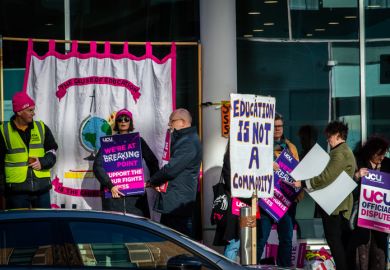
Last week Dundee’s University and College Union branch voted in favour of taking further strike action over cuts and managers’ refusal to rule out compulsory redundancies.
Branch co-president Ian Ellis said the announcement of further job losses was “devastating”.
“Staff are once again paying the price for management failings and a catalogue of managerial missteps. Every job that is lost, whether by voluntary redundancy or by possible compulsory redundancies is a tragedy for the individuals impacted but also diminishes the university and leaves increasingly unmanageable workloads for the staff who remain.”
Register to continue
Why register?
- Registration is free and only takes a moment
- Once registered, you can read 3 articles a month
- Sign up for our newsletter
Subscribe
Or subscribe for unlimited access to:
- Unlimited access to news, views, insights & reviews
- Digital editions
- Digital access to THE’s university and college rankings analysis
Already registered or a current subscriber?