UK higher education staff may have to wait to receive a pay rise this year amid uncertainty over whether unions plan to strike over the deal.
The Universities and Colleges Employers’ Association (Ucea) has said it is unable to progress this year’s pay offer because the unions are yet to formally declare whether they are in dispute.
Following a round of pay talks earlier this year, Ucea announced it had made an offer of a 2 per cent pay rise for most eligible staff. It was due to take effect from 1 August.
However, progress on agreeing the rise has stalled, leaving universities unable to implement any increases for staff. Last year the employer body told universities on 17 July to go ahead and implement the rise, despite not having agreement from the unions.
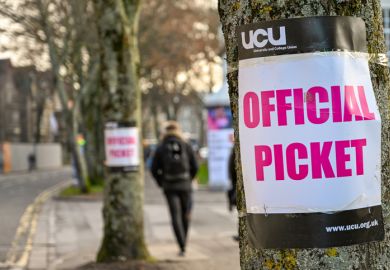
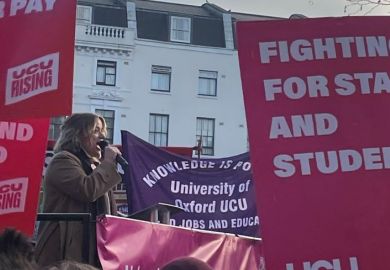
The University and College Union (UCU) has consulted its members over the offer, with 30.4 per cent voting in an online ballot. A total of 69.3 per cent voted to reject the offer and 60.2 per cent said they were willing to partake in industrial action to improve it.
The union said its higher education committee will meet on 9 October to consider the results and decide on next steps.
Meanwhile, 89.6 per cent of Unite members voting in this union’s ballot rejected the offer, on a turnout of 43.3 per cent. A larger proportion of Unite members said they would be willing to ballot on industrial action over the matter, at 87.31 per cent.
EIS and Unison have not made their consultation outcomes publicly available, but both voted to reject the offer.
However, GMB – the final sector union – is still consulting its members and is yet to announce the outcome of this exercise. A GMB spokesperson said it “has informed Ucea and our sister trade unions that the full and final pay offer from the employers has not been accepted. We will now consult our members on the next steps that they may wish to take.”
Ucea said that it is unable to recommend universities impose the pay rise until GMB announces its result, as the unions have not declared a formal dispute with the employers’ association.
“Once Ucea has heard from all trade unions on whether any trade union is invoking the New JNCHES dispute resolution procedure, it will arrange any required meetings with the intention that these take place as quickly as possible after the formal dispute notification,” the body said.
Raj Jethwa, Ucea chief executive, said the results of the ballots were “disappointing, though not unexpected”.
“HE employers genuinely wish they could afford a higher pay award for the 2026-27 pay uplift, but the sector continues to face unprecedented financial challenges. We made our full and final offer on 15 May, and the financial position of the sector has only weakened since then.
“It is much better for employers and unions to work together, and we value the continued engagement of the five trade unions on the joint review of the pay spine.
“But under our collective bargaining agreement with the unions, until the five trade unions have formally responded to Ucea’s offer and the pay round has been concluded, hardworking staff will not receive any uplift.”
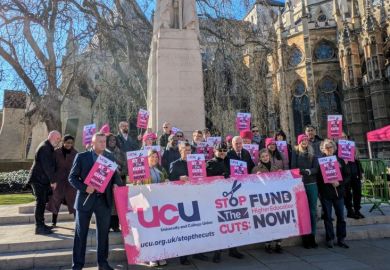
Meanwhile, UCU’s plans to begin a trade dispute with the secretary of state over the number of redundancies taking place across the sector appear to have been shelved.
In documents seen by Times Higher Education, a working group set up to progress the plans said legal advice it has received indicated the dispute “would not be possible”, because it would be considered a political dispute and not a trade dispute.
A dispute over improved funding in order to give members a pay rise “may be possible”, but it would not address the redundancy crisis, the group outlines.
“A dispute with the secretary of state over funding to address the redundancies crisis is not possible under the current law. It is important to emphasise that this conclusion is not in doubt,” the documents say.
“The secretary of state dispute has always been, at its heart, about fighting the redundancies crisis in the sector. If the secretary of state is explicitly prevented from intervening in a manner that would protect jobs, the working group cannot see a way in which a trade dispute with the secretary of state could deliver the outcome that members are seeking.”
UCU was approached for comment.
Register to continue
Why register?
- Registration is free and only takes a moment
- Once registered, you can read 3 articles a month
- Sign up for our newsletter
Subscribe
Or subscribe for unlimited access to:
- Unlimited access to news, views, insights & reviews
- Digital editions
- Digital access to THE’s university and college rankings analysis
Already registered or a current subscriber?