Harsh disciplinary sanctions against Palestinian students in Israeli universities amount to “apartheid” in the country’s higher education system, a legal and human rights centre claims.
In a report, Adalah, the Legal Center for Arab Minority Rights in Israel, says that Palestinians studying at Israeli universities have been suspended from their studies for merely “liking” social media content that relates to Palestine.
A “two-track” disciplinary route is opening up in the country, the report alleges, saying that Israeli universities are imposing increasingly harsh sanctions on Palestinian students, while Israeli Jewish students go without punishment for similar actions.
Apartheid in Israeli Academia is based on 132 enquiries that Adalah received from Palestinian students relating to disciplinary proceedings tied to social media posts on private accounts. In 61.3 per cent of all the enquiries received, institutions imposed interim suspensions, barring individuals from their studies before any determination of culpability had been made, the report says.
Law enforcement authorities became involved in 20 cases, some entailing arrests, with institutions at times directly reporting their own students to the police.
About 24 per cent of the posts reviewed contained criticism of Israeli government policy or of the war in Gaza; 23 per cent contained content related to the Hamas attacks of 7 October; 22 per cent addressed events in Gaza and civilian suffering; 21 per cent featured religious expressions, including prayers and verses from the Koran; and 16 per cent contained visual symbols of Palestinian identity.
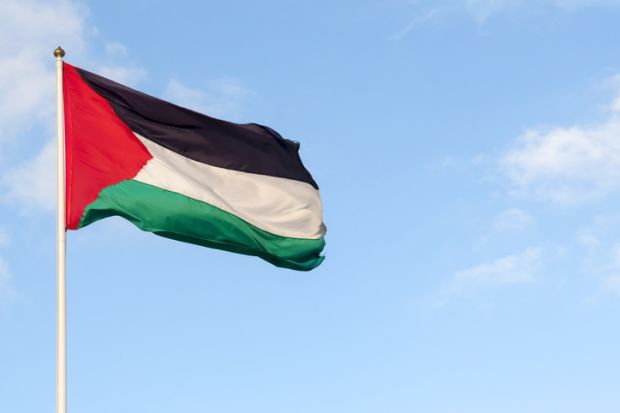
Some students were suspended for displaying a Palestinian flag in their social media biographies, the report claims. In one case, Adalah says, a university allegedly took action against a student for a post made in 2022 about the football World Cup in Qatar. The post read: “The World Cup is in Qatar, while the cup of manhood, resistance, and pride is being played here in Palestine.”
One student who had been suspended, and who wished to remain anonymous, told Times Higher Education that they felt “lost and anxious” after being investigated by their university, adding that “the hearings themselves were extremely humiliating”.
The incident, which also involved them being arrested, put them off further study in Israel. They have since applied to institutions in Europe for postgraduate studies.
The most common form of discipline for students was suspension for one academic year, which 25 per cent of the students in the report received. This was followed by educational sanctions (including reprimands, obligatory educational courses and the revocation of academic credits), at 21.67 per cent; permanent suspension (18.33 per cent); and suspension for one to five years (16.67 per cent).
Adalah says there was a “relatively high volume” of disciplinary proceedings from some institutions, including the Bezalel Academy of Arts and Design in Jerusalem (nine), the University of Haifa (nine) and Technion Israel Institute of Technology in Haifa (six).
In its report, Adalah warns that there are “two separate disciplinary tracks”, one for Palestinian students and one for Israeli Jewish students.
The paper says: “To the best of our knowledge, there is not a single case of a disciplinary prosecution of an Israeli Jewish student for having published a social media post, for example, showing support for genocide, for the ‘flattening’ of Gaza, or a racist statement against the Arab public in Israel.”
This discrepancy “created a reality of apartheid in the disciplinary law of Israeli academia”, says Adalah, which describes it as a “racist policy” that sees higher education institutions “violate international law”.
“This policy produces collective harm, in which religious, political, or identity-based expression by Palestinian students may result in sanctions and academic penalties,” the report says.
“It creates a ‘chilling effect’ within the Palestinian student body in Israeli academia, fostering fear, incentivising self-censorship, and discouraging legitimate expression. By contrast, such fears do not exist for the Jewish Israeli student.”
THE approached the universities named for comment. Technion said the report was “part of a broader attempt to discredit Israeli academia and institutions”.
It said that it has more than 3,000 Israeli Arab students and that there have been six disciplinary cases involving them over the past decade, three of which resulted in guilty verdicts. Another two students chose to discontinue their studies before the proceedings were completed.
“The reality is that the Technion has worked diligently to support all of its students, including its Arab students, during an exceptionally difficult and emotionally charged period,” the institution said.
“Baseless accusations of discrimination undermine these efforts and risk damaging the delicate fabric of shared academic life that we strive to preserve on our campus every day.”
Register to continue
Why register?
- Registration is free and only takes a moment
- Once registered, you can read 3 articles a month
- Sign up for our newsletter
Subscribe
Or subscribe for unlimited access to:
- Unlimited access to news, views, insights & reviews
- Digital editions
- Digital access to THE’s university and college rankings analysis
Already registered or a current subscriber?