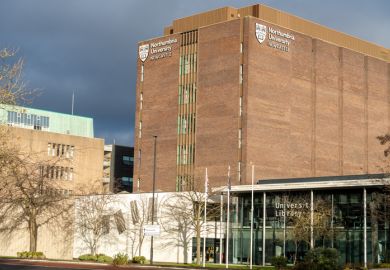
Attempts to persuade staff at Northumbria University to give up their expensive teachers’ pension have so far fallen flat, union members say, with just 7 per cent of staff agreeing to switch to a less generous option, despite the promise of a payout.
The university announced in November that it was looking to offer incentives to staff on the TPS to transfer to one with a lower employer contribution rate, saying the requirement to offer TPS was “significantly financially disadvantaging” post-92 universities.
Staff who give up the TPS, which has an employer contribution rate of 28.7 per cent, and move on to the Universities Superannuation Scheme (USS), which has a contribution rate of 14.5 per cent, are now being offered increased payments of between £8,000 and £12,000, the university said. It had previously offered between £5,800 and £10,000.
Meanwhile, staff who refuse the switch will be ineligible for future pay rises until their overall pay package aligns with those who did make the change. The university has said that the plans will save it £11 million.
However, only 84 staff out of an eligible 1,200 (7 per cent) have so far made the move since the scheme was opened on 18 February. The university has extended the deadline for people to make the switch and receive the payout to the 31 May from the original date of 30 April.
The university insisted that it expected “many more colleagues to transfer in due course” before the deadline but the University and College Union (UCU) branch remains less convinced.
Some 110 members of staff applied for voluntary redundancy between 10 February and 10 March, and although UCU said there were many reasons staff might choose to take redundancy, “over 100 colleagues requesting it in a month indicates they would rather leave the institution than transfer to a more precarious private pension or have their pay frozen”.
UCU branch chair Adam Hansen said the low uptake suggests that the university’s attempts “to force staff to give up their TPS pensions and move to USS are not working” and are an “abject failure” of its approach.
“It should prompt them to urgently reconsider the financial penalties for people who do not transition. But a low uptake makes no difference to university management. They will make the ‘savings’ they say they need to make instead by freezing staff pay indefinitely, leaving national collective bargaining in the process. This means all the risk and detriment falls on employees, not the employer.”
He added that although it was “good that the university has secured access to USS...no one’s pay should be conditional on their colleague’s pension choice”.
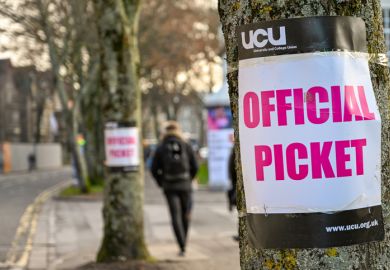
Union members are currently on strike, and have announced further strike action across March and April in response to the “anger” caused by the pension debate, and plans announced by the university to cut a further £25 million from its budget.
Having failed to reach an agreement with the union on the changes, the university informed staff on 12 March that it was going to go ahead with them anyway.
A university spokesperson said: “We have been engaging extensively with colleagues and with UCU since November.
“A substantial support package has been provided to help with decision making, including one-to-one guidance from pension specialists, a contribution towards the cost of independent financial advice, a guaranteed minimum pay increase if colleagues join USS and a transition support scheme that would provide a one-off payment of between £8,000 and £12,000 dependent on salary level.
“However, despite considerable effort from all parties, our negotiations have been unsuccessful, and we have been unable to reach agreement with UCU.”
They said that feedback from staff had “significantly” influenced the design of the final proposal.
“We recognise that this is a significant change and the decision to implement it without agreement has not been taken lightly. Our decision reflects careful consideration of what is necessary to maintain our financial stability so that we can continue to deliver exceptional education and research to our students and deliver our strategy.”
Register to continue
Why register?
- Registration is free and only takes a moment
- Once registered, you can read 3 articles a month
- Sign up for our newsletter
Subscribe
Or subscribe for unlimited access to:
- Unlimited access to news, views, insights & reviews
- Digital editions
- Digital access to THE’s university and college rankings analysis
Already registered or a current subscriber?