Protesters in India have rejected prime minister Narendra Modi’s pledge to set up “fast-track courts” to punish those involved in medical exam paper leaks, as the youth-led cockroach movement continues to grow.
In a statement on X, Modi said, “Nothing is more important than the welfare and future of our youth! We have decided to set up fast-track courts to ensure swift and stringent punishment for those involved in paper leaks.”
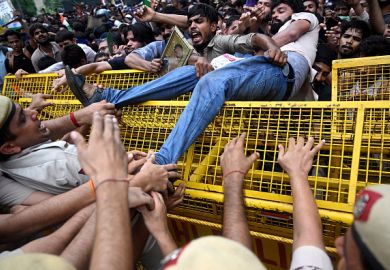
The youth-led Cockroach Janta Party (CJP), has been protesting over issues related to education reform following the leak of the National Eligibility cum Entrance Test that forced millions of prospective medical students to resit.
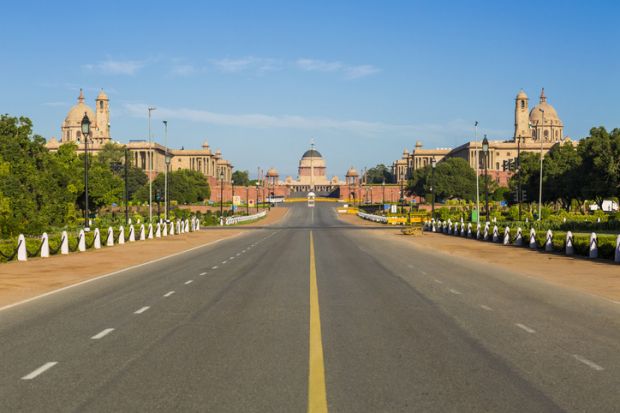
The protest at the Jantar Mantar site in New Delhi has gone on for nearly one month. Several smaller protests are also taking place in at least five other major cities, including Mumbai, Goa and Bengaluru.
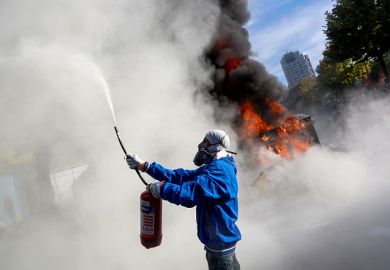
The protests reached a critical point on 20 July when tens of thousands of young people attempted to march to parliament. But their demonstration was violently blocked by police, who used tear gas on protesters, which has only sparked further anger among young people.
Student Krey Kannojia, who attended the protests in Delhi throughout the week, told Times Higher Education that “everybody has showed up in numbers…for different reasons”.
“We want fair examination and for papers not be leaked. But it’s not just a leak. It’s an entire system that we’re protesting against.”
Kannojia anticipated that the protests would “go on for a very long time…people want accountability…unless he [the education minister] resigns, I don’t think the protests are going to stop”.
The CJP’s main demand is for the education minister, Dharmendra Pradhan, to step down. The movement is also seeking compensation for the families of at least 12 students who died by suicide after the NEET was cancelled in May, and for the police cases against peaceful protesters to be retracted.
This week it emerged that Uttarakhand Technical University had to cancel two exams this semester after the papers were leaked, the Indian Express reported.
Mayank Suri, who teaches in the school of law at DY Patil University, told Times Higher Education that the offer of fast-track courts was “just a ploy to assuage the anger of the people”, adding that “no one will be willing to believe that these courts will render true justice”.
Suri, who also attended the protests in Delhi, said: “It is going on in full swing and it is swelling because the people are done with delay and distraction tactics. They want real accountability and they want real reform”.
In a letter posted on X, Vinay Kumar Pathak, president of The Association of Indian Universities called on universities to “encourage students to remain focused on their studies” and “not to allow their energies to be diverted by calls to protest”.
In an effort to reassure the sector, Pathak also said that “the Government is fully committed to strengthening and reforming the education system”.
Register to continue
Why register?
- Registration is free and only takes a moment
- Once registered, you can read 3 articles a month
- Sign up for our newsletter
Subscribe
Or subscribe for unlimited access to:
- Unlimited access to news, views, insights & reviews
- Digital editions
- Digital access to THE’s university and college rankings analysis
Already registered or a current subscriber?