“Minimum provision guarantees” should be introduced across English regions, a report has argued, with universities being encouraged to work closer together on course offerings to stop academic “cold spots” from opening up.
In a policy paper sent to MPs, the University and College Union (UCU) branch at the University of East Anglia has called for urgent action after analysing the state of provision across the East of England.
Universities in the area have enacted major job cuts and course closures in recent years. UEA alone has shed more than 600 jobs across two rounds of redundancies in the past two years, and the University of Essex made headlines earlier this year after it announced it was to close its Southend campus as well as cutting around 400 posts. Nearby the University of Suffolk has also been through multiple rounds of redundancy.
The policy paper argues that while such cuts may have seemed “logical” at the institutional level, “there has been a real lack of consideration of how these decisions are reshaping the higher education landscape across the East of England, where HE provision is dispersed and there are relatively few dual-intensive institutions”.
It therefore argues for the introduction of a “minimum service guarantee” to create a “statutory floor for regional subject provision in England, with a national monitoring function that identifies risks and intervenes to ensure provision is not lost in its entirety”.
This would require a national body responsible for monitoring regional subject provision, it said. It suggests this could sit within the Office for Students or a revived form of the Higher Education Funding Council for England, which was closed down in 2018.
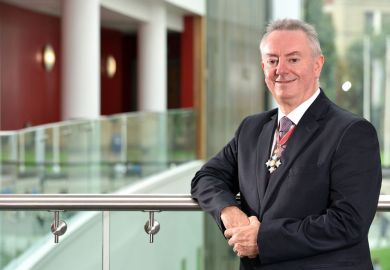
Speaking to Times Higher Education, Nick Grant, recruitment and membership secretary of the UEA UCU branch, said: “There’s got to be a little bit more scrutiny, accountability and joined-up thinking regionally, because we are at the point that we will lose subjects and they won’t come back.
“When more and more people are studying at home for various reasons, what does that mean if you can’t do certain courses any more?”
He noted that UEA closed several of its mental health courses last year, sparking backlash from healthcare providers who argued that the East of England was already experiencing “severe recruitment and retention pressures”.
“We’re seeing chemistry getting closed at other institutions because it’s expensive to run; what would happen if both Essex and UEA decided to do a version of that?” he questioned.
“At the moment, you’ve got teams of five or six people in finance offices dictating what the future of higher education provision will look like in our region, and that doesn’t seem a sensible use of public resources and public funds.”
The paper further recommends that a funding stream be established to protect subjects identified as at risk in specific areas, and argued that a “compact” should be created to bring together universities, businesses and NHS partners across Norfolk, Suffolk, Cambridgeshire and Essex “to give the region a voice in how higher education provision is delivered locally” and to act as a forum for “strategic conversations relating to regional provision”.
“Administering decline is no longer an option. Cutting subject areas institution by institution, through crisis-driven decisions taken behind closed doors, represents a betrayal of the public service and civic missions our universities were built on,” it says.
A UEA spokesperson said the institution welcomed “contributions to the debate about the future shape of higher education provision both nationally and across the East of England, and agree that there is value in considering how universities, colleges, policymakers and regional partners can work together to meet the needs of our communities and employers”.
They pointed to the proposed new Mayoral Combined County Authority for Norfolk and Suffolk, which will have a role in developing local skills plans and should, in the university’s view, “be inclusive of all skill levels”.
“At UEA, any decisions about our academic portfolio are taken carefully, with a focus on maintaining academic excellence, delivering the best possible student experience, and ensuring the long-term sustainability of the university,” the spokesperson added. “We remain committed to providing a high-quality, multidisciplinary education and to making a strong contribution to the social, cultural and economic prosperity of this region and beyond.”
Register to continue
Why register?
- Registration is free and only takes a moment
- Once registered, you can read 3 articles a month
- Sign up for our newsletter
Subscribe
Or subscribe for unlimited access to:
- Unlimited access to news, views, insights & reviews
- Digital editions
- Digital access to THE’s university and college rankings analysis
Already registered or a current subscriber?