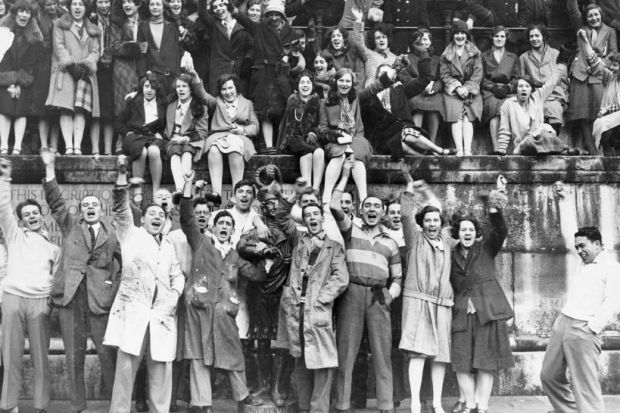
One of the more eye-catching tales included in a new book on the history of student culture concerns “practical jokes” that used to be played on lecturers.
Disguising highly toxic formaldehyde stolen from UCL’s engineering department as a bottle of beer might not be many modern students’ idea of a lark but the book also shows that little else about the university experience has changed.
Authors trawled through thousands of university newspapers, memoirs and interviews to research Student London: A new history of higher education in the capital, which they said is an attempt to re-examine the role students have played in the development of universities.
Released to coincide with UCL’s 200th anniversary this week, its authors say that it seeks to “write higher education students back into the story of London and to focus on students and students’ unions as a neglected aspect of university history”.
One of the authors, Sam Blaxland, lecturer in education at UCL, argued that students are often seen as “trivial” in the history of universities, and institutions can often overlook less favourable stories about themselves when recounting their histories, such as initial opposition to the establishment of LGBTQ societies.
Georgina Brewis, professor of social history at UCL, agreed that students are often not seen as “important”.
“They don’t win Nobel prizes, they’re not celebrated. They only start being celebrated when they win the Nobel Prize later on in their career, but by that point, we don’t know anything about their early days when they were at the institution.”
The book spans the 1800s until the present and tracks historical events through the eyes of students, such as the difficulties faced when they were evacuated from the city for the first time during the Second World War.
It also describes how Jamie Gardiner – now considered a pioneer of Australia’s LGBTQ rights movement – “felt [his] heart in [his] mouth” after requesting a form from UCL’s receptionist to establish what was to become the UK’s first university LGBTQ society.
Cultural shifts, politics, protests and relationships across generations can be viewed “through the lens of students”, said Blaxland, who added they are a “useful litmus test” for youth culture changes.
The authors noted that people’s time at university was often viewed as “nostalgia”. But they argue that although there were “some periods that were better to go to university in than others”, there was “no ‘golden age” of higher education.
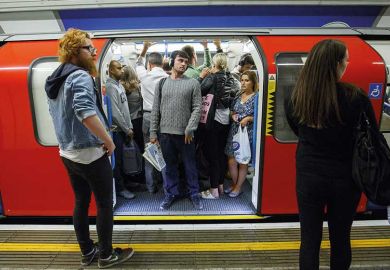
Current cost-of-living pressures, part-time work and remote learning have led to concerns that students are missing out on the “traditional” higher education experience. However, the book argues that what is often considered the apogee of UK higher education, between the end of the Second World War and the turn of the 21st century, when tuition was free and students were given maintenance grants, was “actually relatively short”, noting that before the 1960s most London students lived at home and often had long commutes.
Brewis said there was no singular “student experience” and that among students there has been “apathy” towards the university for generations. The image of a “golden age” where everyone was “debating and participating in the student union is definitely a myth”, she said.
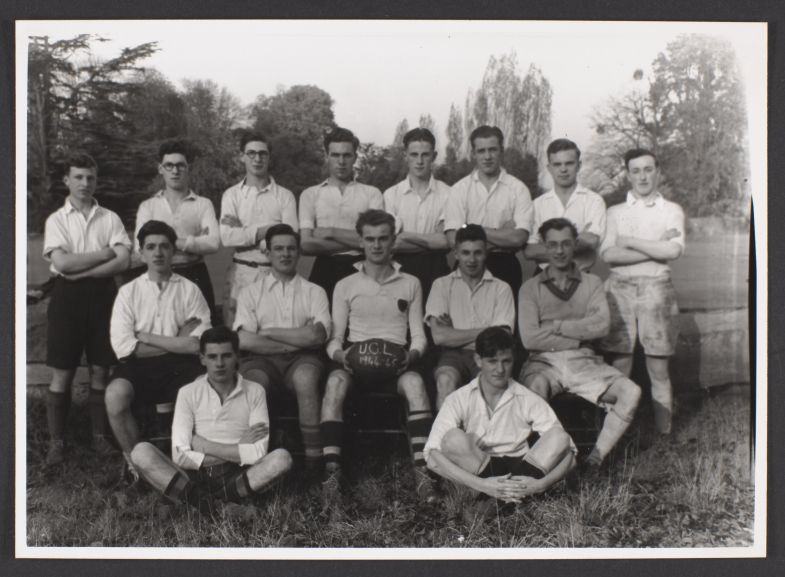
But some student trends have remained consistent. University-branded blazers popular in the first half of the 20th century have been replaced by hoodies, and Soho’s jazz bars have been swapped for nightclubs.
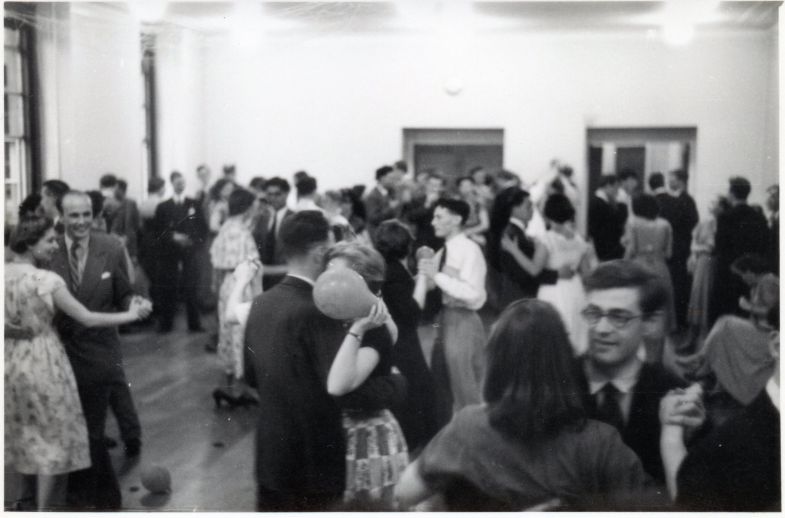
Brewis said she “loved” reading the student memoirs because of “how familiar they felt”. “There was one student in 1850 talking about his nights partying and he’s going to all these parties dancing the waltz and the quadrille, and he’s literally out at 2am, but he’s still at a 8am lecture”.
Another student, who was facing greater financial hardship, writes in his diary about how most nights he ate sausages for dinner, which cost him a “few pence”, adding that he “asked no questions as to what they were made of”.
“Students have experienced London as dirty, smoggy and seedy over multiple generations,” the book concludes.
Register to continue
Why register?
- Registration is free and only takes a moment
- Once registered, you can read 3 articles a month
- Sign up for our newsletter
Subscribe
Or subscribe for unlimited access to:
- Unlimited access to news, views, insights & reviews
- Digital editions
- Digital access to THE’s university and college rankings analysis
Already registered or a current subscriber?