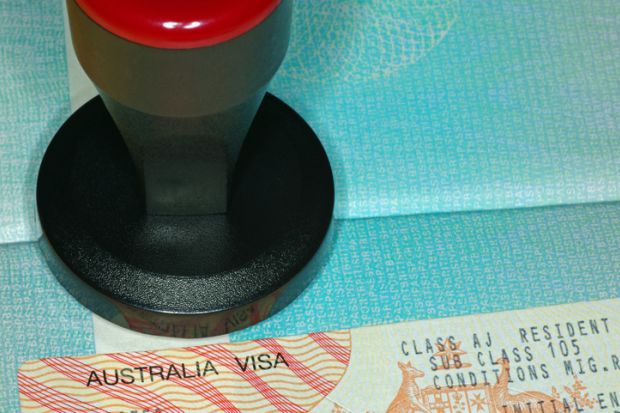
Incoming university student numbers from all of Australia’s major overseas source countries are crashing, as authorities’ willingness to grant visas wanes faster than students’ willingness to apply for them.
Fresh data from the Department of Home Affairs reveals an impending downturn in the foreign enrolments that buttress the higher education sector’s economic viability. The number of visa applications lodged from overseas fell 3 per cent last financial year, driven by a 26 per cent slump in demand from the top market of China and less dramatic declines from the second, fifth and sixth markets of India, Vietnam and Sri Lanka.
Nepal and Bangladesh, the third and fourth top markets, bucked the trend with applications for higher education visas rising by 58 per cent and 37 per cent respectively. Nevertheless, reduced visa approvals to all six countries fuelled a 16 per cent decrease in the number of visas awarded in 2025-26, compared with the previous year.
Visa approvals have returned to pre-pandemic levels, even though applications remain 10 per cent higher than in 2018-19. And the decline appears set to accelerate, with less than half as many higher education visas awarded to offshore applicants in June 2026 than in June 2025.
Grants to India, Bangladesh and Nepal respectively were 75 per cent, 89 per cent and 94 per cent lower than the previous June, suggesting that authorities are blocking student flows from continental South Asia by processing fewer applications and rejecting most that they process.
June grant rates for higher education visa applications were just 46 per cent from India, 22 per cent from Bangladesh and 14 per cent from Nepal. Across all nationalities, 32 per cent of the higher education visa applications lodged offshore were rejected.
The latest hike in the student visa application fee – from A$2,000 to A$2,500 (£1,042 to £1,303) for most nationalities – could also accelerate the slump. The visa data pre-dates this increase, which was applied without warning on 1 July.
The Association of Australian Education Representatives in India has demanded that the fee be split, with 60 per cent payable only after visas are granted. This would cover the government’s visa processing costs “while reducing the financial loss for unsuccessful applicants”, Sydney-based agent Ravi Lochan Singh explained. “It would provide greater fairness and help protect genuine students, particularly at a time when visa refusal rates remain high.”
The release of the visa data follows the unveiling of the government’s “indicative allocations” for overseas higher education student admissions in 2027. The allocations have remained at 2026 levels for public universities while rising slightly for some private colleges.
With just five months of the year remaining, there is little evidence that these quotas will have much effect on universities’ international recruitment. According to the latest advice from the federal education department, all but six of Australia’s 37 publicly funded universities are yet to reach 80 per cent of their 2026 allocations.
Register to continue
Why register?
- Registration is free and only takes a moment
- Once registered, you can read 3 articles a month
- Sign up for our newsletter
Subscribe
Or subscribe for unlimited access to:
- Unlimited access to news, views, insights & reviews
- Digital editions
- Digital access to THE’s university and college rankings analysis
Already registered or a current subscriber?