Modern Conspiracy: The Importance of Being Paranoid, by Emma A. Jane and Chris Fleming Rachel Hoffman on a reconceptualisation of conspiracy theory and its role in the modern world 23 October
Play Matters, by Miguel Sicart Steve Redhead on a discussion of play as a means of interacting with the world around us 23 October
The Immortal Evening: A Legendary Dinner with Keats, Wordsworth, and Lamb, by Stanley Plumly Shahidha Bari on a notorious meeting of three of the great Romantics and the almost-forgotten figure who brought them together 23 October
The Struggle For Pakistan: A Muslim Homeland and Global Politics, by Ayesha Jalal Farzana Shaikh on a retread of a historian’s former work on Pakistan 23 October
Plato at the Googleplex, by Rebecca Newberger Goldstein K. E. Gover assesses the case for the continuing relevance of Platonic thinking to modern life 23 October
Writing History in the Global Era, by Lynn Hunt Is globalisation the next paradigm for a ‘discipline in crisis’? Richard Bosworth reviews the evidence 16 October
The Truth About Art: Reclaiming Quality, by Patrick Doorly Tracey Warr on a study discussing the role of value judgements 16 October
Moral Conscience Through the Ages: Fifth Century BCE to the Present, by Richard Sorabji Tom Palaima considers a compact history of the ideas about our inner voice 16 October
Weimar: From Enlightenment to the Present, by Michael H. Kater Roger Morgan on the German city that enjoyed a golden age of culture that it never managed to reclaim 16 October
The Sense of Style: The Thinking Person’s Guide to Writing in the 21st Century, by Steven Pinker Rachel Bowlby on a modern style guide that aims to teach good writing in a non-prescriptivist way 16 October
Pornotopia: An Essay on Playboy’s Architecture and Biopolitics, by Beatriz Preciado Richard Williams on Hugh Hefner’s attention to the enhancement of pleasure through erotic design 16 October
The Compelling Ideal: Thought Reform and the Prison in China 1901–1956, by Jan Kiely Jonathan Mirsky on the attempts to impose thought reform on prisoners in pre-Communist China 16 October
British Culture and the First World War: Experience, Representation and Memory, by Toby Thacker Angela Smith on stories of the lives of 11 creatives interwoven to give an overview of the Great War from a range of perspectives 16 October
Born in the GDR: Living in the Shadow of the Wall, by Hester Vaizey First-person accounts add complexity to popular notions of East Germany, writes Ulrike Zitzlsperger By Ulrike Zitzlsperger 16 October
Actual Consciousness, by Ted Honderich Roberta Locatelli on an audacious venture to elucidate representations of thoughts and desires 9 October
John Skelton: The Career of an Early Tudor Poet, by John Scattergood David Salter on a comprehensive analysis of the diverse work of a ‘poet of contradictions’ 9 October
God and the Multiverse: Humanity’s Expanding View of the Cosmos, by Victor J. Stenger Virginia Trimble on a book that aims to explain the universe and its contents in terms of natural processes 9 October
Making Make-Believe Real: Politics as Theater in Shakespeare’s Time, by Garry Wills A look at theatre in the Elizabethan court indulges in some fantasies of its own, says Willy Maley 9 October
The Newton Papers: The Strange and True Odyssey of Isaac Newton’s Manuscripts, by Sarah Dry Robyn Arianrhod on the complex and contradictory life of the greatest physicist of all time 9 October
The Global Republic: America’s Inadvertent Rise to World Power, by Frank Ninkovich Elizabeth Cobbs Hoffman on an intricate history of the role of America on the global stage 9 October
The Man Who Thought He Was Napoleon: Toward a Political History of Madness, by Laure Murat Biancamaria Fontana on the tangled connections between historical events and mental illness 9 October
Resonances of the Raj: India in the English Musical Imagination 1897-1947, by Nalini Ghuman Andrew Blake appreciates a new view of the relationship between Empire and cultural hybridity 9 October
Feminism Unfinished: A Short, Surprising History of American Women’s Movements, by Dorothy Sue Cobble, Linda Gordon and Astrid Henry Mary Evans on a study of the US feminist movement from the 19th century 2 October
Why Grow Up?, by Susan Neiman Jane O’Grady on what it means to be mature in an infantilising culture 2 October
Edward Gibbon and the Shape of History, by Charlotte Roberts Richard Bosworth lauds a study of a complex and enduringly valuable work of scholarship 2 October
How I Stopped Being a Jew, by Shlomo Sand Lynne Segal on an Israeli scholar’s persuasive arguments against his country’s myths of identity 2 October
Lord Strange's Men and Their Plays, by Lawrence Manley and Sally-Beth MacLean Peter J. Smith applauds a study of an innovative company of actors and their influence on Elizabethan theatre 25 September
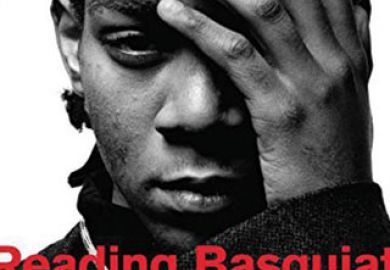
Reading Basquiat: Exploring Ambivalence in American Art, by Jordana Moore Saggese Tracey Warr on an examination of Jean-Michel Basquiat’s work – his inspirations and his relationship to artistic and ideological debates of the late 20th century 25 September
Political Order and Political Decay: From the Industrial Revolution to the Globalisation of Democracy, by Francis Fukuyama Roger Morgan on an exploration of the current state of our political institutions 25 September
Joan of Arc: A History, by Helen Castor Rachel Moss praises an elegant account that sets a charismatic Maid of Orleans in political context 25 September
The English Civil War: A Military History, by Peter Gaunt A comprehensive but compact new history of the war is reviewed by R. C. Richardson 18 September
The Inner Enemies of Democracy, by Tzvetan Todorov Vladimir Tismaneanu on a book that argues against the self-righteousness of neoliberalism 18 September
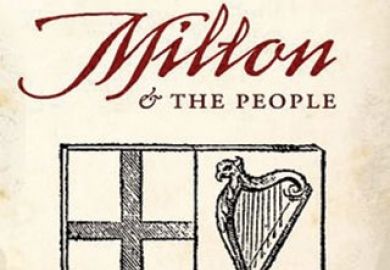
Milton and the People, by Paul Hammond Willy Maley praises a beautifully written account of the poet’s disaffection with the masses 18 September
Voices at Work: Women, Performance, and Labor in Ancient Greece, by Andromache Karanika Barbara Graziosi on a study of female labour and ancient Greek poetry 11 September
The Last Empire: The Final Days of the Soviet Union, by Serhii Plokhy John Barber on a vivid analysis of the last months of the collapse of the USSR 11 September
Literary Criticism in the 21st Century: Theory Renaissance, by Vincent B. Leitch Rachel Bowlby on a comprehensive history of literary theory and the various forms of criticism 11 September
The Culinary Imagination: From Myth to Modernity, by Sandra M. Gilbert Shahidha Bari savours a celebration of our relationship with food across genres and cultures 11 September
Fat Gay Men: Girth, Mirth, and the Politics of Stigma, by Jason Whitesel Sally R. Munt lauds an ethnographic study of men who are ‘out’ about their weight 11 September
Philology: The Forgotten Origins of the Modern Humanities, by James Turner Geoffrey Galt Harpham on a timely reminder of the common root of modern human sciences 4 September
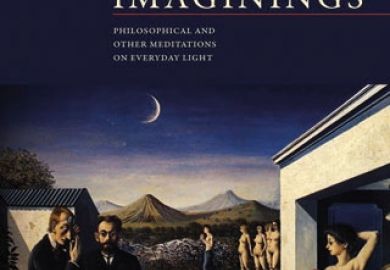
Epimethean Imaginings: Philosophical and Other Meditations on Everyday Light, by Raymond Tallis Jane O’Grady on a celebration of the importance of philosophy in the science of our everyday lives 4 September
The Taliban Revival: Violence and Extremism on the Pakistan-Afghanistan Frontier, by Hassan Abbas Christina Hellmich on an examination of the enduring nature of the Taliban 4 September
Japan: The Paradox of Harmony, by Keiko Hirata and Mark Warschauer Joy Hendry hopes for insights that look beyond stereotypes in this study of a nation in flux 4 September
Failing to Protect: The UN and the Politicisation of Human Rights, by Rosa Freedman Conor Gearty on why the United Nations is successful at developing and promoting human rights but fails in protecting them 4 September
Mysteries and Conspiracies: Detective Stories, Spy Novels and the Making of Modern Sciences, by Luc Boltanski Sharon Wheeler on an ambitious investigation of crime fiction and its relation to modern society 4 September
Philosophy and Blade Runner, by Timothy Shanahan Murray Smith learns much from an examination of the existential questions in a classic cinematic adaptation 28 August
From Eve to Evolution: Darwin, Science, and Women’s Rights in Gilded Age America, by Kimberly A. Hamlin Ellen Carol DuBois extols a study of a scientific theory’s impact on the pursuit of empowerment 28 August
Mind Change: How Digital Technologies Are Leaving Their Mark on Our Brains, by Susan Greenfield A lack of disciplinary expertise in digital cultures undermines this study, finds Tara Brabazon 28 August
National Service: Conscription in Britain, 1945-1963, by Richard Vinen A. W. Purdue on a British institution that changed lives but has been largely ignored by historians 28 August
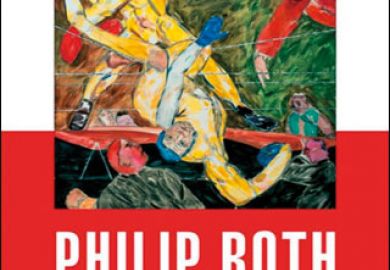
Philip Roth: Fiction and Power, by Patrick Hayes Nigel Rodenhurst is dispirited by one-sided scholarship and an unwillingness to challenge a literary reputation 28 August
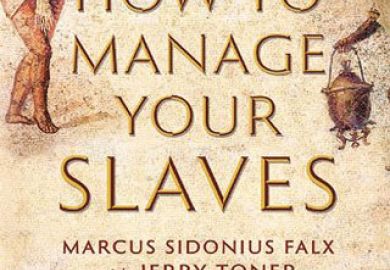
How to Manage Your Slaves, by Marcus Sidonius Falx, with Jerry Toner A light-hearted approach to a harrowing subject is illuminating and packs a punch, finds Tom Palaima 21 August
Watching Arabic Television in Europe: From Diaspora to Hybrid Citizens, by Christina Slade An examination of viewing habits illuminates the lives of Arabic people who have made their home in Europe, finds Zahera Harb 21 August
Celestial Revolutionary: Copernicus, the Man and His Universe, by John Freely A study of heliocentrism rightly acknowledges the work of Islamic astronomers, writes Peter Barker 21 August
Female Tommies: The Frontline Women of the First World War, by Elisabeth Shipton Niamh Gallagher on the women who challenged the consensus of who could serve at the front 21 August
The Darkest Days: The Truth Behind Britain’s Rush to War, 1914, by Douglas Newton A. W. Purdue extols a powerful contribution to the debate over the decision for war 21 August
Working the Aisles: A Life in Consumption, by Robert Appelbaum Leslie Gofton finds this fusion of memoir and essay blending academic learning, popular culture and politics fails to fully satisfy 21 August
A World Without Jews: The Nazi Imagination from Persecution to Genocide, by Alon Confino An analysis of anti-Semitic ideology illuminates a number of its contradictions, says Roger Morgan 14 August
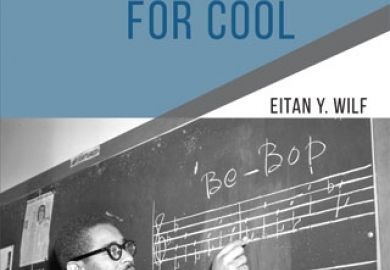
School for Cool: The Academic Jazz Program and the Paradox of Institutionalized Creativity, by Eitan Y. Wilf Does formal teaching of jazz contradict the improvisation that is at its core? Trevor Herbert examines the evidence 14 August
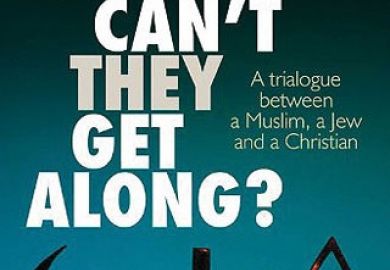
Why Can’t They Get Along? A Conversation between a Muslim, a Jew and a Christian, by Dawoud El-Alami, Dan Cohn-Sherbok and George D. Chryssides Three different religious standpoints are not merely distinct but incompatible, says Robert A. Segal 14 August
Cumin, Camels, and Caravans: A Spice Odyssey, by Gary Paul Nabhan Richard Wilk on a spicy mix of autobiography, food history and travel 14 August
Flight Ways: Life and Loss at the Edge of Extinction, by Thom van Dooren A compelling effort to inspire ethical concern for endangered species is marred only by jargon-laden interludes, finds Wenfei Tong 14 August