Life sciences' REF triumph 'lacks credibility' Bibliometric analysis concludes lower-quality thresholds in 2014 are more likely explanation for doubling of top-rated research By Paul Jump 27 July
Academic takes Bristol to tribunal over ‘grant income sacking’ Alison Hayman says that she is ‘not incapable’ and her treatment was ‘unjust’ By Paul Jump 15 July
US international postgraduate applications up for 10th year running Increase led by rise of applications from India and growing popularity of STEM subjects By Ellie Bothwell 30 June
Science inspired by fiction A new series of short films reveals the often unexpected books that have inspired scientists at Cambridge. By Matthew Reisz 8 June
How to Clone a Mammoth: The Science of De-extinction, by Beth Shapiro Work to bring creatures back from the dead is a tale of wonder and warning, writes Tiffany Taylor By Tiffany Taylor 21 May
The Vital Question: Why Is Life the Way It Is?, by Nick Lane Ravinder Kanda on a convincing hypothesis written in a witty style 14 May
The Invaders: How Humans and Their Dogs Drove Neanderthals to Extinction, by Pat Shipman A lupine alliance may have helped Homo sapiens to beat the competition, says Simon Underdown 23 April
The Ethics of Embryonic Stem Cell Research, by Katrien Devolder Ayesha Ahmad on a thoughtful contribution to a controversial debate 16 April
I, Superorganism: Learning to Love Your Inner Ecosystem, by Jon Turney Helen Bynum on the exciting and vital ‘molecular chatter’ taking place in the human microbiome 9 April
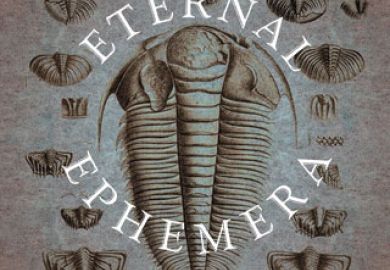
Eternal Ephemera: Adaptation and the Origin of Species from the Nineteenth Century Through Punctuated Equilibria and Beyond, by Niles Eldredgeh Simon Underdown on a tale of the development of evolutionary theory 12 March
The Least Likely Man: Marshall Nirenberg and the Discovery of the Genetic Code, by Franklin H. Portugal Charalambos Kyriacou lauds this account of the life of a humble Nobelist 5 March
Huxley’s Church & Maxwell’s Demon: From Theistic Science to Naturalistic Science, by Matthew Stanley Simon Underdown on the complicated process by which science replaced religion as means of explaining the world 5 February
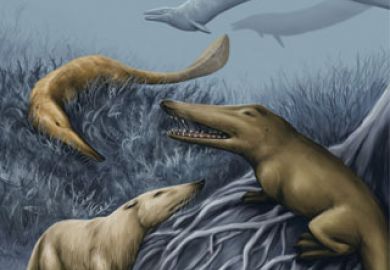
The Walking Whales: From Land to Water in Eight Million Years, by J. G. M. ‘Hans’ Thewissen The Indiana Jones of biology is an engaging guide in this marine detective story, says Philip Hoare 8 January
The Myth of Race: The Troubling Persistence of an Unscientific Idea, by Robert Wald Sussman Racial structure is cemented by theories on the fixed nature of the ‘other’, finds Yolanda T. Moses 11 December
The Meaning of Human Existence, by Edward O. Wilson The folksy charm of these essays threatens to detract from the main argument, says Simon Underdown 4 December
Vaccine Nation: America’s Changing Relationship with Immunization, by Elena Conis The history of vaccinations in the US has as much to do with politics as medicine, says Helen Bynum 27 November
Arrival of the Fittest: Solving Evolution’s Greatest Puzzle, by Andreas Wagner Tiffany Taylor on an investigation of the strategies for innovation involved in evolution 20 November
STEM Strategies: Student Ambassadors and Equality in Higher Education, by Clare Gartland Irene Glendinning evaluates a rare study of the effectiveness of STEM widening-participation schemes 6 November
Sapiens: A Brief History of Humankind, by Yuval Noah Harari Chris Knight on the history of humanity and the myths that shape our civilisations 2 October
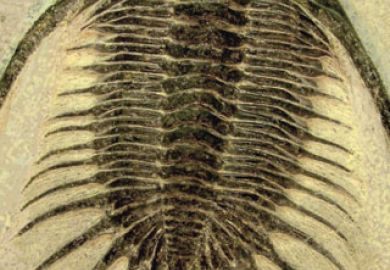
The Trilobite Book: A Visual Journey, by Riccardo Levi-Setti Euan Clarkson admires an exquisite collection of images of an iconic arthropod’s fossil traces 25 September
Thinking Big: How the Evolution of Social Life Shaped the Human Mind, by Clive Gamble, John Gowlett and Robin Dunbar Simon Underdown extols a study that looks beyond stones and bones to understand how the past shaped the brain 18 September
Planet of the Bugs: Evolution and the Rise of Insects, by Scott Richard Shaw Tiffany Taylor on a captivating and comical look at an often overlooked group of evolutionary survivors 11 September
From Eve to Evolution: Darwin, Science, and Women’s Rights in Gilded Age America, by Kimberly A. Hamlin Ellen Carol DuBois extols a study of a scientific theory’s impact on the pursuit of empowerment 28 August
Flight Ways: Life and Loss at the Edge of Extinction, by Thom van Dooren A compelling effort to inspire ethical concern for endangered species is marred only by jargon-laden interludes, finds Wenfei Tong 14 August
Political Descent: Malthus, Mutualism, and the Politics of Evolution in Victorian England, by Piers J. Hale Simon Underdown on a meticulously researched analysis of two camps’ opposing arguments over Darwin’s work 31 July
Snakes, Sunrises, and Shakespeare: How Evolution Shapes our Loves and Fears, by Gordon H. Orians Tiffany Taylor on the emotional and aesthetic responses we share with our hominid ancestors 31 July
The Story of Pain, From Prayer to Painkillers, by Joanna Bourke Brian Hurwitz on the inadequacy of language when it comes to describing physical suffering 10 July
Missing Microbes: How Killing Bacteria Creates Modern Plagues, by Martin Blaser Overuse of antibiotics is upsetting the balance of our internal ecosystems, finds Jon Turney 3 July
40 Years of Evolution: Darwin’s Finches on Daphne Major Island, by Peter R. Grant and B. Rosemary Grant Tim Birkhead advocates long-term scientific studies, particularly for natural selection observations 19 June
Embryos Under the Microscope: The Diverging Meanings of Life, by Jane Maienschein Sally Lowell on our understanding of embryonic development and the possibilities and responsibilities that have arisen 19 June
The Drunken Monkey: Why We Drink and Abuse Alcohol, by Robert Dudley Tiffany Taylor on a thought-provoking exploration of alcoholism from an evolutionary perspective 29 May
Malthus: The Life and Legacies of an Untimely Prophet, by Robert J. Mayhew Niall O’Flaherty on a penetrating and nuanced account of Malthus’ insights and the consequent responses 22 May
War! What is it Good for? Conflict and the Progress of Civilization from Primates to Robots, by Ian Morris Jeremy Black on the provocative thesis that war has permitted the creation of peaceful societies 22 May
Publishing and the Advancement of Science – From Selfish Genes to Galileo’s Finger, by Michael Rodgers Jon Turney on an editor whose work with popular science writers helped to re-establish the genre 24 April
Notebooks, English Virtuosi, and Early Modern Science, by Richard Yeo William Poole on how a culture of literary commonplacing gradually gave way to one of scientific record-keeping 24 April
Ten Thousand Birds: Ornithology Since Darwin, by Tim Birkhead, Jo Wimpenny and Bob Montgomerie Claire Spottiswoode on the history of modern ornithology and how it has contributed to our understanding of evolution 10 April
The Depths: The Evolutionary Origins of the Depression Epidemic, by Jonathan Rottenberg Joanne Dickson on innovative mental health approaches to the understanding and treatment of a global problem 10 April
Neanderthal Man: In Search of Lost Genomes, by Svante Pääbo Simon Underdown on a gripping account of the reconstruction of the first genome recovered from an extinct human species 3 April
The Knowledge: How To Rebuild Our World From Scratch, by Lewis Dartnell What will we need to know to reboot civilisation after the apocalypse?, asks Alison Stokes 3 April
Synthetic Aesthetics: Investigating Synthetic Biology’s Designs on Nature, by Alexandra Daisy Ginsberg, Jane Calvert, Pablo Schyfter, Alistair Elfick and Drew Endy Jon Turney on the possibilities, real and imagined, of engineering the building blocks of life 20 March
The Gap: The Science of What Separates Us From Other Animals, by Thomas Suddendorf Eric Michael Johnson is gripped by an evaluation of what it is to be human and our place in nature 20 March
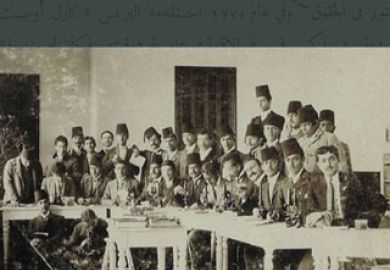
Reading Darwin in Arabic, 1860-1950, by Marwa Elshakry Steve Jones considers a reflection on the Origin of Species’ influence on everything (except biology) 13 March
The Monkey’s Voyage: How Improbable Journeys Shaped the History of Life, by Alan de Queiroz Are tales of incredible animal excursions nonsense or did they shape our world? asks Tiffany Taylor 6 March
Was Hitler a Darwinian? Disputed Questions in the History of Evolutionary Theory, by Robert J. Richards Nazi ideology may not have adopted evolutionary theory wholesale, but it certainly used its ideas, says Yvonne Sherratt 16 January
Wicked Intelligence: Visual Art and the Science of Experiment in Restoration London, by Matthew Hunter William Poole enjoys the insights but prefers his prose less florid 9 January
Down to the Sea in Ships: Of Ageless Oceans and Modern Men, by Horatio Clare Philip Hoare on the global market’s manifest destiny 2 January
The End of Plagues: The Global Battle against Infectious Disease, by John Rhodes Helen Bynum on the history of vaccination 12 December
The Nostalgia Factory: Memory, Time and Ageing, by Douwe Draaisma Alan Collins considers the ‘reminiscence effect’ 12 December
The Way of Science: Finding Truth and Meaning in a Scientific Worldview, by Dennis R. Trumble Andrew Briggs on an effort to cast down faith-based reasoning 31 October
Tracks and Shadows: Field Biology as Art, by Harry W. Greene Jules Pretty on a combined autobiography of a field biologist and celebration of nature 24 October
Gentlemen’s Disagreement: Alfred Kinsey, Lewis Terman, and the Sexual Politics of Smart Men, by Peter Hegarty Donna Drucker on the relationship between intelligence and sex 3 October
Me Medicine vs. We Medicine: Reclaiming Biotechnology for the Common Good, by Donna Dickenson Medical advances have coincided with a decline in healthcare for all, finds Dita Wickins-Drazilova 19 September
Better Humans? Understanding the Enhancement Project, by Michael Hauskeller Andy Miah on the pros and cons of humanity 2.0 12 September
On Gaia: A Critical Investigation of the Relationship between Life and Earth, by Toby Tyrrell Jon Turney on the latest scientific findings regarding interactions between life and our planet that do not support the Gaia theory 8 August
Randomness in Evolution, by John Tyler Bonner Tiffany Taylor weighs the evidence of the importance of random changes in species development 18 July
The Serpent’s Promise: The Bible Retold as Science by Steve Jones Alec Ryrie on an intriguing book that doesn’t do what it says on the tin 11 July
A Child of One’s Own: Parental Stories by Rachel Bowlby Bryony Randall lauds an insightful and overdue study of literary representations of parenting 11 July
Trying Biology: The Scopes Trial, Textbooks, and the Antievolution Movement in American Schools by Adam R. Shapiro Simon Underdown on a key battle between science and religion 4 July