Shaped by uncertainty: how the war in Iran is affecting UAE applications
Rising regional tensions and airspace disruptions have made students in the UAE rethink their university applications


You may also like



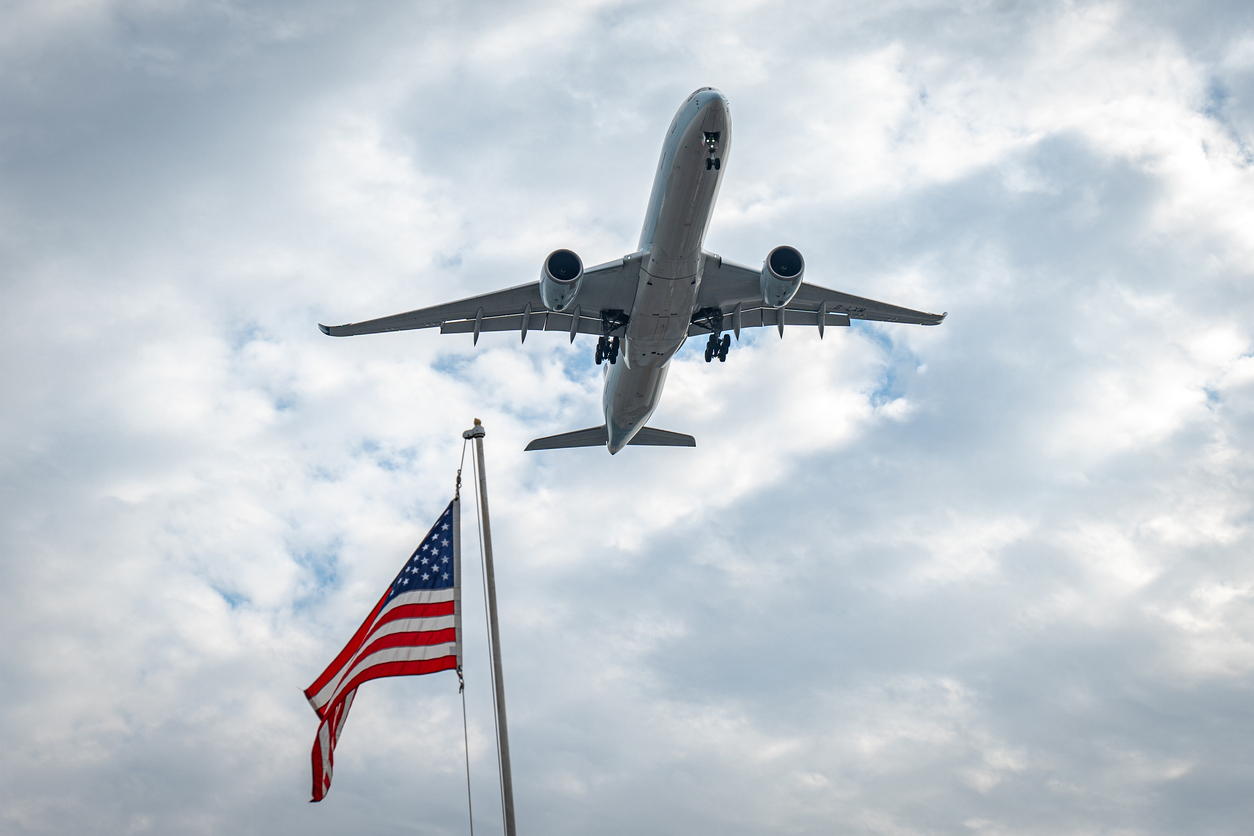

When 17-year-old Mariam, a high school student in Abu Dhabi, began preparing her university applications last year, her plan was clear. She would apply to universities in the UK, study economics and experience life abroad.
But in recent months, that certainty has started to shift.
“I still want to go,” she says. “But now my parents keep asking what happens if flights get disrupted, or if something changes suddenly. It wasn’t something we really thought about before.”
Across the country, students like Mariam are navigating decisions that feel more complicated than usual.
Applying against an uncertain backdrop
For thousands of school leavers in the UAE, the months leading up to university application deadlines are typically defined by familiar pressures: predicted grades, personal statements and choosing where to spend the next three or four years.
This year, however, those decisions are unfolding against a more uncertain backdrop.
Rising regional tensions and recent security concerns have brought geopolitical uncertainty closer to home than many students have previously experienced. Airspace disruptions, heightened alert and constant news coverage have made global events difficult to ignore, even for teenagers trying to focus on exams and applications.
As a result, students and their families are asking new questions. Are overseas universities still the right choice? Is it safer to remain in the UAE? And could wider instability influence where students choose to study?
Rethinking studying abroad
For many UAE-based students, studying abroad has long been seen as a natural next step after secondary school. Each year, the country sends roughly 15,000 students overseas, with outbound mobility historically growing at roughly 3 to 4 per cent annually.
Demand remains strong. According to Unesco outbound student data (UAE), about 18,600 UAE students were studying abroad in 2022, an increase of more than 50 per cent since 2018. Recent analysis suggests numbers have remained broadly stable through 2024-2025.
But now: “Students are still very interested in going abroad but we’re seeing more of them ask about staying closer to home,” says a university counsellor at an Abu Dhabi-based school.
Parents are also weighing decisions more carefully. Some say recent events have highlighted how quickly geopolitical situations can shift, raising concerns about travel disruptions or being far from their children during uncertain times.
For some students, proximity is becoming more important. They are now considering universities in the UAE or nearby countries alongside traditional destinations. That is the case for Ahmed, an 18-year-old student in Abu Dhabi who had initially planned to study in Canada. In recent weeks, he has begun applying to universities in the UAE instead.
“My first choice was definitely abroad,” he says. “But now I’m thinking it might be better to stay here, at least for my undergraduate degree. If things change, I can always go later for a master’s.”
Shifting destination choices
For others, however, the current situation has had the opposite effect. Mariam says recent events have made her more determined to leave.
“I feel like I want to experience something different,” she says. “If anything, everything happening has made me more confident that I want to go.”
These contrasting perspectives highlight how personal and complex these decisions have become.
The current situation could also influence where students apply. The UK remains the top destination, hosting more than 8,000 UAE students, according to Unesco mobility data, while the US, Canada and Australia continue to attract significant numbers. However, families are increasingly factoring in practical considerations.
“There’s more discussion around travel reliability, visa processing and general stability,” says an education consultant in Abu Dhabi. “Even if the risks are low, perception plays a big role.”
As a result, alternative destinations are gaining attention. Canada and Australia are seen as stable options with favourable immigration pathways, while European and Asian universities are becoming more competitive.
Experience suggests such shifts can happen quickly. During the Covid pandemic, many students chose to study closer to home or delayed their plans, highlighting how sensitive international mobility is to disruption.
International students: pausing to reconsider
The impact of regional tensions might not be limited to outbound students. Regional uncertainty could also affect inbound student flows.
In recent years the UAE has positioned itself as a major education hub. In Dubai, international students now account for about 35 per cent of private higher education enrolments. Nationally, more than 57,000 students were enrolled in UAE universities in 2024-2025, the highest level in more than a decade.
Officials say internationalisation has been central to that growth, with the country attracting students from across the Middle East, South Asia and Africa. However, perception remains critical.
“If uncertainty in the region continues, some international students may pause and reconsider,” says an education analyst. “Even if the risks are limited, perception can influence behaviour quite quickly.”
If that were to happen, it could have indirect effects on domestic applicants. In theory, reduced international competition could ease pressure on places at some institutions, although there is currently no clear evidence of such a shift.
Decisions in uncertain times
For students like Mariam and Ahmed, the uncertainty is shaping real decisions. Mariam is still preparing applications to universities in the UK, while Ahmed is focusing on options closer to home. Both say they are trying to balance ambition with practicality.
“It’s not that I’ve changed my goals,” Ahmed says. “I’m just changing the timing.”
Schools say they are placing greater emphasis on counselling and guidance to help students manage anxiety while staying focused. “We remind students that while the world may feel uncertain, their opportunities are still wide open,” one counsellor says.
For many students, constant news alerts and social media coverage have made global events feel immediate and personal, even as they prepare for exams and major life decisions.
It could be months before universities are able to determine whether current uncertainty translates into measurable changes in application patterns. Historically, shifts in student mobility tend to emerge gradually rather than immediately.
For now, the clearest impact might be the conversations taking place among students and families. Decisions that were once driven primarily by academic ambition and career planning are now also shaped by questions of safety and stability.
In the months ahead, application data will offer clearer answers. But, for now, uncertainty itself is shaping how a new generation of UAE students approach one of the most important decisions of their lives.
The author is a counsellor in the UAE.