
Why serious skills need serious play


Created in partnership with

Created in partnership with
You may also like
Teaching human-centred skills is never straightforward. Students have to practise them, which means stepping into unfamiliar situations and performing behaviours they haven’t yet developed – and, crucially, in front of others. This is the point where the process often breaks down.
Ask first-year physiotherapy students to role-play a real clinical conversation and many struggle – not only as the clinician but also as the patient. They might understand the theory but they do not yet know how a distressed, ambivalent or resistant patient actually responds in conversation. The result is often a thin version of practice: polite exchanges, predictable answers and role plays that feel performed rather than meaningful.
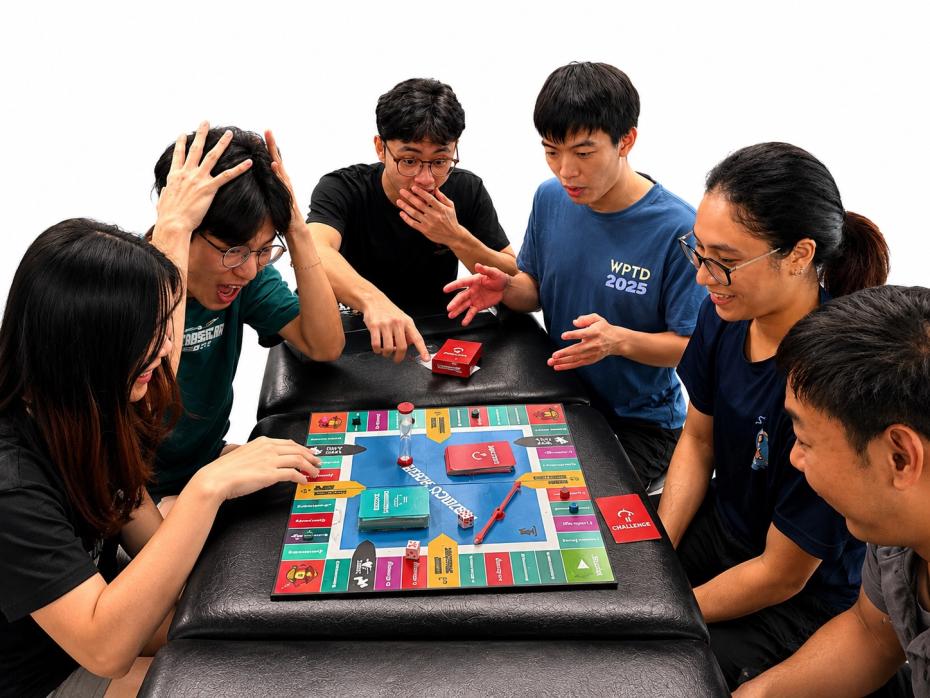
We needed a way in: something structured, low-stakes and rich in practice. So we developed a familiar physical game, with a board, cards, tokens and role play, but enhanced by AI.
- Five tips when embedding gamification in the classroom
- Go beyond play and engage students with game-based learning
- Ready, player one? How video games can help engage students
Here is how a round works. Students move around the board and land on play spaces, each linked to a type of clinical conversation. Some ask them to start gently, building rapport with a patient who is unsure or guarded. Others make the encounter harder: the patient pushes back, dismisses advice, gives short answers or insists they have been misunderstood.
They then draw a card that sets the scenario. The student feeds it into the AI tool, which generates a patient character and voices the opening lines. From there, the student responds in real time while the tool stays in character, improvises as the patient and shows whether each response carries the conversation forward, sideways or nowhere at all.
Take one challenge round. The resistance card produced Mr Lim, a 46-year-old taxi driver sent in by his GP about his blood pressure and low physical activity.
He opened defensively: “I don’t know why I’m here. My wife and doctor keep saying I need to exercise but they don’t sit in traffic for twelve hours. I’m not lazy. I’m just tired.”
The student responded: “Yeah, work sounds really tiring. Maybe you could start small, like taking a short walk after dinner?”
Mr Lim pushed back: “Walk after dinner? By the time I reach home, I just want to shower, eat and sleep. This is why I don’t like coming for these things.”
The tool paused the round and said: “Notice Mr Lim’s pushback. What do you think he is reacting to here? Before offering another suggestion, try reflecting what he wants you to understand about his day.”
The issue was not that the student ignored his stress. It was that she heard his difficulty, then moved too quickly into fixing it before he felt properly understood.
Here is what the game did. Mr Lim’s pushback showed the student that her response had not landed. The tool then pointed her attention back to the interaction without giving her the answer. The student still had to work out what to say next but she had enough feedback to try again.
Here are three design principles that shaped the experience:
1. Make practice realistic enough to matter, and playable enough to begin
Most students had never seen what authentic clinical communication looks like. So we built scenarios drawn from real practice: someone guarded, confused, emotional or insistent that they’re fine. Not clean scripts with the right answers but ambiguous moments that required judgement.
Traditionally, students practised these conversations through peer role play. But when both students are new to clinical communication, the patient role is difficult to play with any depth. Students might not know how to show hesitation, ambivalence, distress or resistance, so the interaction can become limited before the clinician role has anything meaningful to respond to.
So we shifted to AI-supported interaction: not a perfect simulation but believable enough that students could spend less time creating the patient and more time responding to one.
2. Complex skills become learnable when broken into smaller pieces
The game made communication practice smaller. Instead of asking students to manage a whole clinical conversation at once, each turn gave them one immediate task: open the exchange, build rapport, reflect what the patient said, find direction or recover when the conversation started to slip.
This mattered because students could practise the skill at the level where it actually happens: one response at a time. They were not performing an entire encounter; they were trying one response, seeing how the patient reacted and deciding what to do next.
3. Fun matters more than you think
Once the game started, the atmosphere changed. Students leaned in, laughed at their mistakes and debated whose responses were more effective. The play disrupted the fear of getting it wrong, lowering the stakes just enough to explore vulnerable or unfamiliar behaviours.
The structure is what keeps this from tipping into “anything goes”: play lowers the social stakes but the turns, goals and the patient’s reactions keep the task serious. Students could laugh at a clumsy attempt and still see, immediately, that it had not worked.
Feedback, too, felt different. In traditional role play students often feel judged or exposed. Embedded in a game, the same tasks felt less performative and more exploratory. Feedback became something to improve the next round, not something to survive, and it came from two places at once: the patient’s reaction in the moment, and a short prompt from the AI tool naming one thing to try differently.
A call to play, with purpose
Games won’t solve every teaching challenge. But when we tested it, students reported a marked improvement in their confidence. When the goal is to develop nuanced, relational skills such as empathy or reflective listening, structured play gives students a way to begin practising before they feel ready. The hard stuff stays hard at first. But with the right kind of play, students can enter it, stay with it and slowly become the kind of practitioner who can handle it.
Mark Anthony Chan Wen Kein is assistant professor at Singapore Institute of Technology.
If you would like advice and insight from academics and university staff delivered direct to your inbox each week, sign up for the Campus newsletter.
