

Reimagining higher education in an AI-driven future




Universities across the world have embraced AI to varying degrees in recent years. However, keeping up with the rapid development of technologies can be overwhelming for educators. Investing in AI literacy and professional development is essential to measuring the effectiveness of different AI tools. During a session, held in partnership with Huawei, at the 2026 THE Asia Universities Summit, a panel of experts shared insights and strategies for advancing universities towards an AI future.
“AI is the most powerful tool of our time, but a tool without judgement is dangerous,” said Hill Huang, vice-president for education at Huawei. “Universities are where this judgement is built.”
Huang added that in the age of AI, universities must play a bigger role in shaping society: “AI is changing how we learn, teach, explore and work. It’s moving fast, but speed is not direction. Technology moves fast but universities will decide where we go.”
Ashley Mok, director for consultancy services at Times Higher Education, outlined insights from THE’s AI and Digital Maturity Index, which offers a global framework for AI and digital transformation in higher education. Based on responses from over 433 institutions across Asia Pacific, the 2026 APAC report examines AI and digital readiness across teaching, research, connectivity, leadership and strategy.
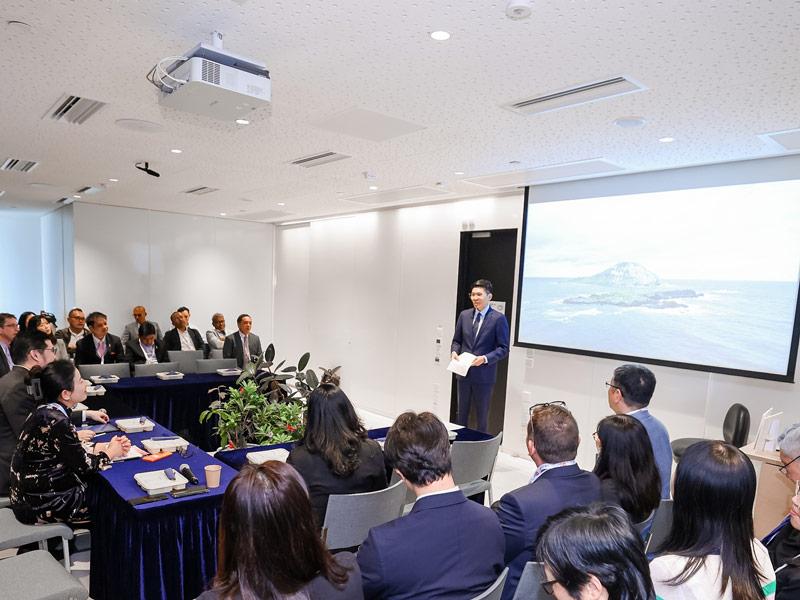
The panellists shared how their institutions are working towards equitable and responsible AI adoption. Parichart Sthapitanonda, vice-president of academic affairs and social outreach at Chulalongkorn University in Thailand, spoke about the need for universities to work closely with industry partners to design outcome-based frameworks for teaching and learning.
In China, the government’s emphasis on AI is helping higher education keep pace globally, said Lei Zhang, assistant researcher at Shanghai Jiao Tong University. The university’s leadership has made AI a strategic focus. This commitment is reflected in its short and long-term plans and supported by its collaboration with the Shanghai government.
However, making the best use of infrastructure can sometimes be a challenge, said Zhang. The university collaborated with Huawei to build a supercomputing system. Its project managers serve as AI leaders to manage the platform’s use and demand, said Zhang. It is important to educate people on best practice when it comes to using AI, she added.
Sean McMinn, director of the Center for Education Innovation at the Hong Kong University of Science and Technology, said that once an institutional need is identified, universities must perform an evaluation, determine what tools are available and what partnerships are needed. For example, the university has invited Huawei to support faculty development on AI, he said.
Jay Siegel, vice-president and pro vice-chancellor of teaching and learning at the University of Hong Kong, spoke about empowering staff and students by providing seamless access to the right tools. “For us, the investment has been on bringing down the barriers to accessing things,” Siegel said. This can help improve personal motivation, encouraging student engagement and AI use among educators.
It is important to help students and faculty members understand why AI is important, said McMinn. “If we don’t invest in helping faculty and students understand this, that motivation will not emerge,” he concluded.
The panel:
- Hill Huang, vice-president for education, Huawei
- Ashley Mok, director for consultancy services, Times Higher Education (chair)
- Sean McMinn, director of the Center for Education Innovation, Hong Kong University of Science and Technology
- Jay Siegel, vice-president and pro vice-chancellor of teaching and learning, University of Hong Kong
- Parichart Sthapitanonda, vice-president of academic affairs and social outreach, Chulalongkorn University
- Lei Zhang, assistant researcher, Shanghai Jiao Tong University
Find out more about the AI and Digital Maturity Index.
