

Reimagining assessments in response to AI


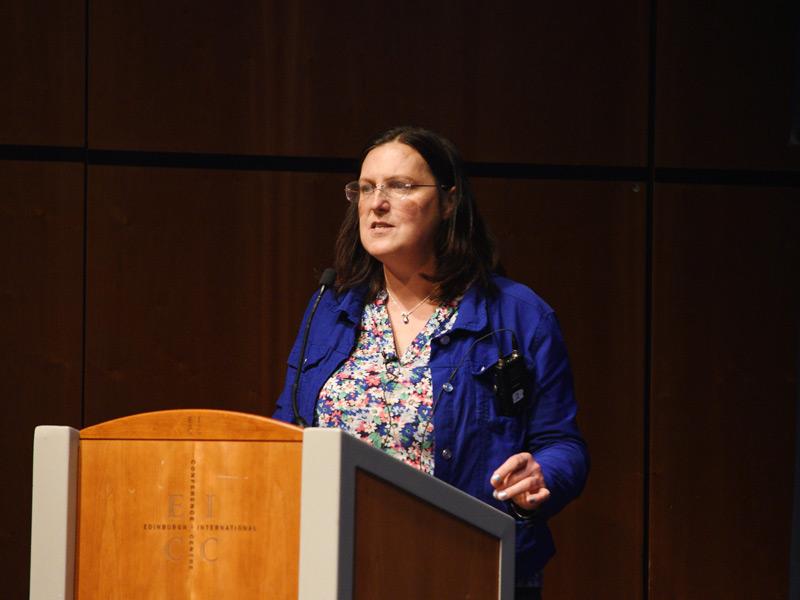

University responses will model AI adoption for those currently in higher education and also show future leaders how to deal with the next generation of disruptive technologies, according to Lydia Arnold, associate pro-vice-chancellor of learning and teaching at Harper Adams University in the UK.
Students are leaders of the future and educators need to ensure they “know how to deal with technological change and not be fearful of it”, said Arnold, speaking at a session during the 2025 THE Student Success UK and IE event. Held in partnership with PebblePad and featuring an introduction by its director of global marketing, Alison McHugh, the session highlighted how generative AI has not only disrupted traditional assessment methods but also revealed their fragility.
“We need to grapple with the technology, ask difficult questions and not be afraid to get stuck in and play with the different tools as they change and emerge,” said Arnold. Proficiency in AI tools is increasingly important in the workplace and universities need to help students navigate this space.
Coordinating approaches to AI
Countries around the world are already developing national strategies around AI, tied to specific economic aims and societal ambitions. “If we start to look at the nuance of these strategies, it helps us to think about the courses we want to build, who we want to partner with and how we might work internationally in this space,” Arnold said.
The panellists discussed the common concerns around AI use in assessment. In particular, higher education practitioners are worried about student integrity and upholding academic standards. While there is no single solution to this challenge, there is a suite of options that could help, Arnold said. Institutions could curb cheating by lining up various elements such as assessment designs, the right environment and culture on top of each other.
For instance, PebblePad is an ePortfolio, workbook and assessment platform that focuses on making learning visible by unifying the student journey. “For 20 years, PebblePad has put student-centred learning at the heart of everything that we do,” said Alison McHugh, explaining that the platform captures students’ learning experiences and gives them a space to analyse what they learn. “Crucially, it allows them to evidence their skills, attributes and competencies over time. It supports growth and reflection, helping not just students but also educators,” she added.
Reconfiguring assessment designs
Another option is the two-lane approach, devised by the University of Sydney in Australia. It involves two types of assessment: open, where students can use AI, and secure, where it is not allowed. Those two models can work together, Arnold said. “At the heart of this is working programmatically. It is thinking about our assessment designs in terms of a programme and how the student travels through it as a whole experience,” she said.
The type of assessments impacted by AI is “often the things that are recall-based, not personalised, and those we don’t necessarily take pride in”, said Arnold. “This is a call to go back to taking pride in our assessment work and to create assessments that students will enjoy and will get behind as part of the process.”
The speakers:
- Lydia Arnold, associate pro-vice-chancellor of learning and teaching, Harper Adams University
- Alison McHugh, director of global marketing, PebblePad
Find out more about PebblePad.
