
Beyond borders: the new architecture of transnational education in East Asia



Over the past five years, transnational education (TNE) in East Asia has undergone a structural shift. Once centred on programme delivery and student recruitment, it is now embedded in how countries pursue higher education reform, skills development and institutional capability. More importantly, governments and institutions in East Asia are redefining the purpose and value of TNE.
From expansion to capability building
Enrolments in UK TNE programmes have been rising for nine consecutive years. China remains the UK’s largest TNE partner, with enrolments having more than quadrupled over the past decade. The country accounted for over 44 per cent of all UK TNE enrolments in East Asia in 2024-25. However, the regional pattern is increasingly diversifying. Vietnam, for example, has seen rapid growth, with enrolments increasing by an average of 31 per cent every year since 2017-18.
This growth was driven by supportive national policies, including recognition of hybrid and blended TNE models and a strong focus on digital transformation, quality assurance and labour-market alignment. Meanwhile, Indonesia and the Philippines are emerging as important growth markets as their governments prioritise internationalisation and industry-linked curricula.
This diversification is altering partnership models. Universities are moving from franchise arrangements toward co-developed quality frameworks, curriculum redesign and shared research infrastructure. These are not add-ons – countries now expect TNE to contribute to stronger systems, not simply to provide additional study routes.
Skills alignment as a competitive edge
Across East Asia, demographic pressures and sectoral shifts are creating urgent demand for skills in cybersecurity, AI, data analytics, manufacturing technologies and health sciences. As a result, TNE partnerships increasingly incorporate work-integrated learning, applied research components and stackable microcredentials.
For example, Vietnam’s push for digital transformation has opened significant space for blended and online TNE, while Indonesia’s focus on human-capital development has prompted interest in programmes that link curriculum content to national skills roadmaps. These shifts are driving UK institutions to design provisions that are academically rigorous and directly responsive to economic priorities.
A multi-model delivery landscape
The coexistence of branch campuses, hybrid models and collaborative online international learning is a defining feature of the post-2020 TNE landscape. Branch campuses remain strong in markets with mature regulatory systems, such as Malaysia and China. But hybrid and digital modes have expanded rapidly. These evolving approaches are enabling institutions to test demand before committing to infrastructure, co-teach modules across borders and widen access while maintaining quality standards.
Governments across the region are refining TNE regulation to emphasise governance, student protection, digital delivery standards and long-term sustainability. Navigating these regulatory landscapes now requires institutions to demonstrate contribution to national research, innovation and skills ecosystems – not just student mobility.
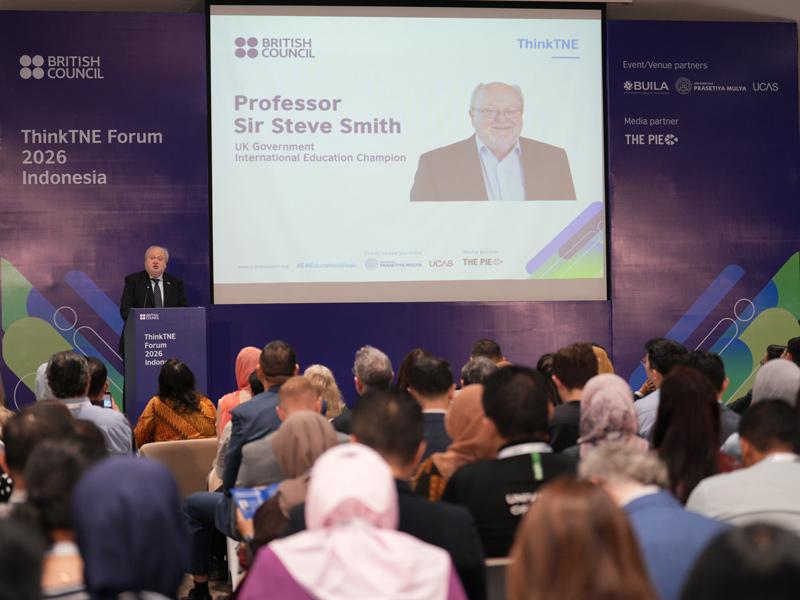
The next five years are likely to see TNE become more closely linked to research collaboration and innovation networks. Emerging models include joint research centres connected to TNE partnerships, co-supervision of postgraduate degrees and thematic mobility pipelines in STEM and sustainability. As highlighted by Sir Steve Smith, the UK Government’s International Education Champion, at the 2026 ThinkTNE Forum in Indonesia, this shift reflects a deeper alignment between education and research, with international collaboration already underpinning around 60 per cent of UK research outputs and delivering significant public value. Strengthening TNE partnerships can further build the long-term institutional networks, alumni communities and innovation ecosystems that sustain this collaboration.
Find out more about the British Council’s work in education.
