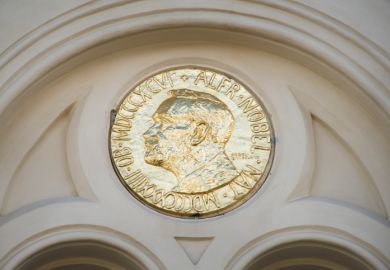
Douglass North, Nobel prizewinner in economics in 1993, has written a fascinating book on the process of economic change. A striking feature is that he has done so in accessible English. In marked contrast to most economics books, there is not a single mathematical formula in the entire text.
The book is nonetheless rigorous and analytical, dealing with deep issues that are of great importance not just for the discipline of economics, but for the world as a whole.
North's work spans the ten millennia of settled human existence. Why is it that all previously existing societies have achieved so little and have ended in failure? Why has Western capitalism been so spectacularly successful? Why has development in Latin America repeatedly stalled after so many promising starts? Why did the Soviet Union, by far and away the most consciously planned society that ever existed, collapse in ignominy?
North makes it clear from the outset that the standard economic theories of growth have very little to offer in terms of understanding economic history. Indeed, he goes further, arguing that the whole of the conventional paradigm of economics "was not created to explain the process of economic change. We live in an uncertain and ever-changing world that is continually evolving in new and novel ways. Standard theories are of little help in this context. Attempting to understand economic, political and social change requires a fundamental recasting of the way we think".
His previous work helped inspire a revolution in economic history by demonstrating that economic performance is determined largely by the kind and quality of institutions that support markets. In particular, property rights and transaction costs are fundamental determinants of economic performance. North sees institutions as a set of rules, both formal and informal, that constrain or encourage different types of human economic behaviour. In this book, the focus is much more on how different societies arrived at the various institutional infrastructures that were crucial in their economic history.
Regrettably, much of North's work, documented in so much detail, has yet to permeate most of conventional economics, which remains fixated on the view that economics is the physics of society. In other words, most of the profession behaves as if there were a single universally valid view of the world that needs only to be applied. Yet all the major developments in the subject point to an opposite view. The more recent Nobel laureates Vernon Smith and Daniel Kahneman, for example, have drawn extensively on evidence from psychology and demonstrated that the behavioural postulates of conventional economics are in general deeply flawed.
The content of the book goes far beyond the confines of economics to address problems of human cognition and the formulation of beliefs. The orthodox economic approach assumes that decision-makers - whether firms, individuals or governments - act in a fully "rational" way. They are armed with truly formidable cognitive powers, able to gather all available information and to process it in a way that arrives at the single best decision. The concept of "bounded" rationality, introduced by economists such as Joseph Stiglitz and George Akerlof, goes some way to relaxing these assumptions, by permitting decision-makers to have access to a limited set of information only. But they still possess the enormous processing capacity required to make the optimal decision given the set of information available to them.
North notes that in very restricted circumstances, it is reasonable to assume such high cognitive ability. But in general, the level of uncertainty about the future that people face is so great that their cognitive ability to anticipate and plan successfully is low. Most of human economic history consists of failure. Unlike biological species, humans can act with the intent of improving their fitness for survival but, as North notes, there is a "wide gap throughout history between intentions and outcomes".
In terms of practical policies for, say, lifting Africa out of poverty or for placing Latin America on a more sustainable growth path, North is sceptical of any simple formulas, seductive though they may be. He argues convincingly that there are inherent difficulties involved in attempting deliberately to alter the societal framework, given the imperfect knowledge of decision-makers.
Yet his work is far from purely negative. He suggests that positive change is achievable, and it depends on "adaptive efficiency". By this he means not just the ability of a society to create institutions that are productive, stable and broadly accepted, but flexible enough to adapt in response to changed circumstances. The book is written in a clear and concise style that succeeds in conveying a number of inherently difficult ideas well. It deserves a wide readership. Economists at all levels, student and staff, should read it. It will challenge their mind-sets fundamentally. But even if they continue to disagree, the book shows economists how effectively their subject can be communicated by a true expert. Indeed, quite literally anyone with an interest in world poverty can benefit from this carefully crafted and closely argued book. It is a pleasure and a delight to read.
Paul Ormerod is the author of Why Most Things Fail and a director of Volterra Consulting.
Understanding the Process of Economic Change
Author - Douglass North
Publisher - Princeton University Press
Pages - 187
Price - £18.95
ISBN - 0 691 11805 1
Register to continue
Why register?
- Registration is free and only takes a moment
- Once registered, you can read 3 articles a month
- Sign up for our newsletter
Subscribe
Or subscribe for unlimited access to:
- Unlimited access to news, views, insights & reviews
- Digital editions
- Digital access to THE’s university and college rankings analysis
Already registered or a current subscriber?