No one familiar with the tone of Lindsay Anderson's film journalism - polemical, angry, scathing, deeply serious - can have been surprised that for the launch of the Free Cinema movement in 1956 he composed a manifesto. It was snappy and memorable enough to have been widely quoted in the 50 years since, which is exactly why Anderson wrote it and had Lorenza Mazzetti, Karel Reisz and Tony Richardson - the other directors featured in the first Free Cinema screenings - add their names.
Even the name Free Cinema was a contrived attention-grabber, less a reflection of a philosophical position than an attempt to get people to sit up and notice. "Journalists always seem to need a 'peg'," Anderson said. "So we invented one."
While it is nothing new for journalists to be led by the nose, the first Free Cinema programme at the National Film Theatre did something more remarkable than bag some free publicity: it found a public willing to queue round the block to see three short films by directors very few of them could have heard of. Fifty years on, the British Film Institute has released a batch of the Free Cinema films on DVD, and one wonders more than ever at the perspicacity, or appetite for novelty, or simple curiosity displayed by that original audience. It is hard to imagine a similar thing today.
But today, perhaps, we might feel that we have seen everything, been to the Sixties and done all that (what was left to do after the Sixties?). In 1956, the world was more innocent. Look Back in Anger confronted theatre-goers with a new stage prop, an ironing board, and a new attitude of open contempt for authority. The same year the Suez debacle exposed the degeneracy and futility of Britain's imperial ambitions. In the media, the monopoly of the BBC was broken by the launch of ITV (Independent Television).
What Free Cinema must have seemed to promise was a further dose of independence. In 1948, Anderson had visited Pinewood film studios and complained: "Artists find it difficult to survive in large organisations, especially in large organisations that exist for the purpose of making money." He concluded: "What is required is a cinema in which people can make films with as much freedom as if they were writing poems... There is no safe and easy way out of this dilemma. There is only the impossibly difficult way of independent, small-scale production."
And with Free Cinema he was putting his money (plus a little bit from the BFI Experimental Film Fund) where his mouth was. His manifesto famously declared: "An attitude means a style. A style means an attitude." The attitude of independence meant a style that eschewed studios and stars (which it could not afford anyway). Like the French Nouvelle Vague directors, Free Cinema film-makers relished location shooting, pursuing "a belief in freedom, in the importance of people and in the significance of the everyday". The films were mostly documentaries, which meant for Anderson - a Humphrey Jennnings devotee - a documentary tradition that aspired not to generate sociological analysis but to produce cinematic poems.
That said, the first film shown, Anderson's O Dreamland , was a savage sort of poem. Shot at a Margate amusement park in 1953, it juxtaposes the sound of insane canned fairground laughter with footage of a sideshow that re-enacted a series of of executions.
Commentators have argued that the object of Anderson's satire was not the fair-goers, but the low-grade entertainment offered them. One cannot, however, miss the stupefied boredom of most of the pleasure seekers as they move through the grounds dully registering a succession of dismal spectacles.
The second film, Reisz and Richardson's Momma Don't Allow , was much more sympathetic to the people it portrayed. With some prescience, it focused on a demographic group that was to dominate the years to come: the young.
Scenes of Chris Barber's jazz band warming up in a North London club were intercut with various young workers finishing off for the day before going to dance the night away to Barber's trad jazz. Momma Don't Allow feels true to its time and its subjects, and it is not hard to discern the roots of later, more celebrated work by the same directors.
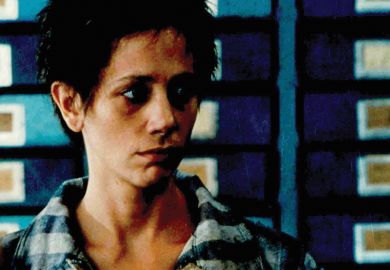
The third film was Together by Mazzetti, a young Italian art student. Unlike the other two films, it was fiction, the tale of two deaf-mutes living and working in London's East End amid bomb sites and mischievous local children. Strikingly, the 50-minute film has no spoken dialogue. It is a perfectly realised cinematic piece that conveys a flavour of time and place no less successfully than the documentaries it accompanied.
Free Cinema was a brief moment. There were five further programmes, but by 1959 it was all over. However, its progeny, some of the best of which is collected on these discs, deserves to live: notably Anderson's justly celebrated Every Day Except Christmas , Robert Vas's Refuge England and Reisz's We Are the Lambeth Boys .
The films vividly recall the era and cannot help but make one nostalgic.
Free Cinema showed what could be done in the cinema in the teeth of smothering corporate power and apparent public indifference. Where is that spirit now that we need it?
Christopher Wood is a freelance writer on film and music.
Free Cinema
Author - by various directors
Publisher - BFI
Pages - 3 DVDs, 475 minutes
Price - £29.99
ISBN - ASIN B000E1P2XU
Register to continue
Why register?
- Registration is free and only takes a moment
- Once registered, you can read 3 articles a month
- Sign up for our newsletter
Subscribe
Or subscribe for unlimited access to:
- Unlimited access to news, views, insights & reviews
- Digital editions
- Digital access to THE’s university and college rankings analysis
Already registered or a current subscriber?