
Beijing Institute of Technology prepares students for an innovation-first future
At Beijing Institute of Technology, global events allow students to engage with the technologies and people likely to shape our planet’s future
Beijing Institute of Technology

Sponsored content: created in partnership with Beijing Institute of Technology.
Many of the challenges facing the planet today can only be resolved by combining solutions from around the world. Take infrastructure, for example. The Belt and Road Initiative (BRI) may be the brainchild of the Chinese government, but it is resulting in collaborative projects to enhance land and maritime trade in many countries. It is a global solution to a global problem.
Beijing Institute of Technology (BIT) aims to shape future-ready international talent to support the progress of large-scale initiatives like the BRI. Last year, the university held its fifth Belt and Road Talent Cultivation Base Training Programme, inviting delegates from Malaysia, Indonesia, Mongolia, Thailand and South Africa. The programme focused on the importance of educational cooperation as a bridge to promote regional development and cultural integration.
As well as requiring international collaboration, initiatives like the BRI are also long-term projects. This is why BIT has been supporting them for many years. In 2023, BIT’s Belt and Road Talent Cultivation Base Training Programme focused on educational cooperation and cross-border exchange, while the 2019 Science and Tech Camp looked at vehicle research and development for Belt and Road country students.
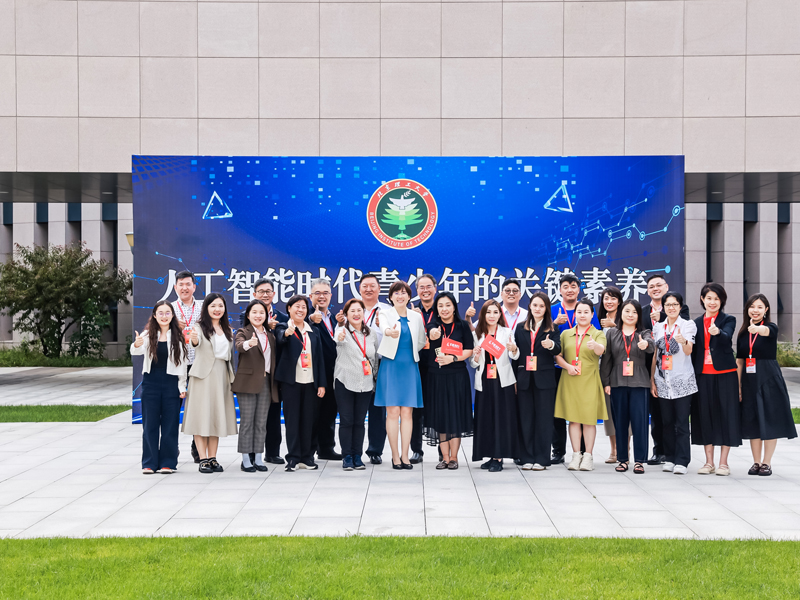
AI also played an important role in the 2019 Science and Tech Camp and is certain to influence talent development and education in the years to come. As a case in point, BIT’s 2024 International Education Forum focused on youth literacy in the age of AI. More than 60 educators from Asia and Africa participated in the forum, which took a detailed look at AI’s role in education and youth literacy. The challenges and opportunities that AI presents for education were discussed during the event, which stressed the importance of mutual learning and collective improvement when engaging with emerging technologies.
As further evidence of BIT’s commitment to future-proofing global talent development, 200 of the university’s international students represented the institution at the 23rd China International Software Expo in 2019. From facial recognition software to AI, the event allowed BIT students to engage with cutting-edge technological developments influencing government, industry and education.
However technology evolves in the future, the human element should remain at the heart of education. This was clear during the 2019 Study in BIT event for international primary school students, which shone a spotlight on integrated academic credit, innovation and cultural immersion.
Higher education is critical to ensuring individuals have the necessary skills to take part in the huge, collaborative projects that will transform our world, whether they focus on infrastructure, like the BRI, or digital solutions, like AI. Whatever form the future of work takes and whichever skills are in the highest demand, universities can shape future-ready international talent by focusing on emerging technologies and human skills, such as collaboration, leadership and empathy. At BIT, preparing students for a global future means creating opportunities for them to engage with government, industry and academia from all over the world so they gain first-hand experience with emerging technologies like AI, but also so they can meet and share ideas with like-minded creative individuals.