
Thammasat University’s vision to future-proof its students and faculty
As it nears its 100th anniversary, Thammasat University is reimagining its curriculum and campus to build future-ready, sustainability-driven global leaders
Sponsored by Thammasat University


Sponsored by
Sponsored by
With its centenary around the corner, Thammasat University is working to ensure its institution and graduates are prepared for the future, according to Prapaipit Muthitacharoen, assistant to the rector for corporate communications at Thammasat University.
Established in 1934, Thammasat University in Thailand has more than 40,000 students and 2,000 academic staff spread across its four campuses. “We want to be the best university in the region,” says Muthitacharoen.
The university recently launched its new education strategy, which aims to position the university as a leading comprehensive institution for future societies. The goal is to become a national model for developing leaders and professionals who are well-equipped to meet the challenges of a rapidly changing workforce and world.
“We are in the process of completely reworking the curriculum over the next two years to make sure our graduates are future-ready,” says Muthitacharoen. The institution is updating 298 academic programmes across 19 faculties, six colleges, and two institutes to foster interdisciplinary learning. Interdisciplinary collaborations are vital to addressing the problems facing today’s and tomorrow’s societies. For example, two new programmes include a Bachelor of Science in sustainability management and a Bachelor of Arts in human potential and well-being. This interdisciplinary thinking extends beyond teaching, incorporating research and international partnerships.

Students also need life skills to succeed after they graduate, Muthitacharoen says. Currently, all first-year students are required to complete a compulsory course in financial literacy. This is, in part, thanks to collaborations with local banks and investors. The university also offers a first-year course on AI ethics for leadership.
Muthitacharoen says that the institution had introduced the idea of TU IMPACT for its graduates. “I” stands for interpersonal skills, “M” for mindful self-development, “P” for progressive thinking, “A” for agility, “C” for competencies in science, technology and AI literacy, and “T” for thriving in global citizenship and financial literacy. “We aim to instil the core values of TU IMPACT in all of our students,” she says.
To make sure they are ready for the workforce, the university also ensures that its students have practical experience in industry. “Learning by doing is important, which is why we have established an experiential learning programme that connects every student in every faculty with industry partners,” Muthitacharoen says.
At the same time, the university is positioning itself as a sustainability role model, both for its students and other institutions. The United Nations’ Sustainable Development Goals – humanity’s 17 goals for ending poverty, protecting the planet and ensuring prosperity for all – are a central part of the university’s curriculum and activities, Muthitacharoen says. “We have spread these concepts to every process of the university.”
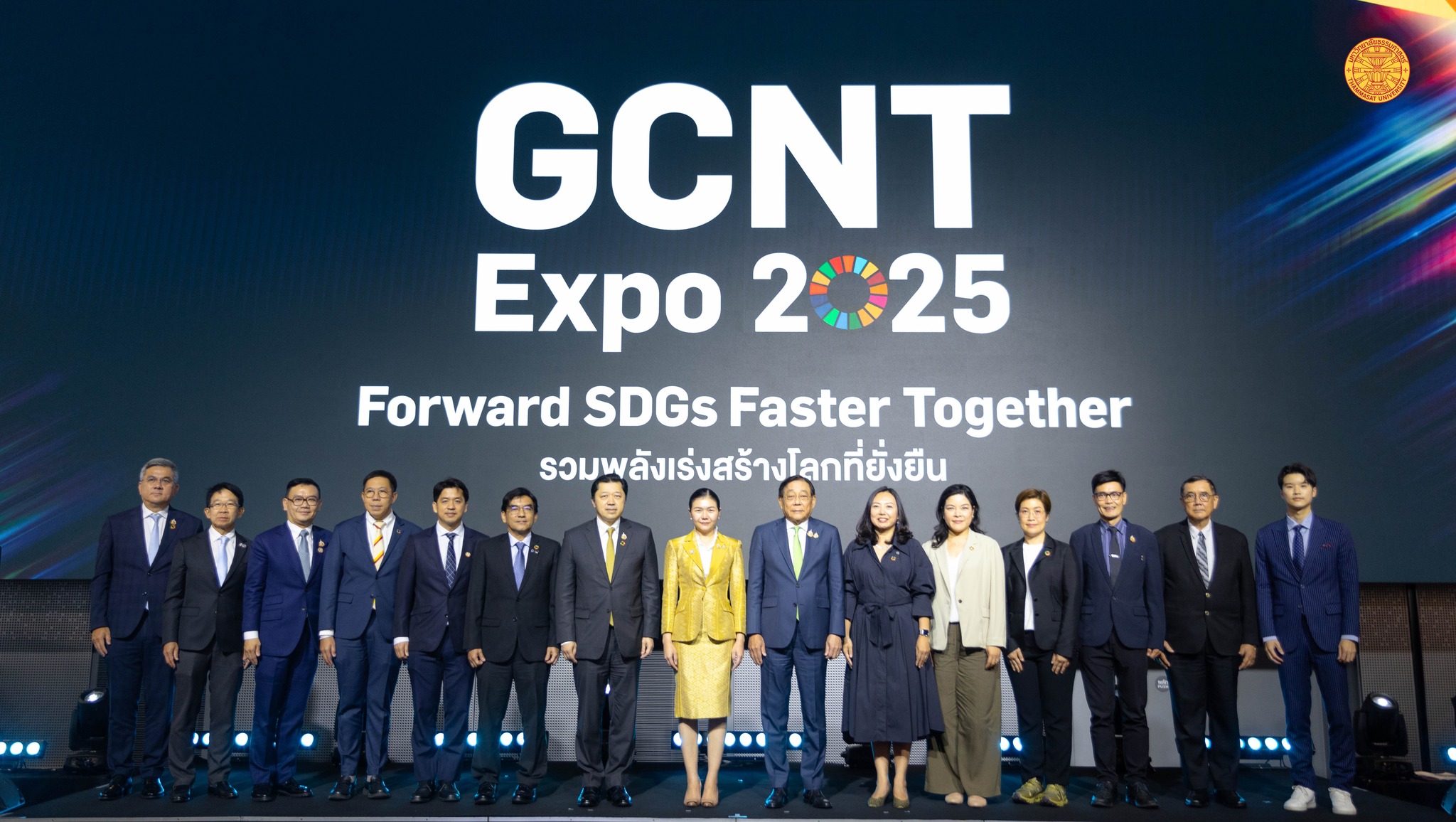
Thammasat University is working to become a smart and sustainable campus, she said. It already has zero-waste and energy-efficiency initiatives, and plans to build on its successes going forward.
In today’s globalised society, international collaboration is also central to learning and research success, making it fundamental to Thammasat University's vision for the future. The institution is pursuing international accreditation for its faculty to ensure that its academic offering adheres to the highest international standards.
“We are nurturing a new generation of change makers – disruptive thinkers who value real impact over grades,” Muthitacharoen says. “We want them to be disruptive thinkers, not only focusing on their grades. Our faculty, too, are leading through purpose-driven research.”