
Thammasat University’s library drives sustainability agenda
Thammasat University’s award-winning library is redefining what a library can be, transforming from an information centre into a sustainability and innovation hub driving real-world change

Sponsored by Thammasat University

Sponsored by
Sponsored by
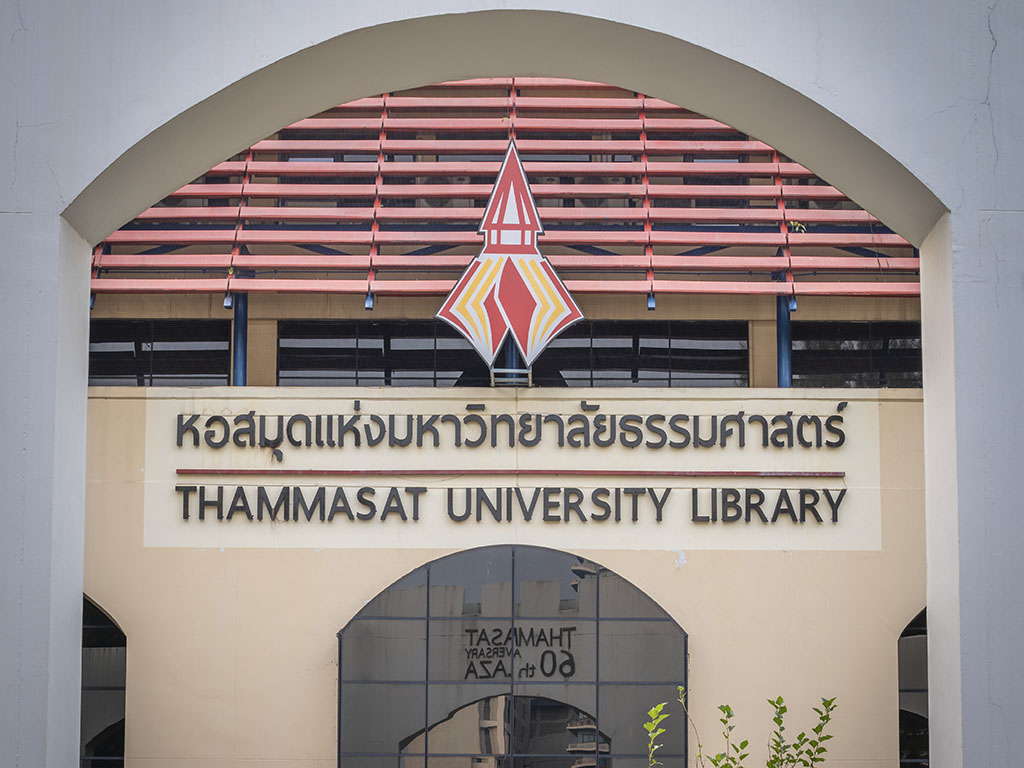
Libraries play a vital role in shaping active citizens and sustainable communities, according to Anyanitha Distanont, director of the library at Thammasat University.
“Modern libraries must evolve from information centres to innovation and sustainability hubs,” she says. “At Thammasat University, we see the library as a library of life, where environmental awareness, inclusion and innovation meet.”

The project embodies an ambitious vision to integrate principles of a circular economy, reduce waste and promote sustainability across the campus. Focusing on environmental responsibility, social engagement and innovation, it seeks to minimise waste and emissions, encourage recycling and convert discarded materials into valuable resources.
Beyond environmental goals, the project aims to educate and inspire students, staff and the wider community to adopt eco-conscious practices. By transforming the library into a living laboratory for sustainability, the initiative reimagines the library’s purpose – not just as a centre of knowledge, but as a dynamic space driving environmental awareness and sustainable innovation in everyday practice.
Thammasat University has put the United Nations’ Sustainable Development Goals at the centre of its mission. The Sustainable Development Goals are humanity’s 17 goals for ending poverty and protecting the planet.
Through its actions, the university aims to be a sustainability role model for its students, community and other institutions. Its library has taken this agenda on board and is receiving international recognition for its efforts.

In 2025, the university’s library placed first in the International Federation of Library Associations and Institutions’ 2025 Green Library Award. The library’s “From Waste to Wealth” project diverted more than 6,000 kilograms of recyclable waste and reduced its carbon emissions by more than 20,000 kilograms. The award “reaffirms our belief that a library can truly be a driving force for meaningful change, for people, for the community and for our planet”, says Distanont, who is also an associate professor at the university’s College of Innovation. Another initiative, “From Dates to Dots”, turned old calendars into more than 30,000 braille pages to connect environmental care with social inclusion.
“We were inspired by a simple belief – that a library should not only store knowledge but also inspire change,” Distanont says. “Seeing how much waste was generated daily, we wanted to turn that problem into a learning opportunity.” The From Waste to Wealth project “became our way of showing that sustainability begins with awareness and collective action”, she says.
Distanont says that the library began by creating change within its own walls. “Before reaching out to the wider community, we first focused on raising awareness and understanding among our own library staff,” Distanont says.

For example, its “One Day with Green” campaign encouraged staff and students to give up single-use plastics within the library. The library organised workshops where waste materials were upcycled into new items, and it also provided environmental education activities for young school children. Another initiative, “From Dates to Dots”, turned old calendars into more than 30,000 braille pages to connect environmental care with social inclusion, she says.
The savings from the reduced plastic use were used to purchase trees to bolster reforestation efforts in eastern Thailand.
For those wishing to start their own projects and campaigns, Distanont recommends starting small, but with purpose. “Sustainability doesn’t always require a large budget – it begins with a change in mindset,” she says. “When people understand why it matters, they will find creative ways to make it part of their everyday life.”
Distanont says the library plans to build on its “Library of Life” concept and move towards a fully sustainable library, which integrates principles of the circular economy into every dimension of its operations. “Our goal is to become a living example of sustainability for other units within and beyond the university,” she says.