
Thammasat University: Shaping Future Societies through Transformative Education
Redefining higher education with a future focused strategy, Thammasat University combines Outcome-Based Education, industry collaboration, and sustainability-focused learning to equip graduates for complex global and societal challenges.


Sponsored by
Sponsored by
Thammasat University (TU) has unveiled a bold education strategy under the theme “Leading Comprehensive University for Future Societies.” This initiative positions TU as a model for future-ready education in Thailand, focusing on interdisciplinary learning, real-world experience, and emerging technologies to prepare students for a rapidly evolving global landscape.
A New Era of Learning: What Sets This Strategy Apart
Central to this strategy is a sweeping overhaul of TU’s learning ecosystem, involving reforms in 298 academic programs across 19 faculties, 6 colleges, and 2 institutes. The new curriculum emphasizes interdisciplinary learning, AI and digital skills integration, and hands-on experience, aligning academic pathways with both global and local needs.

Departing from traditional, lecture-based education, TU adopts Outcome-Based Education (OBE) and experiential learning co-designed with industry partners. All students must complete over 405 hours of real-world training through internships, fieldwork, or project-based learning, ensuring graduates are both academically proficient and professionally equipped.
Additionally, a common core curriculum across all faculties, expanded e-learning, and a focus on English proficiency and the UN Sustainable Development Goals (SDGs) enhance accessibility and prepare students for global citizenship.
Three Strategic Pillars Driving the Transformation
TU’s transformation is guided by three key pillars:
1. Becoming a Leading Comprehensive University of the Future
TU emphasizes interdisciplinary knowledge, cutting-edge research, and 21st-century skills. Courses such as Ethics of Artificial Intelligence for Future Leaders and modules in Finance & Investment demonstrate the fusion of humanities, technology, and business.
2. Becoming a University for Society
TU strengthens its role in public engagement, sustainable development, and community impact. Students are shaped to be both skilled professionals and socially responsible citizens, contributing to national and regional development.
3. Ensuring Happiness and Sustainability for the TU Community
Internal reforms focus on student well-being, faculty development, and sustainable governance. TU fosters a supportive environment that develops both hard and soft skills through inclusive learning and outcome-based education.
Innovative Curriculum and Industry Alignment
A standout of the reform is TU280: Artificial Intelligence Ethics for Leaders of the Future, a required course that explores the ethical, societal, and economic dimensions of AI. The goal is to produce thoughtful, ethical leaders—not just tech experts.
TU also offers a robust set of Finance & Investment modules, developed in partnership with the Stock Exchange of Thailand (SET), SCB, GULF, and Bangkok Bank. Covering personal finance, tax planning, cryptocurrency, and sustainable investing, these online modules mirror the realities of the modern financial world.
Since the SET E-learning platform launched in 2022, over 22,000 students have enrolled in finance-related courses, underscoring the demand for career-relevant, future-facing education.
Preparing Graduates for Tomorrow’s Workforce
Aligned with the World Economic Forum’s 2024 findings, TU’s curriculum targets top future workforce skills—such as analytical thinking, resilience, and influence. Students gain a combination of hard skills (e.g., digital literacy, finance, legal knowledge) and soft skills (e.g., adaptability, communication, teamwork).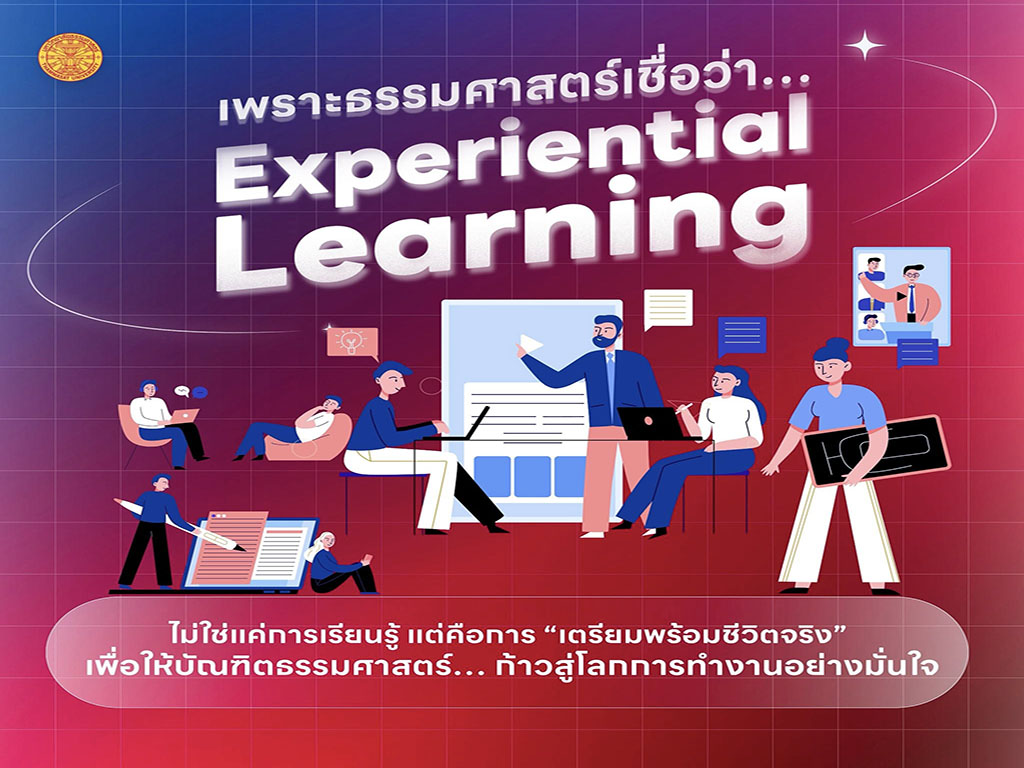
Each student must complete at least six credits via practical learning. TU also embeds emerging skillsets—AI ethics, cross-cultural teamwork, and digital marketing—into all academic tracks to ensure relevance in today’s job market.
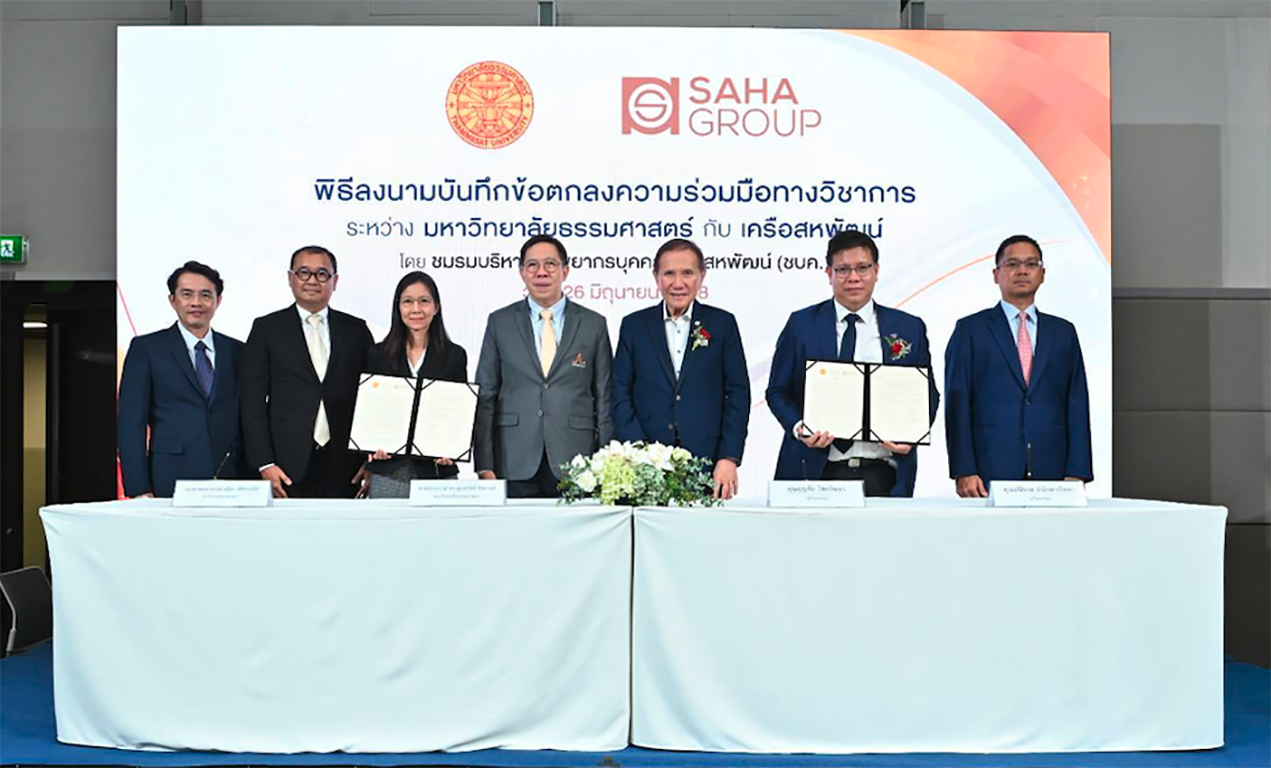
Thammasat has established strong partnerships with leading industries to prepare students and graduates for tomorrow’s workforce through practical training and experiential learning. The collaboration with Saha Pathana enhances workforce readiness via Cooperative Education and Internship Programs, giving students hands-on experience, industry-aligned skills, and a solid foundation for career development. With SCG, the “Possibilities Space: Shaping Future Workforce” program integrates academic learning with real business problem-solving, enabling students to tackle challenges in Smart Living and ESG, develop prototypes, and present innovative solutions—some of which advance toward real-world implementation and job opportunities. Meanwhile, the partnership with Boon Rawd Brewery strengthens academic and research collaboration, offering internships, co-op placements, innovation competitions, and scholarships.
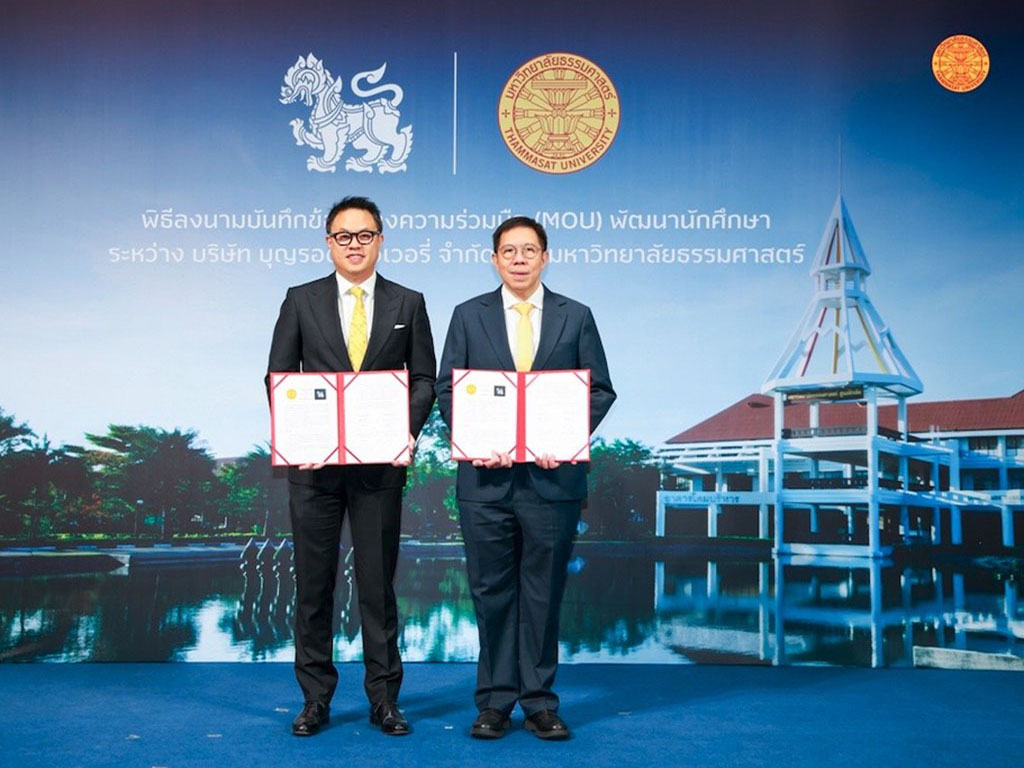
These initiatives collectively build job-ready competencies, foster innovation, and create clear pathways to employment, ensuring graduates are well-prepared to meet the demands of a rapidly evolving labor market.
To further boost employability, TU has launched the Co-operative Education and Career Development Centre (TUCEEC). Between 2025 and 2027, it will offer over 100 training programs and workshops, targeting 100% graduate employment within one year.

Empowering Faculty as Learning Leaders
TU is also transforming its faculty into “learning leaders.” Through the Professional Standards Framework (PSF), the university aims for at least 100 lecturers to achieve PSF Level 2 or higher by 2027, ensuring high-quality, inclusive teaching.
The university is expanding international collaborations and dual-degree programs with global partners, further reinforcing its status as a Global Impact University.
From Traditional to Global Impact University
This transformation marks a departure from TU’s traditional focus on social sciences and public service. Now, these strengths are blended with high-demand sectors like AI, fintech, and health technology, forming a future-proof, interdisciplinary academic model.
TU’s holistic approach—balancing academic excellence, real-world relevance, ethical awareness, and social contribution—equips students not just for today’s jobs, but to become leaders in tomorrow’s society.
Building a University for Future Societies
Amid global challenges like aging populations and digital disruption, TU’s education strategy offers a national and regional blueprint for how higher education can adapt and thrive. With its commitment to interdisciplinary learning, community engagement, and global connectivity, TU is truly becoming a Leading Comprehensive University for Future Societies—empowering learners of all backgrounds to build a more sustainable and equitable world.