
Thammasat University Leads with Innovation and Care in Navigating Thailand’s Aging Society
Thammasat University responds to the challenges of Thailand’s transition to a complete aged society through integrated research, healthcare solutions, and community-centered innovation.


Sponsored by
Sponsored by
A shrinking working-age population and rising elderly dependency ratio threaten long-term economic growth, increase labor shortages, and may heighten reliance on costly foreign workers. The demand for healthcare, welfare, and pension systems is surging, yet many elderly individuals remain digitally excluded, limiting access to critical support. Intergenerational tensions may also rise as younger generations shoulder more caregiving responsibilities. To meet these complex challenges, urgent reforms in public policy, education, and welfare systems are essential.
Among institutions responding to this national shift, Thammasat University stands out as a leader—proactively addressing the complex needs of an aging population through integrated research, practical healthcare solutions, and community-centered innovation. By promoting resilience, fostering intergenerational understanding, and equipping students with skills suited to an aging demographic, Thammasat is helping Thailand adapt to demographic shifts with creativity and sustainability at the forefront.
The “Build and Repair” Strategy: A Holistic Health Framework
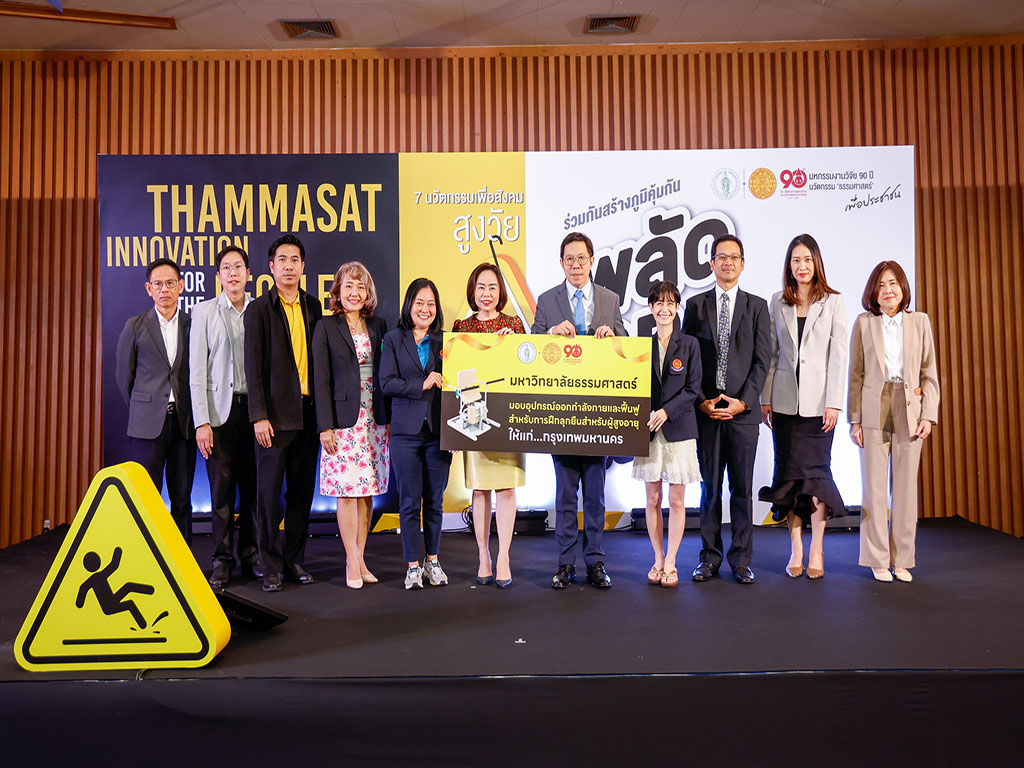
At the core of Thammasat’s efforts is its “Build and Repair” strategy—an initiative that blends preventive care with rehabilitative support. Introduced during the seminar “Fall Prevention: Thailand and Preparedness for an Aging Society”, the program reflects the university's broader mission of translating academic knowledge into public benefit.
Through partnerships with the Bangkok Metropolitan Administration and national health agencies, Thammasat University Hospital has delivered over 750 free hip and knee replacement surgeries for underprivileged elderly patients. A 150-bed senior care hospital is also under development, strengthening long-term infrastructure for geriatric care and signaling the university’s commitment to sustainable, system-level health improvements.
Empowering Communities through Grassroots Health Initiatives
Thammasat is not only focused on hospital-based care but also on prevention at the community level. By training village health volunteers to detect age-related conditions early, the university is expanding the reach of basic healthcare into neighborhoods and households. This is complemented by awareness programs in schools and workplaces, which promote physical activity, fall prevention, and chronic disease education—bridging generational knowledge gaps and building a culture of lifelong health.
Innovating with Purpose: Sit-to-Stand Trainer and Arm Booster
Where Thammasat’s leadership becomes most evident is in its commitment to human-centered innovation. Two key devices—developed and launched through the university’s interdisciplinary collaborations—illustrate this approach.
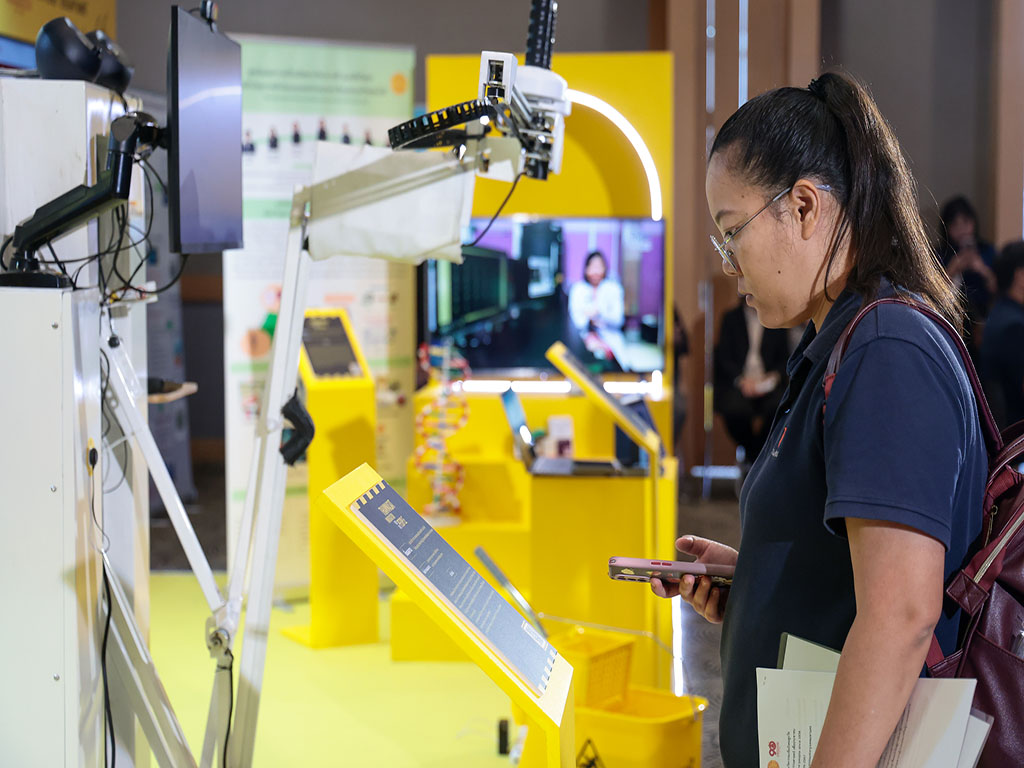
The Sit-to-Stand Trainer, showcased at Thammasat’s 90th Anniversary Research Fair, is a lower-limb strengthening and fall-prevention tool. Deployed in community health centers, it supports elderly users in maintaining mobility and independence while reducing the burden on caregivers. Simple in design but impactful in outcome, this device exemplifies how low-cost engineering can lead to scalable public health benefits.
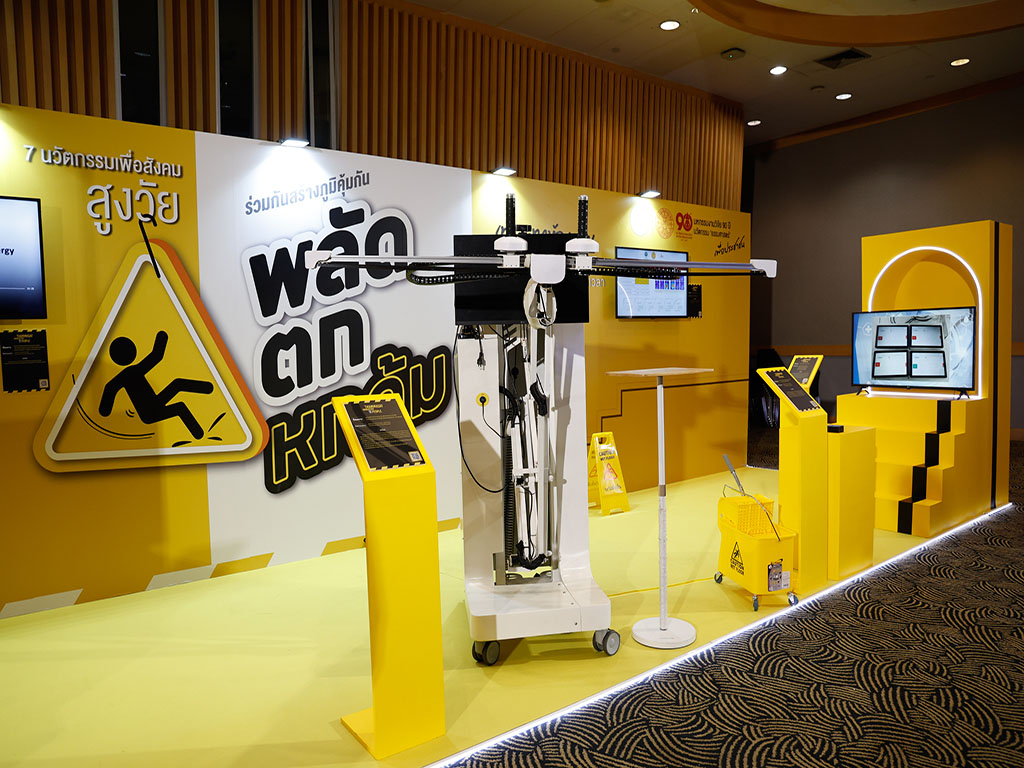

Equally noteworthy is the Arm Booster, a bilateral upper-body rehabilitation device developed by the university’s engineering faculty. Originally designed for stroke recovery, the Arm Booster allows users to mirror movement from their stronger arm to aid the weaker one, using multiple axes of motion (X, Y, Z). It features a gamified interface and real-time feedback sensors, making the rehabilitation process both interactive and measurable. Currently in use across several health centers, this device is already enhancing recovery outcomes for elderly individuals and stroke survivors alike.
Promoting Equity in Access and Care
These innovations are more than technical achievements—they represent Thammasat’s underlying commitment to social equity. By making such devices affordable and publicly available, the university is helping reduce disparities in healthcare access while relieving pressure on Thailand’s overstretched medical system.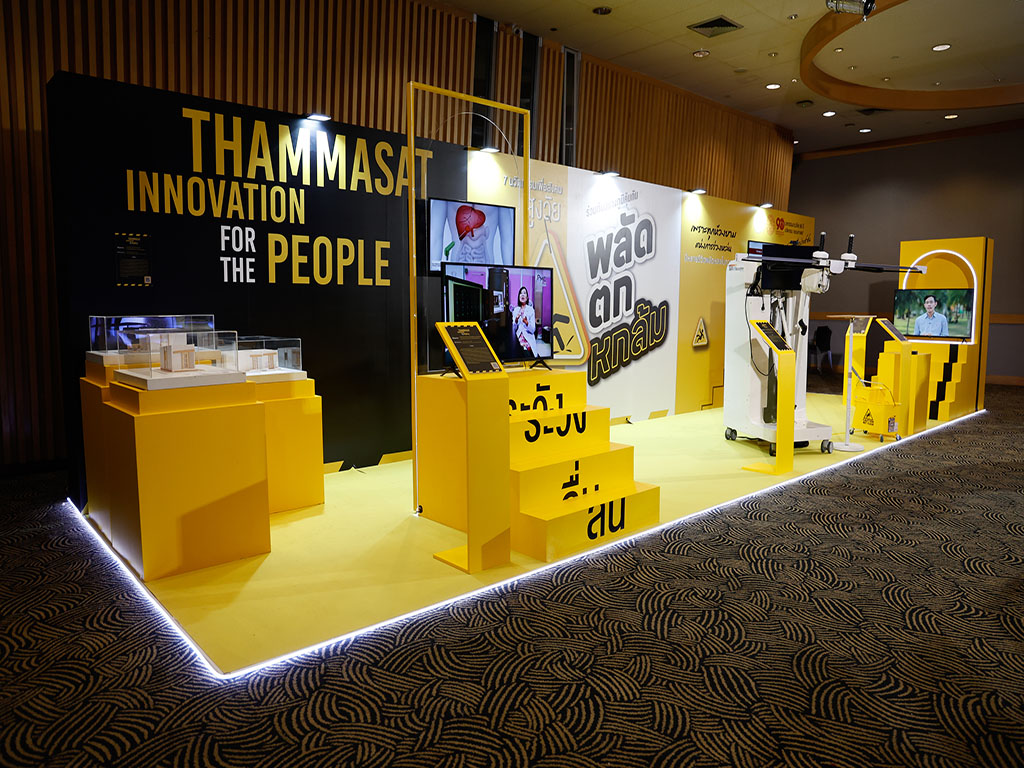
Tackling Digital Exclusion and Social Vulnerability
Recognizing that health is not limited to physical well-being, Thammasat is also addressing the social vulnerabilities that aging populations face. A growing number of elderly Thais are digitally excluded, preventing them from accessing essential welfare services. The university is responding by promoting digital literacy and inclusion, particularly in low-income and rural communities.
In parallel, social science faculties are driving initiatives that strengthen emotional resilience and intergenerational empathy. Programs encouraging digital training, adaptive skills, and mental wellness are being integrated into school and workplace settings, helping Thai society adapt to its demographic transition.
Influencing Policy for Long-Term Change
Beyond its hands-on programs, Thammasat is using its research to shape public discourse. The university advocates for reforms to Thailand’s welfare systems, recommending global best practices such as Switzerland’s co-funded pension model as potential blueprints. This dual focus on grassroots action and high-level policy reform sets Thammasat apart as a thought leader in the national aging conversation.
A Unified Vision for an Inclusive Future
What distinguishes Thammasat University’s response is not just the scale of its initiatives, but the cohesion of its vision. By aligning healthcare, engineering, education, and social policy around the shared challenge of aging, the university is forging a comprehensive path toward an inclusive, prepared, and equitable society.
As Thailand navigates the pressures of a shrinking workforce, growing eldercare demands, and widening social disparities, Thammasat offers more than solutions—it offers leadership. In doing so, it reaffirms the transformative role of higher education not just in advancing knowledge, but for the people.
Find out more about Thammasat University.