
Crafting Sustainability at Thammasat – Empowering Communities Through the Innovation of Natural Dyes and Deadstock Textiles
By merging traditional craftsmanship with circular innovation, Thammasat University is empowering local communities through the creative transformation of agricultural orchid waste into natural dyes and industrial deadstock yarn into premium handcrafted textiles, championing a restorative model of social and environmental prosperity.


Sponsored by

Sponsored by
The transition toward a circular economy has become a critical necessity in modern production as the global community seeks to mitigate the environmental impact of industrial and agricultural waste. By shifting the perspective of waste from a liability to a valuable resource, innovation can foster a production cycle that is both restorative and sustainable. This approach is exemplified by two pioneering projects—the "Repurposed Orchid" and "AMARA"—which demonstrate how discarded materials from the floral and textile sectors can be transformed into high-value, eco-friendly goods.
These initiatives not only address the physical reduction of waste but also challenge the traditional manufacturing model by integrating artisanal wisdom with scientific research to create products that are as aesthetically pleasing as they are environmentally responsible.
The core research and innovation within these projects focus on the technical feasibility of repurposing overlooked materials. In the orchid project, researchers successfully extracted a natural color palette ranging from deep purple to golden brown from discarded orchid blossoms, discovering that protein-based fibers like silk and animal hair absorb these pigments more effectively than plant-based fibers. Innovation in this area further involved testing fixatives to ensure durability, where Alum was identified as the superior choice for maintaining light and wash fastness according to ISO 105 standards.
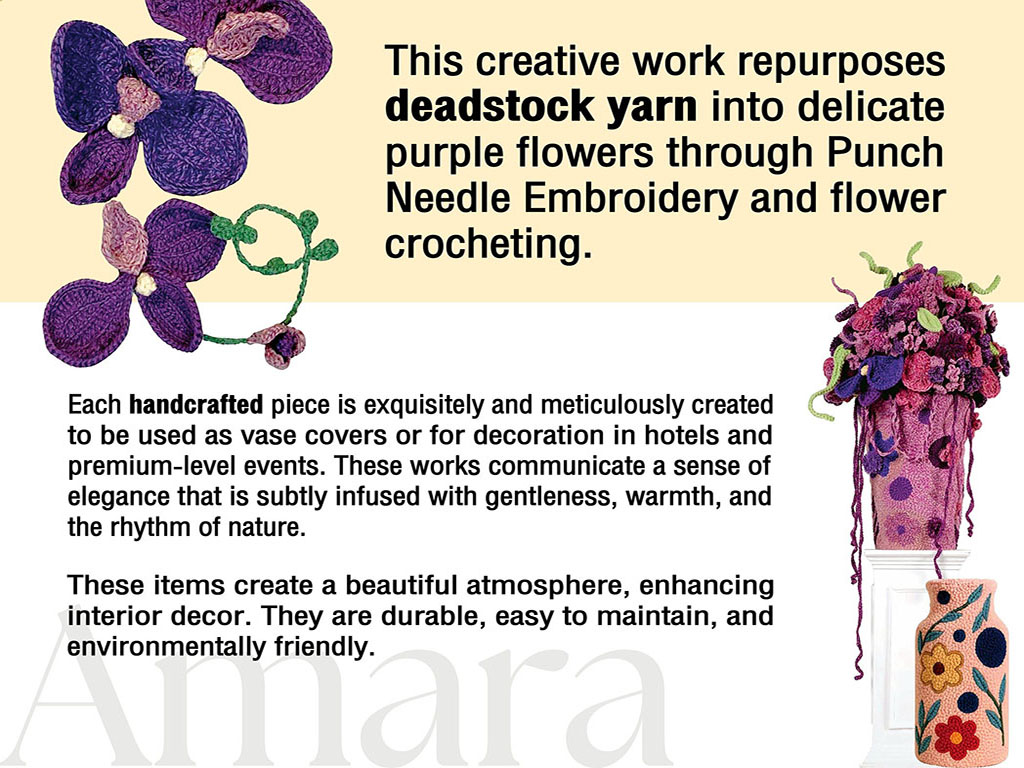
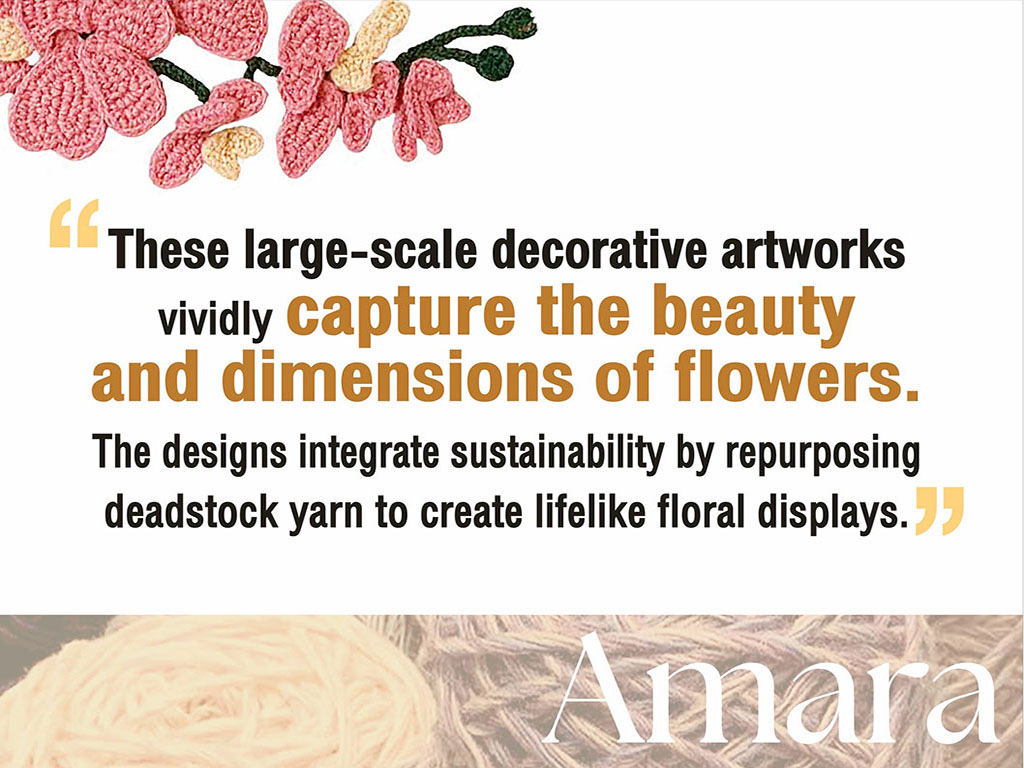
Similarly, the AMARA project innovates within the textile industry by utilizing "deadstock yarn"—leftover threads from industrial manufacturing—to create intricate, large-scale decorative art. This is achieved through the creative combination of Punch Needle Embroidery and handcrafted crochet techniques, which allow for the creation of three-dimensional, lifelike floral textures that breathe new life into industrial waste.
Beyond the technical achievements, these projects provide significant benefits to society by fostering economic growth and promoting public wellness. The repurposing of orchid waste creates a new revenue stream for local communities, as they participate in the production of value-added textiles that utilize traditional "Jok" weaving patterns. Furthermore, the resulting silk scarves and garments are entirely chemical-free and gentle on the skin, offering a health-conscious alternative to mass-produced fashion that often relies on harsh synthetic dyes.
For the AMARA project, the benefits extend to the interior design and hospitality sectors, where the handcrafted art pieces provide premium, durable, and easy-to-maintain décor for luxury hotels and residences, thereby enhancing the atmosphere of living spaces while promoting a culture of mindful consumption.
These projects are deeply rooted in the principles of sustainability and are directly aligned with several United Nations Sustainable Development Goals (SDGs). By focusing on "Waste to Worth," they contribute to SDG 12 (Responsible Consumption and Production) by reducing waste and SDG 8 (Decent Work and Economic Growth) by supporting local community livelihoods. The AMARA project’s use of industrial leftovers to create sustainable interior environments supports SDG 11 (Sustainable Cities and Communities) and SDG 13 (Climate Action) through the reduction of industrial waste. Meanwhile, the orchid project supports SDG 15 (Life on Land) by utilizing bio-based agricultural waste and promoting the use of natural resources in a way that preserves the ecosystem.
Ultimately, these initiatives serve as a blueprint for how innovation can bridge the gap between traditional craftsmanship and modern sustainability, ensuring that resources are used wisely for the benefit of both people and the planet.