
Engineering a better tomorrow through SDG awareness
Prince Sattam Bin Abdulaziz University is training the future generation of leaders to address the planet’s greatest challenges through innovation
Sponsored by Prince Sattam Bin Abdulaziz University


Sponsored by

Sponsored by
Sustainability is one of the most important concerns facing the world – and innovation can make a significant impact. Higher education institutions play an important role in equipping the leaders of tomorrow with the critical thinking skills and knowledge needed to address such global issues. That’s why Prince Sattam Bin Abdulaziz University (PSAU) in Saudi Arabia has undertaken a holistic realignment of its teaching and learning using the United Nations’ Sustainable Development Goals (SDGs) as a lodestar for its curriculum.
Driving this realignment is Abdullah M. Elias, director of PSAU’s Rankings, Strategy and Institutional Advancement Department. A passionate advocate of the SDGs, Elias shares that the key vision of PSAU is to see its students taught to think about how they can find solutions to global issues using sustainability as a frame of reference.
This sentiment is shared by Ali Aldrees, the dean of the College of Engineering at PSAU, who reiterates that the college, and PSAU, want to see how every course offered within all the programmes at the university is linked to an SDG. “We want to see to what extent we can integrate the SDGs into our curriculum and the way we teach,” says Elias. “It’s important that students understand what the SDGs are and their importance.”
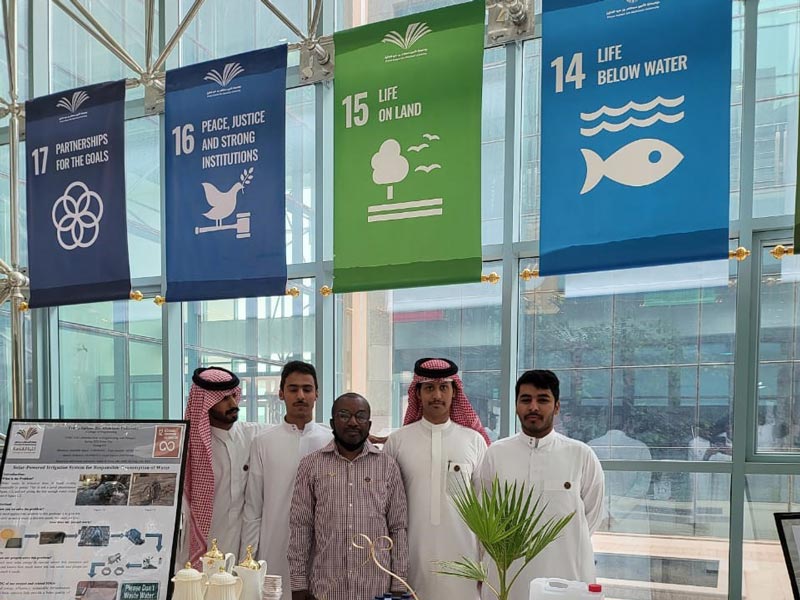
 Elias says his vision for SDG-focused education was initially met with scepticism. But he argues that Saudi Arabia’s Vision 2030 is a catalyst for change that encourages buy-in and accelerates sustainable innovation.
At PSAU, “we have carefully mapped every course taught at the college to one or more SDGs,” explained Aldrees. Engineering students are introduced to the SDGs from day one. After one year of foundational learning in subjects such as maths and physics, students undertake an introductory engineering course during which they participate in project-based learning to establish a sound knowledge of the 17 SDGs.
Elias’s students are divided into groups and presented with a problem relating to one or more of the SDGs. “In the course of doing that, they understand what the SDGs are,” says Elias. “They have to understand the targets, the indicators and the way that SDG attainment is assessed to be able to link a certain project to an SDG and corresponding targets.”
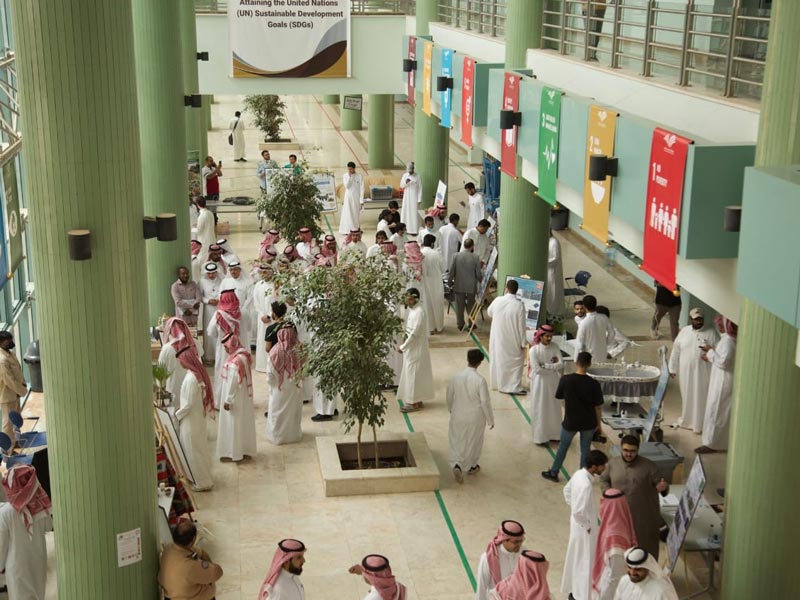
A deeper understanding of the SDGs prepares students for their future education and experiences at PSAU such as PSAU’s summer learning project, which is conducted in partnership with Imperial College London. It’s an intensive programme where students from PSAU are taught by Imperial’s faculty in London, gaining hands-on experience with prototyping at the advanced hackspace at the White City Campus.
During the programme, PSAU students work in collaboration with students from across the globe, developing skills in problem-solving and teamwork. Each cohort must include at least 10 per cent female students. “They had support from Imperial’s technical staff. They had access to tools such as robots and 3D printers, so they were able to produce advanced solutions using facilities at Imperial College London,” says Elias.
The likelihood that we may fail to meet the UN’s sustainability targets by 2030 is all the more reason to redouble our efforts, says Elias. He believes universities can lead the charge and says he was delighted when THE introduced the Impact Ranking because it gives them every incentive to do so.
Find out more about SDG education at Prince Sattam Bin Abdulaziz University.