
Building partnerships for sustainable impact
By adopting a grassroots approach to university partnerships, Prince Sattam Bin Abdulaziz University is taking its sustainability drive global and catalysing progress in the Global South and beyond
Sponsored by Prince Sattam Bin Abdulaziz University

Sponsored by

Sponsored by
In today’s interconnected world, both challenges and innovation must be met through collaborative effort. Value-driven partnerships between institutions, industry and organisations worldwide enable knowledge exchange, resource-sharing and creative solutions that result in meaningful and sustainable outcomes.
As key actors in the innovation ecosystem, universities need partners across sectors to address the world’s biggest problems and maximise societal impact. When Prince Sattam Bin Abdulaziz University (PSAU) in Saudi Arabia committed to reorientating its mission and curricula to align with the United Nations’ Sustainable Development Goals (SDGs), one key element of its strategy was to look outwards for strong partnerships with industry and government, but especially with peer institutions at home and abroad that shared its vision.
One notable example is PSAU’s collaboration with Imperial College London in the UK. Since 2023, the collaboration has included intensive summer training programmes at Imperial, where students are offered hands-on learning experiences in SDG-themed projects. It also gave PSAU students a first-hand experience of living and studying in London and interacting with peers from around the world. In addition to student training, the partnership promotes faculty mobility and research collaboration between the two institutions.
Additionally, PSAU has built partnerships with several institutions in Africa and Asia to promote sustainable development. In 2025, it established the PSAU Global South Partnership (GSP) to foster research collaboration, student exchange programmes, policy advocacy and joint projects related to climate action, quality education and sustainable development. “Sustainability is a top priority for PSAU,” says Abdullah M. Elias, professor and director of the Rankings, Strategy and Institutional Advancement Department at PSAU. “Through the Global South Partnership, we are trying to champion the SDGs.”
The initiative was launched at the 2025 THE African Universities Summit in Rwanda. Elias emphasises that it takes a unique approach to academic partnerships by avoiding the top-down model, where proposals are defined by senior leaders. “We’re doing a bottom-up approach,” Elias says. “We got [university] presidents in a room and sold the idea to them. We told them, ‘we want your buy-in, we want your support, but other than that, we don’t want you involved in the day-to-day and research activities of this partnership.’”
Instead, the PSAU GSP requires that partnering universities put forward academics and team members who are then paired with peers at PSAU. Building on existing relationships makes this process easier. For example, Elias leveraged his relationship with a former colleague, Clement Nyirenda, eResearch director at the University of the Western Cape (UWC) in South Africa, to get UWC’s buy-in into the PSAU GSP. Subsequently, both PSAU and UWC identified student mobility as a common priority, which is also a key theme of the PSAU GSP.
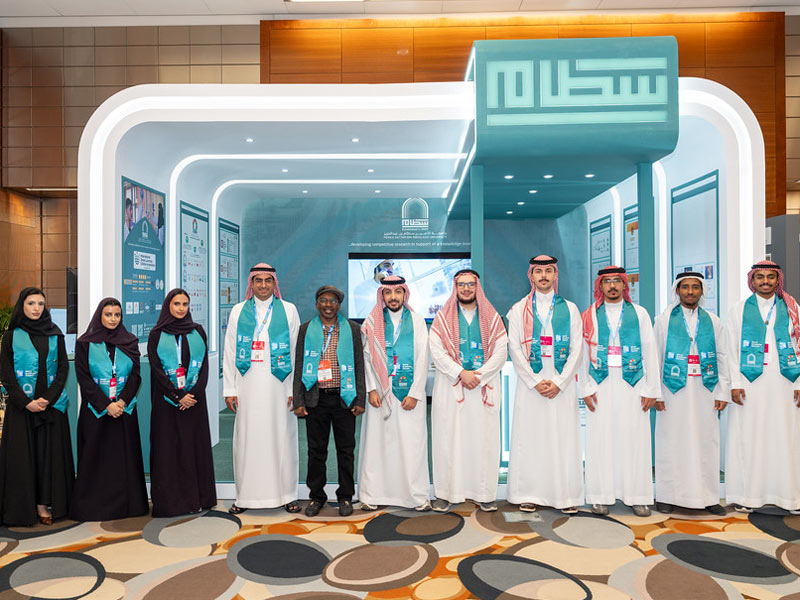
“We were able to do something that many thought was impossible,” says Elias. “With the help and support of these networks, we were able to take over 200 students from PSAU and 14 GSP partner institutions from Saudi Arabia on a student mobility visit to Cape Town. Through that, now we have more student projects going on.”
Another advantage of global partnerships is that they enable universities to pool their resources. At a time when AI and cutting-edge technologies are evolving rapidly, some institutions might find it challenging to keep up with the infrastructure requirements and associated costs. Partnering with like-minded universities can improve access to technology and tools to support research projects and enhance teaching and learning.
Nyirenda says that to build successful partnerships, shared values should take precedence over resources. “From our work, when it comes to partnering, the equipment or physical resources are not the first thing that we put on the table,” he says. “The first thing that we bring forward is the people and the values that we stand for. We believe that if we have people who are committed to partnership and the values that we share, then the resources that we need, no matter how difficult it may look, we will easily get.”
UWC has historically drawn large numbers of students from marginalised communities and sees its civic outreach and work in sustainable development as a means of supporting them. “We have a lot of programmes that are tailored for those students and communities,” says Nyirenda. “The SDGs talk about the fight against hunger and health issues. They are the forefront of what we do.”
Nyirenda says UWC’s partnership with PSAU is opening up pathways for projects that can enhance both universities’ research impact. Conversations with academic staff at PSAU and other universities in the country have highlighted that institutions in Saudi Arabia and South Africa pursue some of the same research interests. He adds that when institutions work together, they can produce joint publications and long-term strategic plans, generating momentum that is carried on to the next generation.
Alongside its collaboration with PSAU, UWC has long-standing partnerships with universities in the Netherlands. It is expanding its network in Germany, collaborating with the Ruhr University Bochum on research-orientated master’s and PhD programmes to educate the next generation of leaders in how to tackle the challenges facing sustainable development. It also collaborated with the University of Hohenheim to establish the African-German Centre for Sustainable and Resilient Food Systems and Applied Agricultural and Food Data Science. This initiative hopes to enhance food security across Africa and beyond and tackle SDG 2 (zero hunger).
Student engagement and participation are important pillars of the Global South Partnership. Conscious of their need for better stewardship of our planet, students are often eager to contribute to PSAU’s international collaborations, Elias notes. “As part of the core requirements under the PSAU GSP, students from both partnering institutions must be engaged in the project,” says Elias. “Once academics from one university find common ground with scholars from our university, they would need to form a team and those teams must include students from both sides. Because we believe there is a responsibility to ensure that this fight continues into the next generation. The only way we can do that is to involve students in everything we do.”
Find out more about Prince Sattam Bin Abdulaziz University.
Find out more about the PSAU Global South Partnership.