
Metal Organic Frameworks as Multifunctional Catalysts

Sponsored by
Sponsored by
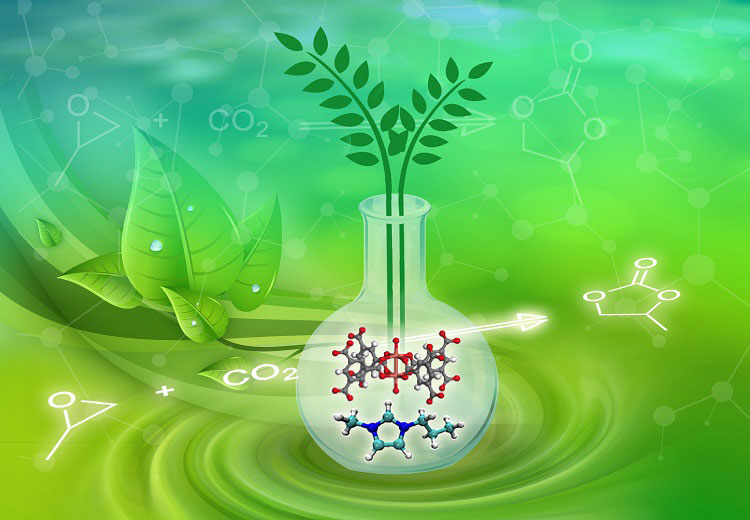
Metal organic frameworks (MOFs) are crystalline porous materials whose crystal structure is assembled with the coordination between metal ions/cluster connected with the rigid polycarboxylate linkers either in two- or three-dimensional solids. These solids are also considered as highly potential materials like zeolites, however, the chemical/thermal stability of the later solid is relatively higher. In one of the review articles written by Prof. Dhakshinamoorthy, Madurai Kamaraj University, India often visited as a researcher to the research group of Prof. Hemenegildo Garcia, Technical University of Valencia, Spain.

In his article published in Trends in Chemistry, he discloses various opportunities provided by MOFs as solid catalysts for liquid-phase reactions, including synthesis by design, high porosity in the micro-mesoporous range, and a high density of unsaturated transition-metal ions. Authors of this review have described key current research strategies (structural defects, synthesis of mixed-metal and mixed-ligand MOFs, synthesis of 2D materials with high lateral area-to-thickness aspect ratios) that have been developed over the period of years have been briefly discussed with appropriate examples for the improved catalytic activity, A special attention is also paid for the development of bifunctional catalysts based on MOFs to perform tandem reactions.
Besides MOFs as catalysts with intrinsic activity due to the nature of the metal ions and linkers and the presence of free coordination positions, MOFs can also play a passive role as large surface area supports of other components responsible for the observed catalytic activity. More specifically, structurally robust MOFs are among the preferred supports to incorporate noble metal nanoparticles (NPs). The resulting hybrid solids have been shown to be highly active catalysts for wide range of organic transformations including C-C coupling reactions like Suzuki-Miyaura, Sonogashira and Heck. On the other hand, these heterogeneous MOF-based solids with metal NPs have also been effective in promoting hydrogenation of C=C double bons and nitrophenol reductions.
Authors conclude the final section that in only two decades MOFs have become among the preferred solid catalysts for liquid-phase reactions. The versatility of these materials with respect to their use as catalysts has been illustrated by highlighting several strategies to increase their catalytic activity, In recent times, efforts have also been given to use MOFs for gas-phase reactions and MOFs as heterogeneous solids catalysts for the reduction of CO2 to methanol or methane products either thermally/photochemically.
Reference
Amarajothi Dhakshinamoorthy, Abdullah M. Asiri, Hermenegildo García, Metal–Organic Frameworks as Multifunctional Solid Catalysts, Trends in Chemistry, Volume 2, Issue 5, 2020, Pages 454-466,ISSN 2589-5974, https://doi.org/10.1016/j.trechm.2020.02.004.