
EXCELLENCE IN SUSTAINABLE CATALYSTS

Sponsored by

Sponsored by
World reference developing and applying new sustainable catalysts: this is one of the fundamental objectives of current chemical research, and where the UPV has a world reference in this field, Avelino Corma, founder of the Instituto de Tecnología Química (UPV-CSIC). These catalysts are crucial to decarbonization, one of the most significant challenges to the world's productive fabric, and contribute to the fight against climate change.
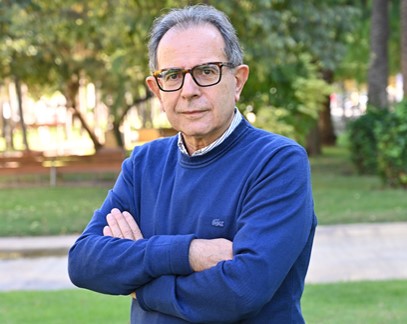
Prof. Avelino Corma, at the UPV campus
The applications of these devices - whose action is analogous to that of our enzymes - are manifold: thus, the preparation of catalysts with well-defined active sites allows cascade reactions to be carried out in petrochemical-related processes, biomass transformations to produce fuels and chemicals, and photocatalytic processes with particular emphasis on CO2 and H2O activation. Catalysts are also essential in manufacturing industrial polymers and plastics, most pharmaceuticals, and all kinds of soaps and perfumes, for example. And they are indispensable for reducing CO2 emissions into the atmosphere in the production processes of fuels and other chemicals.
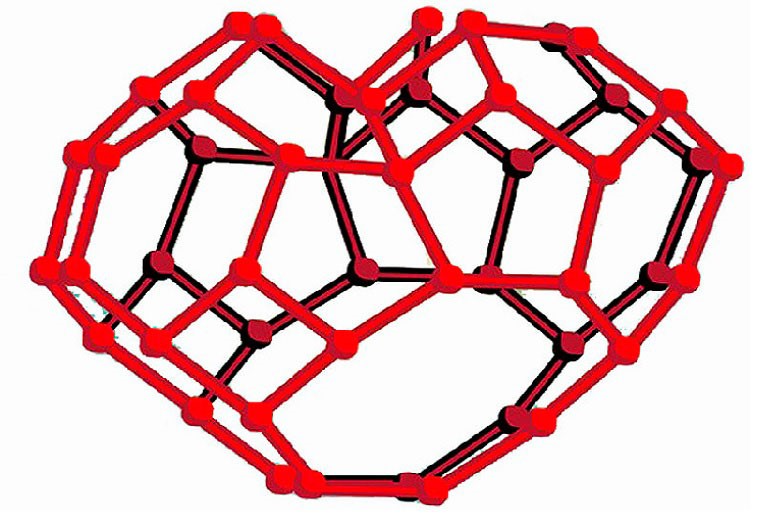
In all these applications, the objective is to optimize the synthesis of the catalysts to achieve maximum activity and selectivity. It is essential to characterize them using spectroscopic techniques (UV-Visible, IR, Raman, XPS, NMR, XRD, etc.) or gas adsorption and TEM. Together with theoretical models and kinetic and isotopic studies, it is possible to understand the functioning and optimize the development of these "tools", which are key to our industry, our day-to-day life... and our future.
To explain catalysis, the best example is that of enzymes, which are nothing more than our body's catalysts. Their activity is fundamental, as they increase the speed of the reaction in our body, and not only that, they allow us to obtain only the desired products. Our bodies would be flooded with hazardous by-products if they were not selective. Similarly, chemical processes aim to develop them as quickly, effectively, and efficiently as possible, directing them to the desired product and avoiding the formation of by-products - pollutants.
And in this field, the Institute of Chemical Technology (ITQ), a joint institute of the Universitat Politècnica de València (UPV) and the Spanish National Research Council (CSIC), is an international benchmark. Its catalysts accelerate and direct chemical reactions to sustainably obtain biofuels, fibers, and improved polymers, among many other applications.
From its laboratories, its research staff works on achieving a molecular design and synthesis of catalysts to make them on demand, i.e., depending on the reaction to be catalyzed, to find the catalyst that would be most suitable for it due to its high activity and selectivity to the desired product.
And what are the main challenges facing research in this field? For example, activating and transforming CO2 effectively and efficiently. The second challenge, which is ongoing, is to reduce waste production with more selective catalysts. And the third would be to improve process intensification through catalysis.
Among other initiatives, the ITQ is currently working on the European EBIO project, which aims to obtain molecules for the chemical industry and biofuels from biomass waste through the combination of an electrochemical process and a classic catalytic process. The aim is to produce sustainable fuels with high energy content from biomass from the agri-food and paper industries. The ITQ is also involved in obtaining aviation fuel from forestry and urban waste in the Hidrosaf project, in addition to other projects related to the conversion of biomass waste and plastic waste to produce biofuels and molecules for the chemical industry in general, and studying how to trap CO2 from emissions and transform it into hydrocarbons.
"Humanity has created problems, and it is in science and technology that we have found the answers and solutions. Catalysts offer us answers and solutions to move towards a more sustainable energy model", concludes Avelino Corma.