INESS: Breakthrough Innovations in Nanomaterials and Energy Storage Technologies

Sponsored by
Sponsored by
Leading scientists presented cutting-edge research and held interactive workshops and mentorship sessions for early-career researchers.
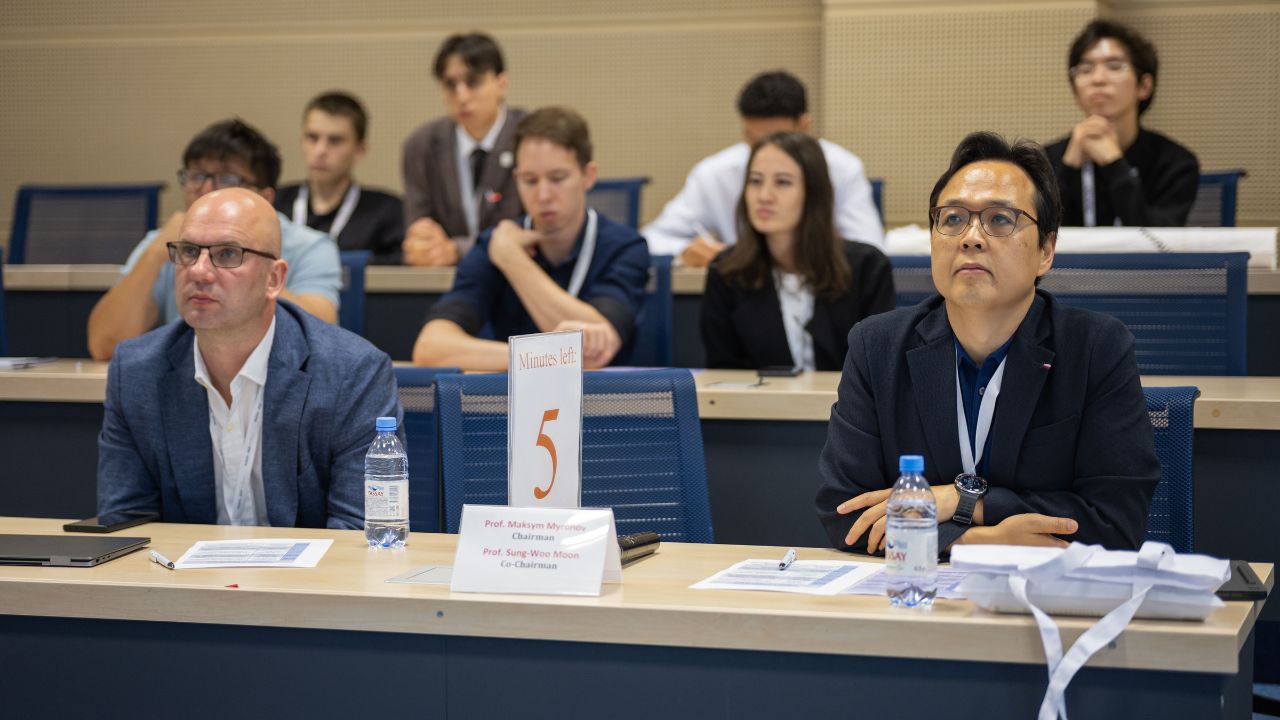
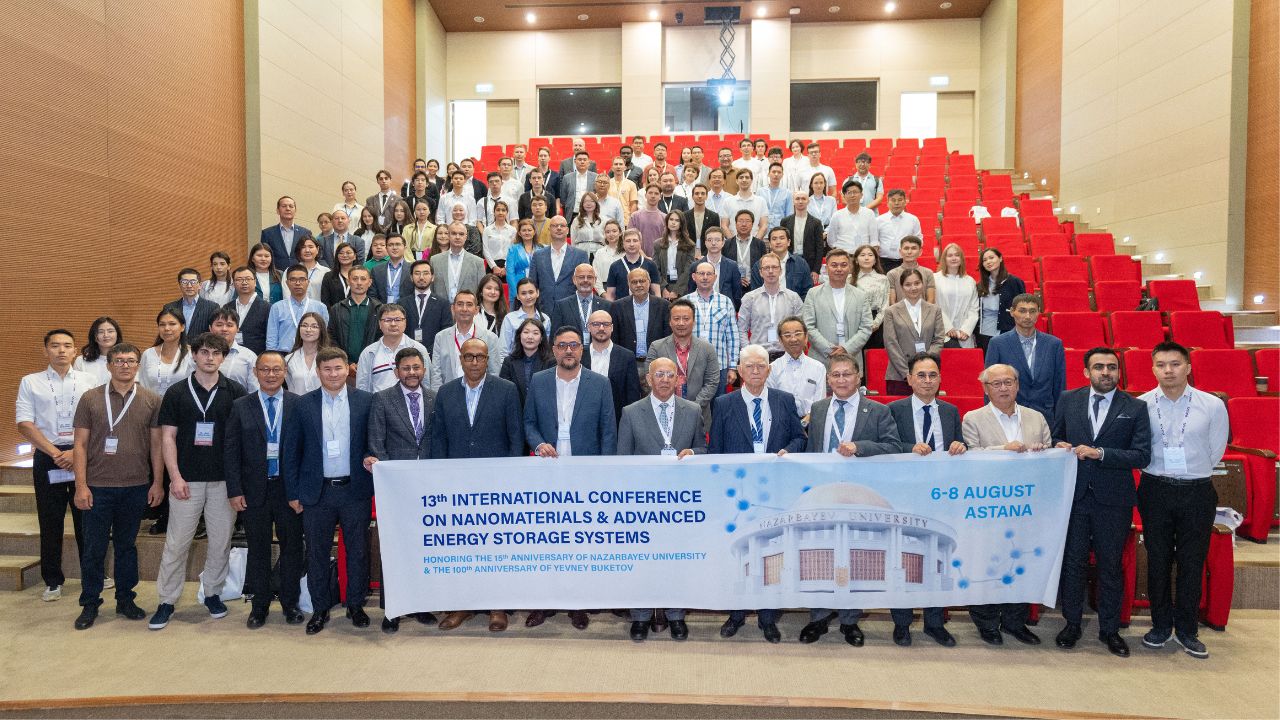
The International Conference on Nanomaterials and Advanced Energy Storage Systems (INESS-2025), dedicated to the 15th anniversary of Nazarbayev University (NU) and the centenary of academician Yevnei Buketov, took place from August 6–8. Jointly organized by NU, National Laboratory Astana, and the Institute of Batteries, the event brought together prominent researchers and experts in electrochemical energy from 11 countries, including Japan, South Korea, China, Taiwan, the United States, the United Kingdom, Russia, Morocco, the United Arab Emirates, and the Netherlands.
As NU President Professor Waqar Ahmad emphasized in his welcome speech, over the past 13 years, INESS has become Central Asia’s leading scientific platform in the fields of nanotechnology, energy storage systems, and materials science, creating opportunities for the exchange of research ideas, breakthroughs, and long-term partnerships: “The development of nanomaterials and advanced energy storage systems stands at the heart of our efforts to create a more sustainable, efficient, and resilient future. Since the university's founding, it has grown into a center of academic excellence, committed to advancing knowledge, fostering innovation, and driving meaningful change. Conferences like INESS reflect that vision and help us extend our reach beyond borders, connecting science and education to real-world progress. INESS serves as a dynamic platform for academic researchers, industry experts, and students to exchange ideas, showcase advances in materials, batteries, fuel cells, supercapacitors, and related technologies, and forge impactful new collaborations.”
The conference featured seven world-renowned keynote speakers who have made significant contributions to the field, including Professor Shinichi Komaba of Tokyo University of Science; Professor Naoaki Yabuuchi of Yokohama National University; Professor Yongcheng Jin of the Ocean University of China; Professor Sung-Soo Kim of Chungnam National University; and Professor Nae-Lih Wu of National Taiwan University, among others.
According to Professor Kiyoshi Kanamura of Tokyo Metropolitan University—a leading expert in the Japanese battery industry and another keynote speaker—lithium-ion batteries will continue to dominate the market for at least another decade. “Lithium-ion batteries remain essential, but in the future, attention will shift toward next-generation technologies, such as solid-state batteries. The challenge lies in their commercialization. Perhaps in 20 years, we’ll see entirely new battery types. I hope so—but first, we must overcome many technological and scientific hurdles.”
Kazakh researchers also showcased strategically essential developments. Among them: the production of cathode materials using an original synthesis method based on locally sourced raw materials.
“We’ve begun collaboration with nickel mining companies and, together with the Ministry of Industry and Construction, plan to launch pilot-scale cathode material production by year’s end. We are ready to scale up to 50 tons, aimed primarily at the export market—especially China. We’re now seeking investment. Our goal is to create a high value-added product,” said Professor Zhumabay Bakenov, Director of the Center for Energy and Advanced Materials Science at National Laboratory Astana, Nazarbayev University.
His team is also focused on developing pure compounds of nickel, cobalt, manganese, and iron—critical elements for batteries that power everything from electric vehicles to smartphones. Professor Bakenov’s research group is also exploring sodium-ion, potassium-ion, and other promising energy storage systems targeted at microelectronics and autonomous power networks.
In line with advancing scientific potential, particular attention was given to young researchers. At the conference, leading experts conducted hands-on workshops and mentorship sessions specifically designed for them. In total, the INESS-2025 program featured around 60 presentations and reports highlighting breakthrough research in areas such as advanced functional materials and energy conversion systems, next-generation batteries and energy storage technologies, electrochemical engineering, computational modeling, sensors, catalysis, and lab-scale upscaling. The conference proceedings will be published in RSC Advances.